
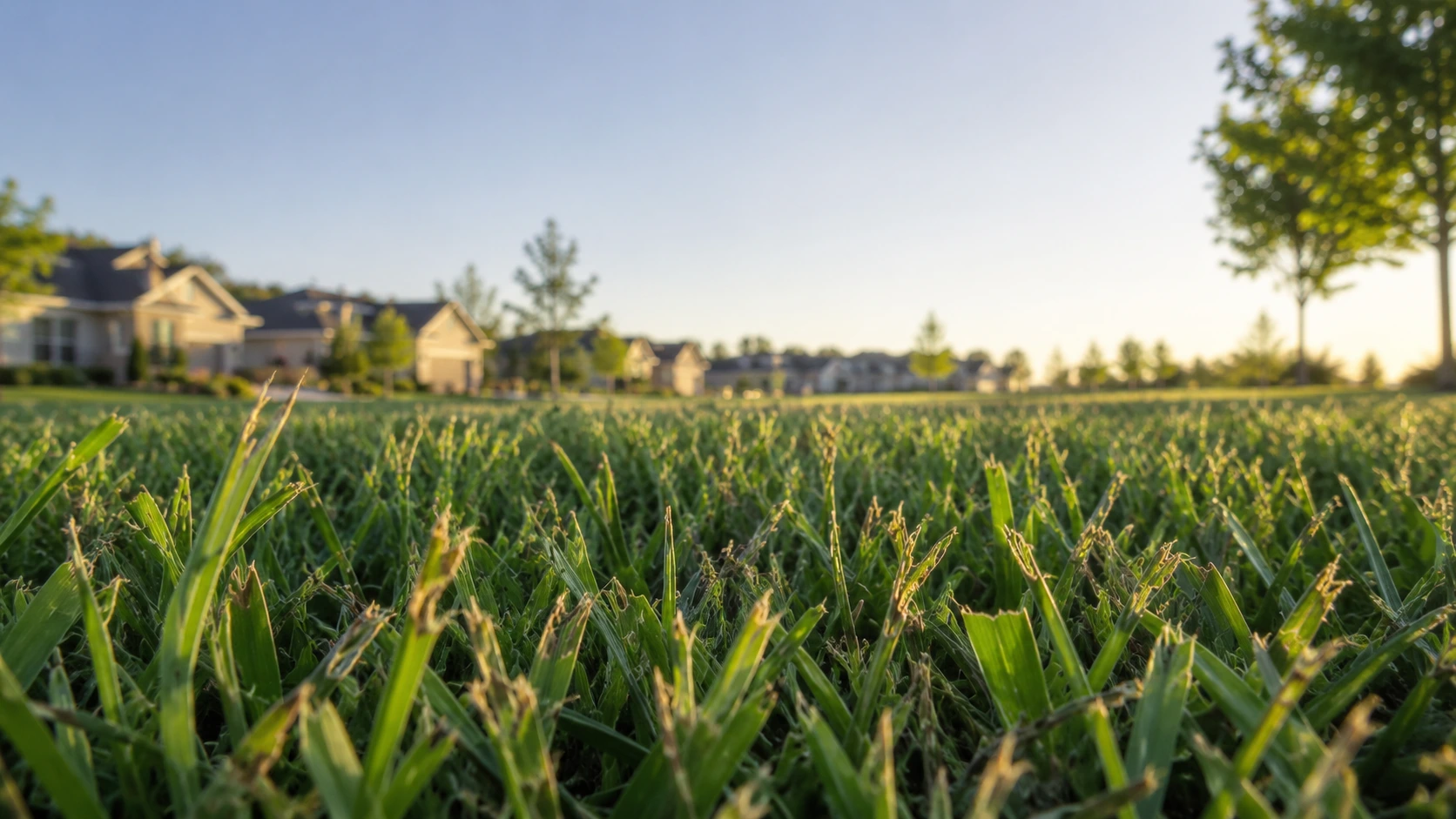
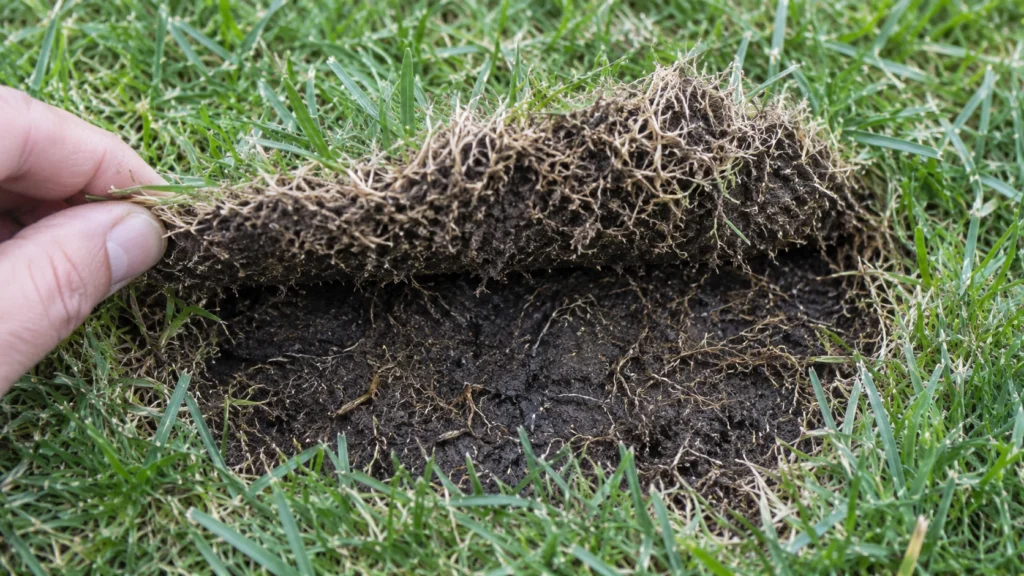
Armyworms feed above ground, chewing grass blades down to the dirt in a matter of days and leaving jagged edges. Grubs feed below ground, severing the roots so your turf rolls back like a loose carpet. If birds are pecking your dead turf, check the soil for white, C-shaped grubs or the surface for striped caterpillars. Treat immediately to prevent total turf loss.
Identification Guide
You need to know exactly what you are fighting before buying chemicals. Guessing costs you time, and in pest control, time equals dead grass.
- The Pull Test: Grab a handful of brown grass and pull upward. If it lifts effortlessly like a loose toupee, you have grubs. They ate the entire root system. If the roots hold strong but the blades look chewed, ragged, or skeletonized, it is armyworm damage.
- The Soap Flush: Mix 2 tablespoons of dish soap with 2 gallons of water in a watering can. Pour it over a 3-foot by 3-foot section of the affected border. Wait 10 minutes. If armyworms are hiding in the thatch, they will surface rapidly. Grubs will ignore this flush completely.
- Visual Appearance: Armyworms are 1.5 to 2 inches long, green or brown, with a distinct inverted “Y” shape on their heads and racing stripes down their sides. Grubs are plump, white, C-shaped larvae with tan heads, found one to two inches deep in the soil profile.
- Bird Activity: Starlings and crows digging deep, messy holes usually mean grubs. Flocks of birds aggressively pecking the surface canopy in the morning indicate armyworms.
Most homeowners just see brown grass and assume the yard needs water. I pull up to houses every August where homeowners are actively watering an armyworm infestation—you are just giving them a hydrated salad.
Root Causes
These two pests attack your yard for completely different reasons.
Grubs are the larval stage of Japanese beetles, June bugs, or chafers. Adult beetles look for moist, well-maintained turf in early summer to lay their eggs. If you run your irrigation system heavily in June and July, you are practically rolling out a welcome mat for egg-laying beetles. The eggs hatch by August, and the ravenous larvae start devouring roots beneath the surface.
Armyworms, specifically the fall armyworm, are moth larvae blown in by strong storm fronts from the South. I track their migration every late summer across the Midwest and Southeast. They drop into lush, heavily fertilized turf, reproduce, and march across your yard like a unified front.
A massive mistake I see constantly is homeowners over-fertilizing with high-nitrogen products in late July. Lush, tender growth is an absolute magnet for both pests. You are feeding the problem. If you live in a transitional zone, high heat combined with excessive thatch (anything over 1/2 inch) creates the perfect incubation chamber. Thatch traps moisture and provides a safe harbor from natural predators.
Step-by-Step Solution
Treatment timelines dictate your success. Do not apply a blanket insecticide hoping it works for both.
Step 1: Choose the Right Chemical
For armyworms, you need a surface-level contact kill. Look for liquid Bifenthrin (like Ortho BugClear) or Lambda-cyhalothrin (Spectracide Triazicide). For grubs, you need a systemic curative product that penetrates the soil. Trichlorfon (BioAdvanced 24 Hour Grub Killer Plus) is the industry standard for active, late-season infestations.
Step 2: Mow and Prep
Cut your lawn to about 2 inches. This removes the top canopy so your chemical can reach the thatch layer where pests hide. Bag the clippings to remove potential armyworm egg masses from the yard.
Step 3: Apply the Insecticide
For Armyworms: Mix liquid Bifenthrin at 0.5 oz per gallon of water in a pump sprayer. Apply late in the afternoon. Armyworms feed at night. Spraying at 5 PM ensures they ingest a fresh dose of chemical when they surface. Spray a 5-foot buffer past the visible damage.
For Grubs: Apply granular Trichlorfon using a broadcast spreader. Set your Scotts spreader to the specific dial number on the product bag (usually around 3 or 4) to ensure proper coverage per sq ft.
Step 4: Water In (Or Don’t)
This is where 90% of DIY treatments fail. If treating armyworms, do not water your lawn for 24 hours. The chemical needs to dry directly on the grass blades. If treating grubs, you must water the granular product immediately with at least 0.5 inches of water. The active ingredient will not reach the root zone without heavy irrigation.
Step 5: Monitor and Reassess
Armyworms die fast. You will see dead caterpillars on the surface within 24 to 48 hours. Grubs take longer. Check the soil 5 to 7 days after watering in the Trichlorfon. The grubs should turn brown and mushy.
Wear long pants, long sleeves, and chemical-resistant gloves during application. Keep pets and kids off the yard until liquid sprays dry completely or granular applications are fully watered in.
Professional vs. DIY
Treating these pests yourself is entirely possible, but your timing and execution must be flawless.
| Factor | DIY | Professional |
| Cost | $$ | $$$$ |
| Speed | Weeks | Days |
| Effectiveness | Moderate | High |
| Risk | Moderate | Low |
If you catch an armyworm infestation on day one, DIY liquid treatments are highly effective and cheap. However, if your yard is being decimated overnight and you have over 10,000 sq ft of turf, a pro rig can spray high-volume Bifenthrin accurately in 15 minutes.
Grub control is trickier. Over-the-counter curative grub products have a short shelf life and degrade if left in a hot garage. Professionals have access to commercial-grade Chlorantraniliprole (Acelepryn), which offers season-long control with a single application. I tell clients all the time: if your turf is already dead and peeling back in massive sheets, call a professional. You likely need comprehensive aeration and overseeding alongside the chemical knockdown.
Common Misdiagnosis
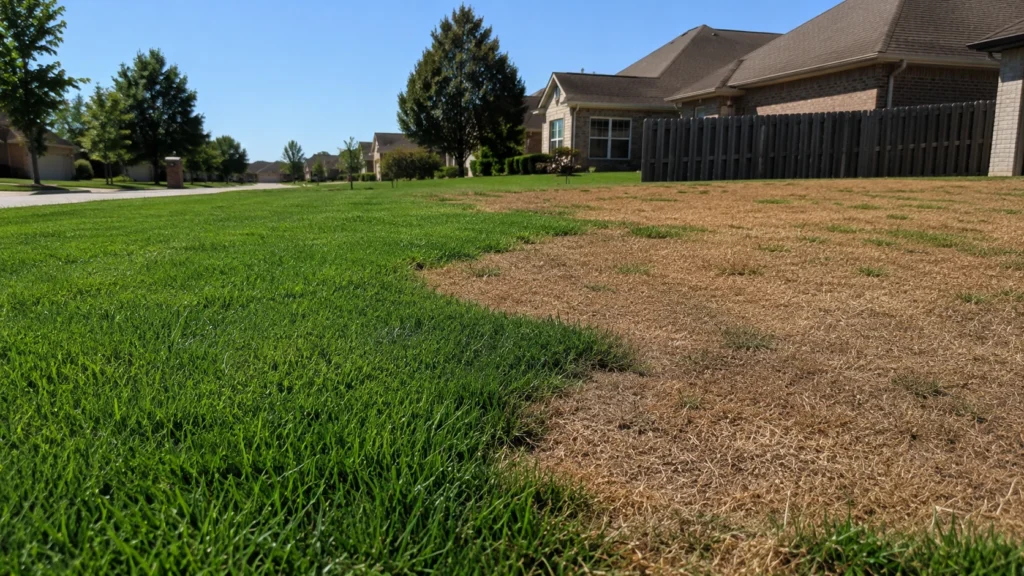
People misidentify pest damage every single day in the field. The most common culprit is confusing grub damage with brown patch fungus.
Both cause large, irregular brown spots in late summer. I frequently get called out to properties where the homeowner dumped three bags of expensive fungicide on a yard that was actually being eaten alive by insects. If you have grub damage vs fungus damage, the soil holds the answer. Fungal diseases cause the grass blades to spot, rot at the sheath, or smell musty, but the roots remain firmly anchored in the ground. Grubs sever the roots entirely.
Chinch bugs also mimic armyworm damage in St. Augustine or Bermuda grass. Chinch bugs suck the moisture out of the blade, causing it to turn yellow, then brown. Armyworms physically chew the edges, leaving a ragged, torn appearance. Look at the actual blade structure closely before you spray any chemical.
Prevention Tips
Reactive pest control is expensive and stressful. Preventive action saves your yard and your wallet.
For grubs, timing is your best weapon. Apply a preventative granular insecticide containing Imidacloprid (like Scotts GrubEx) between May and late June. This product needs to be in the soil profile before the beetles lay their eggs in July. Applying a preventative in September is a complete waste of money.
To deter armyworms, manage your thatch layer aggressively. Core aerate your lawn in the fall or spring if thatch exceeds 1/2 inch. Armyworm moths seek out thick, spongy turf to hide their eggs. Knowing exactly when you should aerate your lawn breaks up this habitat. I also recommend shutting off outdoor floodlights during late summer nights; bright lights attract migrating armyworm moths directly to your property.
Pro Tips Box
Pro-Tips Box: Stop relying on big box store granulars to stop an active armyworm invasion. Granulars take too long to activate. Use a hose-end sprayer with liquid Talstar P (Bifenthrin) at 1 oz per gallon and soak the turf canopy at dusk. For grubs, the soil must be moist before you apply Trichlorfon. If your soil is bone dry, the granular chemical binds to the surface thatch and never reaches the root zone. Run your sprinklers for 15 minutes the day before your grub treatment.
People Also Ask
Will grass grow back after armyworms?
Yes, healthy grass usually recovers from armyworms because they eat the blades, not the crowns or roots. If you treat the infestation quickly and apply a light fertilizer, warm-season grasses will push new growth within two weeks. Cool-season grasses might need minor overseeding in bare spots.
Can I treat for grubs and armyworms at the same time?
You can, but it requires two different products and application methods. You would apply a liquid contact killer for the armyworms, let it dry for 24 hours, and then apply a granular soil-penetrating product for grubs, which must be watered in heavily.
Do heavy rains bring armyworms?
Yes. Armyworm moths ride storm fronts and strong wind currents from the South. A heavy rainstorm in late summer often precedes an infestation, as the moths drop out of the weather system, lay eggs on your wet grass, and hatch into hungry caterpillars a few days later.
What to Read Next
If your yard is developing strange brown patches but the roots are still firmly attached to the soil, insects might not be your problem at all. Fungal diseases often mimic pest activity during humid summer months, which is why understanding the visual differences between Grub Damage vs Fungus will save you from buying the wrong chemical treatment.