
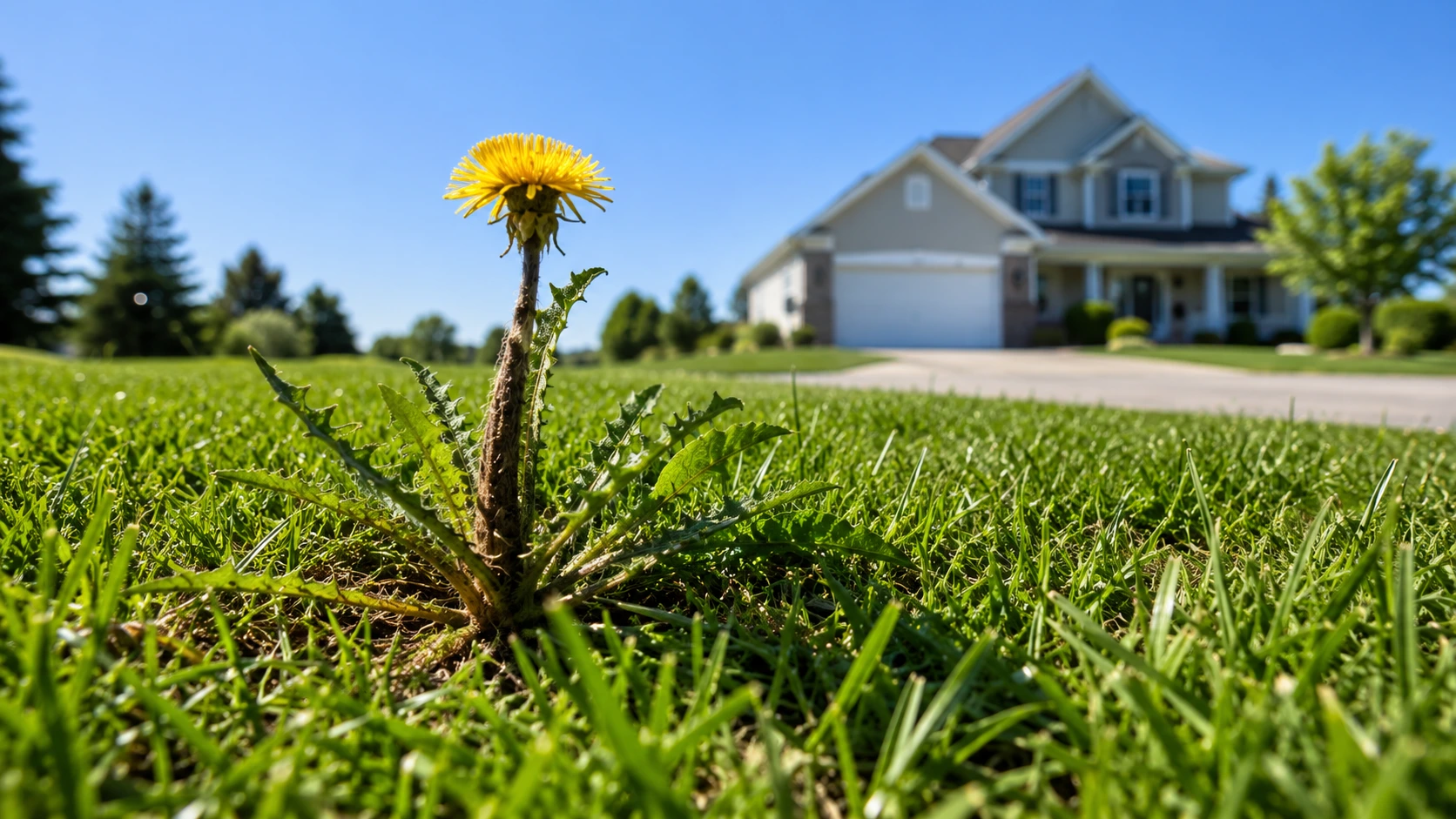
Flatweed (Hypochaeris radicata) features heavily textured, hairy leaves and sends up multiple yellow flowers branching from a single solid stem. True dandelions (Taraxacum officinale) have completely smooth, deeply toothed leaves and produce only one flower per hollow, unbranched stem. Both are stubborn broadleaf perennials that produce identical puffball seed heads, and both require the same post-emergent chemical control or deep mechanical removal to eradicate the taproot.
Identification Guide
You spot a yellow flower in your yard and assume it is a dandelion. Most homeowners do. Look closer, because the physical structure tells a different story.
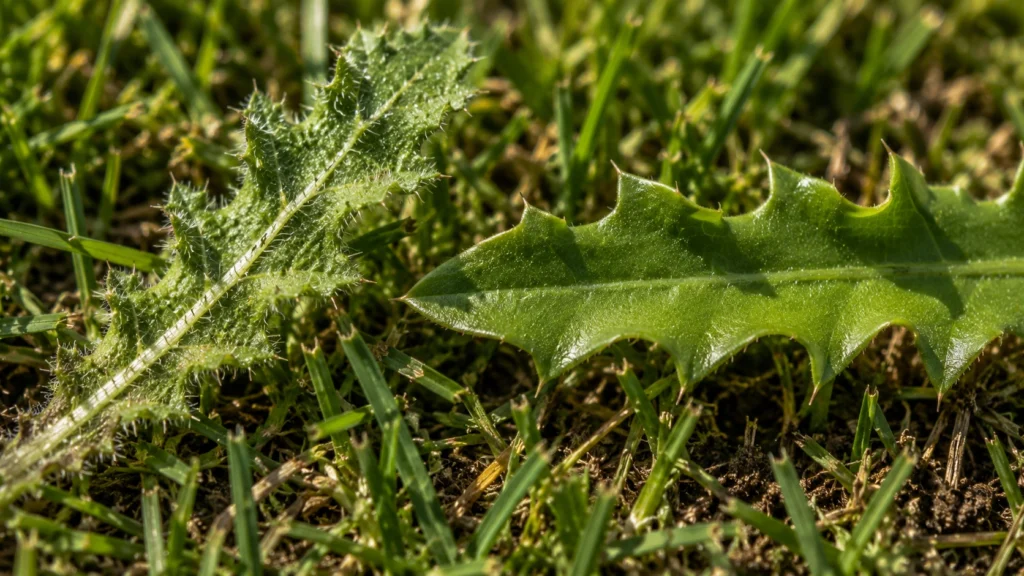
- Leaf Texture: Run your fingers over the foliage. Flatweed leaves are covered in dense, coarse hairs. Dandelion leaves are perfectly smooth.
- Stem Structure: Snap a stem in half. True dandelion stems are hollow tubes that exude a milky white sap. Flatweed stems are solid and wiry.
- Flower Count: Follow the stem down from the yellow flower. Flatweed stems branch out, producing multiple flowers on one stalk. Dandelions strictly produce one single flower per stem.
- Growth Habit: Flatweed leaves lay completely flat against the soil surface, choking out the grass underneath. Dandelion leaves tend to grow slightly upward and outward.
Root Causes
Weeds are opportunistic. They do not invade healthy, thick turf. If your yard is overrun by flatweed or dandelions, the soil conditions are favoring weeds over your grass.
Both of these broadleaf weeds thrive in thin, undernourished lawns. A lack of regular nitrogen fertilization leaves bare spots where windblown puffball seeds easily make contact with the soil. Soil compaction is another primary driver. Dandelions and flatweed both possess massive, thick taproots that easily punch through hard, clay-heavy soil. Your turfgrass roots cannot push through that same dense dirt.
Mowing too low is the most common mistake I see in the field. Scalping your lawn down to 1 or 1.5 inches removes the grass canopy that normally shades out weed seeds. Sunlight reaches the soil level, accelerating weed germination.
Step-by-Step Solution
Pulling the tops off these weeds does nothing. The taproot will regenerate a new rosette in a matter of days. You have to kill the entire root system.
Step 1: Mechanical Removal (Light Infestations)
If you only have a few weeds, buy a stand-up weed puller tool. Wait for a heavy rain, or soak the affected area with a hose. Push the tool deep into the wet soil directly over the center of the weed, twist, and pull. You must extract at least 4 to 5 inches of the taproot. If the root snaps near the surface, the weed survives.
Step 2: Chemical Control (Heavy Infestations)
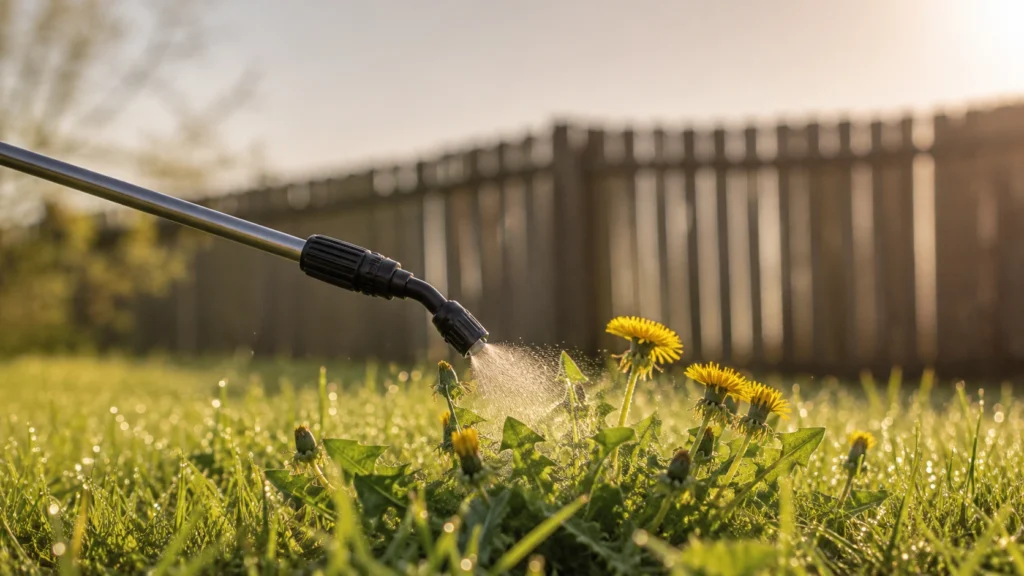
For a yard full of yellow flowers, spot-treating with a post-emergent herbicide is your best route. Look for a liquid broadleaf weed killer containing 2,4-D, Dicamba, and Quinclorac. Ortho Weed B Gon or BioAdvanced All-In-One Lawn Weed & Crabgrass Killer are highly effective.
Step 3: Mixing and Application
Wear long pants, shoes, and chemical-resistant gloves. Mix the concentrate in a pump sprayer according to the label. A standard rate is often 2 to 3.2 oz of product per gallon of water to cover 500 sq ft, but verify your specific bottle’s instructions.
Step 4: Spraying Protocol
Adjust your sprayer nozzle to a coarse spray to avoid wind drift onto your ornamental plants. Coat the leaves of the weed until they are wet, but stop before the liquid runs off into the soil. Apply when temperatures are between 65°F and 85°F. Do not spray if rain is expected within 24 hours. If you are unsure about the weather, understanding the best time to spray weeds before or after rain will save you from wasting product.
Expect the weeds to curl and wilt within 3 to 5 days. Total death to the root takes about 14 days.
Professional vs. DIY
Tackling broadleaf weeds is highly manageable for anyone with a pump sprayer and a weekend afternoon. You rarely need a professional just for dandelions.
| Factor | DIY | Professional |
| Cost | $ | $$$ |
| Speed | Weeks | Days |
| Effectiveness | Moderate | High |
| Risk | Moderate | Low |
DIY fails when homeowners guess the mixing ratios. Pouring extra herbicide into the tank burns the grass and often shocks the weed into shutting down, meaning it stops absorbing the chemical before the root dies. Call a professional service like TruGreen or a local operator if your lawn is more than 50% weeds, or if you simply do not want to handle and store concentrated chemicals in your garage.
Common Misdiagnosis
People mix up yellow lawn weeds constantly. Flatweed is frequently called “false dandelion” or “catsear”. But there is another imposter to watch out for.
If you see a yellow flower that looks like a dandelion, but it has hairy leaves and leafy stems, you are looking at hawksbeard. Dandelions and flatweed have basal rosettes, meaning all their leaves originate from a single point at the soil level. The stems themselves have no leaves. Hawksbeard grows leaves all the way up its stalk. Knowing the difference between a dandelion vs hawksbeard matters because hawksbeard often signals an immediate need for lime, as it thrives in highly acidic soils.
Prevention Tips
Chemicals treat the symptom. Thick grass treats the disease. Your lawn care routine dictates your weed pressure.
Raise your mower deck to 3 or 3.5 inches for cool-season grasses like Fescue and Kentucky Bluegrass, or 2 to 2.5 inches for Bermuda. Tall grass physically blocks sunlight from triggering weed seeds in the dirt. Feed your yard a quality granular fertilizer every 6 to 8 weeks during the growing season. If you keep the turf dense and properly fed, you won’t need to spray nearly as much. Timing your applications is critical; make sure you know exactly when to weed and feed the lawn to maximize root absorption before the summer heat hits.
Pro Tips Box
Pro-Tips Box: Stop wasting pre-emergents on dandelions and flatweed. Most granular crabgrass preventers (like those containing Pendimethalin or Prodiamine) do a terrible job stopping perennial broadleaf weeds because these weeds regenerate from existing taproots that overwinter in the soil, not just from seed. Spend your money on a premium post-emergent liquid instead. If you prefer pulling them manually, do it exactly 24 hours after a heavy rain. I’ve pulled thousands of these over the years, and dry soil acts like concrete; the root will snap at the crown every time, guaranteeing the weed comes right back.
People Also Ask
Is flatweed toxic to dogs?
Flatweed is generally considered non-toxic to dogs and cats. However, consuming large amounts of any raw yard weed can cause mild gastrointestinal upset, vomiting, or diarrhea in pets. Always keep dogs off the lawn after applying any chemical herbicides until the spray has completely dried.
Can I use vinegar to kill dandelions?
Household vinegar (5% acetic acid) will burn the top leaves but rarely kills the deep taproot of a mature dandelion. Horticultural vinegar (20-30%) is stronger but highly corrosive and non-selective, meaning it will severely damage and kill the surrounding lawn grass alongside the weed.
Does flatweed mean my soil is bad?
A heavy flatweed infestation usually indicates dry, compacted soil with low nutrient levels. Their deep taproots allow them to survive in poor dirt where standard turfgrass struggles. Core aeration and routine fertilization will improve the soil and help your grass choke out the weeds.