
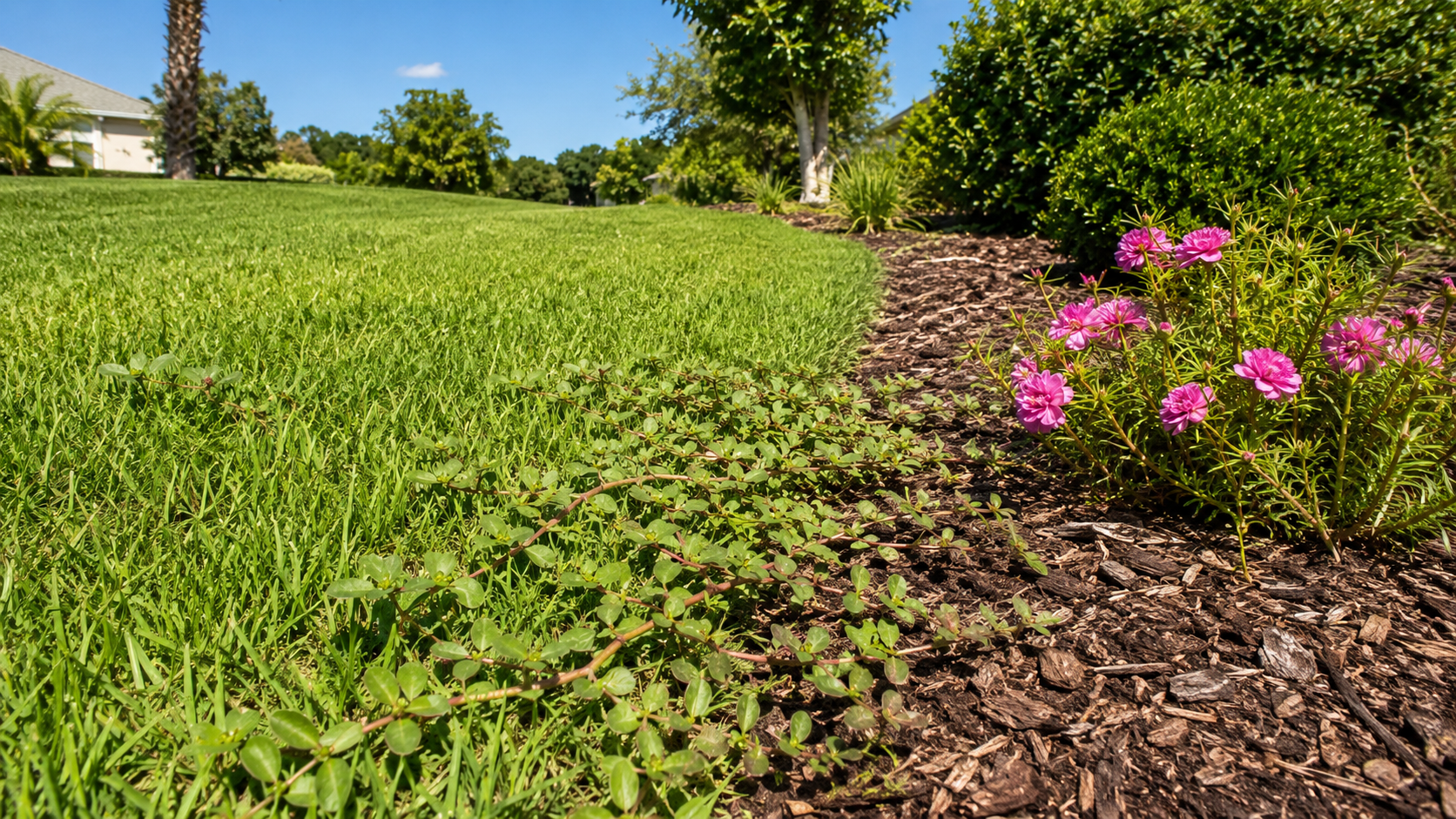
Purslane is an invasive broadleaf weed with flat, teardrop-shaped succulent leaves and tiny yellow blooms that aggressively chokes out thin lawns. Portulaca, commonly called moss rose, is an intentional ornamental flower with needle-like, cylindrical leaves and large, brightly colored ruffled blooms. Purslane requires immediate removal to protect your turf, while portulaca safely stays confined to your flower beds.
Identification Guide
Most homeowners pull up expensive nursery plants or let aggressive weeds take over simply because both of these succulents thrive in the heat. You can tell them apart instantly by looking closely at their structure.
- Leaf Shape: This is your definitive giveaway. Purslane leaves are completely flat, smooth, and shaped like little teardrops (spatulate). Portulaca leaves look like fleshy, pointed pine needles or tiny green cylinders.
- The Flowers: Purslane produces very small, single yellow flowers that open only on sunny mornings and fade quickly. Portulaca bursts with large, showy, ruffled blooms that look like miniature roses in neon pink, red, orange, or yellow.
- Stem Color: Invasive common purslane develops thick, distinctively reddish-purple stems that sprawl flat against the soil surface like a starburst. Portulaca stems tend to be greener or lighter pink and grow slightly more upright.
- Location: Purslane forces its way into sidewalk cracks, thin patches of turf, and compacted bare soil. You will almost exclusively find portulaca right where you planted it in potting soil or loose mulch beds.
Root Causes
Purslane seeds lay dormant in the soil for decades, just waiting for the right trigger. This weed exploits weakness. It thrives in heavily compacted soil and full sun, environments where standard turfgrass struggles to survive.
A severe purslane outbreak in the middle of your yard tells me your turf canopy is too thin. Healthy, thick grass shading the soil surface naturally prevents weed seeds from germinating. When you cut your grass too short during the blistering summer months, you expose the soil to the sun, raising the ground temperature. Purslane thrives in soil temperatures above 80°F.
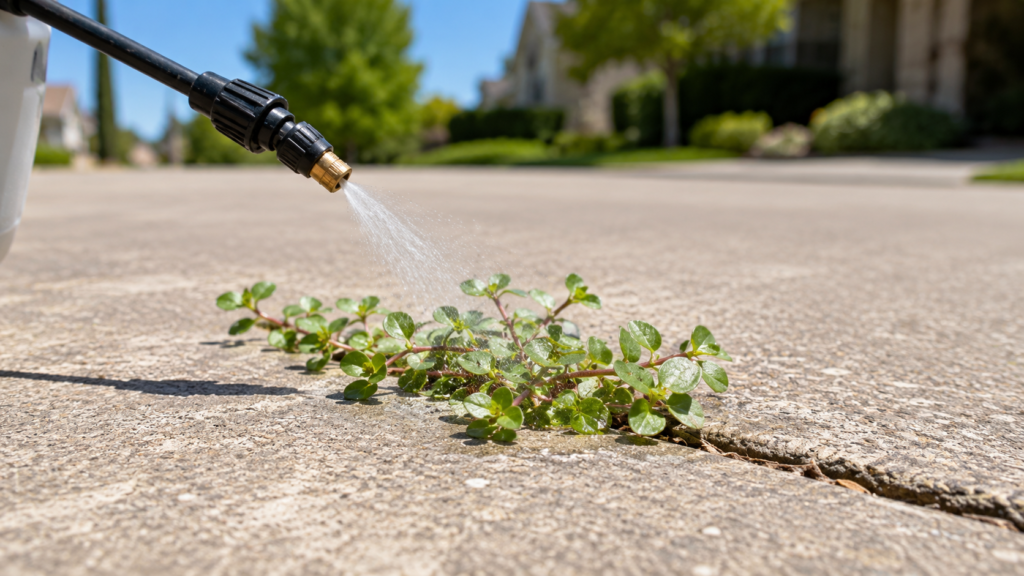
Overwatering bare patches also invites this weed. Even though it is a highly drought-tolerant succulent, constant surface moisture on bare dirt accelerates seed germination. You often see purslane exploding along driveway edges or near concrete paths because the pavement radiates intense heat right into the adjacent compacted soil, creating a microclimate perfectly tailored for this aggressive weed.
Step-by-Step Solution
Eradicating purslane requires a two-pronged approach. Because of its fleshy leaves, chemical control must be done correctly to penetrate the plant’s waxy surface.
1. Hand-Pull Isolated Weeds
If you only have a few scattered plants, manual removal works best. Grab the purslane at the central taproot and pull slowly. Do not snap the stems. Collect every single broken piece. Leaving a tiny fleshy fragment on the ground allows the plant to root itself right back into the dirt. Place the weeds directly into a yard waste bag.
2. Select the Right Post-Emergent
For larger yard infestations, you need a selective broadleaf herbicide that kills the weed without damaging your grass. Look for products containing 2,4-D, Dicamba, or Triclopyr (like Ortho Weed B Gon).
3. Check the Weather and Temperature
Do not spray if daytime temperatures exceed 85°F. Applying 2,4-D or Triclopyr in extreme heat will severely burn your lawn. Wait for a cooler morning. Timing your application correctly is vital, especially if rain is in the forecast. Knowing the best time to spray weeds before or after rain ensures the chemical doesn’t just wash off the waxy leaves into the soil.
4. Mix and Apply
If using a concentrate, mix 2 to 2.5 oz of product per gallon of water in your pump sprayer (check your specific label). Spray the purslane leaves until they are wet, but stop before the chemical drips off.
5. Monitor and Re-Treat
Succulents die slowly. You will notice the stems curling and turning brown within 5 to 7 days. If the plant survives, do not spray again immediately. Wait a full 14 days before applying a second treatment to avoid stressing the surrounding grass.
Professional vs. DIY
Tackling a purslane invasion is highly manageable for most people, provided you catch it early. However, severe infestations might require a different approach.
| Factor | DIY | Professional |
| Cost | $ ($20–$40 for spray) | $$$ ($60–$100 per treatment) |
| Speed | 1–2 Weeks | 5–7 Days |
| Effectiveness | Moderate to High | High |
| Risk | Moderate (Turf burn risk) | Low |
Call a professional lawn care service like TruGreen or a local operator if the purslane has completely overtaken more than 30% of your yard. Professionals have access to specialized commercial-grade surfactants and herbicides that penetrate waxy weed cuticles much faster than standard box-store products.
Common Misdiagnosis
The biggest mistake homeowners make in the field is confusing purslane with spotted spurge. They both grow flat to the ground in a sprawling mat, have reddish stems, and thrive in the hottest parts of the summer. Treating the wrong weed often leads to wasted money on ineffective herbicides.
To tell them apart instantly, break a stem in half. Spotted spurge stems bleed a sticky, toxic milky white sap that can irritate your skin. Purslane stems hold clear, watery liquid. Additionally, spurge leaves have a distinctive dark purple or red spot right in the center, whereas purslane leaves are uniformly green and completely smooth. If you see white sap, wear gloves, as spurge is far more toxic to handle than harmless purslane.
Prevention Tips
You cannot spray your way to a weed-free yard permanently. Your best defense against a recurring purslane problem is dense turf.
Apply a pre-emergent herbicide containing Pendimethalin or Prodiamine in the late spring just as soil temperatures consistently hit 60°F. This creates a chemical barrier in the soil that prevents dormant purslane seeds from sprouting when the summer heat arrives.
Raise your mower deck. Cutting your grass at 3 to 4 inches tall keeps the soil shaded, dropping the ground temperature and starving weed seeds of the sunlight they desperately need to germinate. Aerate your yard every fall to relieve the soil compaction that purslane loves, allowing your grass roots to grow deeper and choke out future invaders.
Pro-Tips Box: Most homeowners spray standard herbicide on purslane and wonder why the chemical rolls right off the shiny leaves. Always add a non-ionic surfactant to your tank mix (about 0.5 oz per gallon). It breaks the surface tension, allowing the chemical to stick to and burn through the waxy cuticle. Also, never throw pulled purslane into your compost pile; the succulent stems retain enough water to continue ripening their seeds long after you rip them out of the ground.
People Also Ask
Can purslane ruin my lawn?
Yes. If left unchecked in a thin or stressed lawn, purslane forms dense, sprawling mats that block sunlight and steal water, effectively choking out the surrounding turfgrass.
Will weed killer kill my portulaca?
Yes. Broadleaf herbicides containing 2,4-D or Triclopyr cannot distinguish between a broadleaf weed like purslane and an ornamental broadleaf plant like portulaca. Spraying near your flower beds can easily kill your prized ornamentals via drift.
Are purslane and portulaca related?
Yes, they belong to the same botanical family (Portulacaceae). This is why they share a similar succulent structure and love hot, dry conditions, even though one is cultivated for landscaping and the other acts as an aggressive weed.
What to Read Next
Timing your lawn maintenance properly dictates how effective your chemical treatments will be, which is why understanding the rules on whether you should mow before weed and feed applications is essential before attacking broadleaf weeds like purslane.