
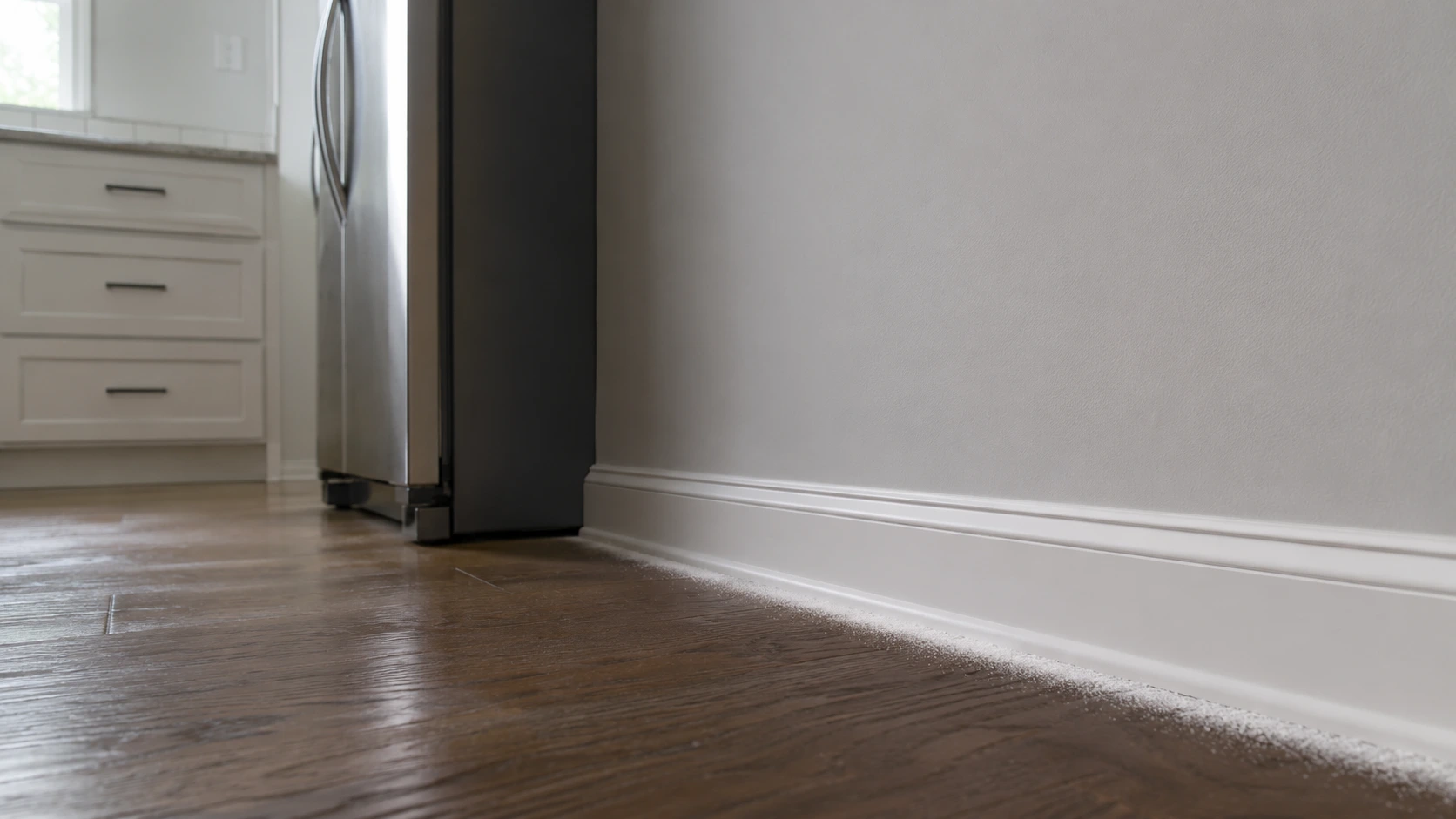
Boric acid is generally more effective for roaches than diatomaceous earth (DE) because it acts as a highly lethal stomach poison. Roaches ingest the powder while grooming and carry it back to the colony, creating a cascading kill effect. DE only kills mechanically by scratching the exoskeleton to cause dehydration, which is significantly slower and rarely eliminates an entire hidden nest.
Identification Guide
Before dusting your floors, you need to confirm where the roaches are actually traveling. Dusting open spaces is a waste of product. Look for these specific visual signs in your kitchen and bathrooms:
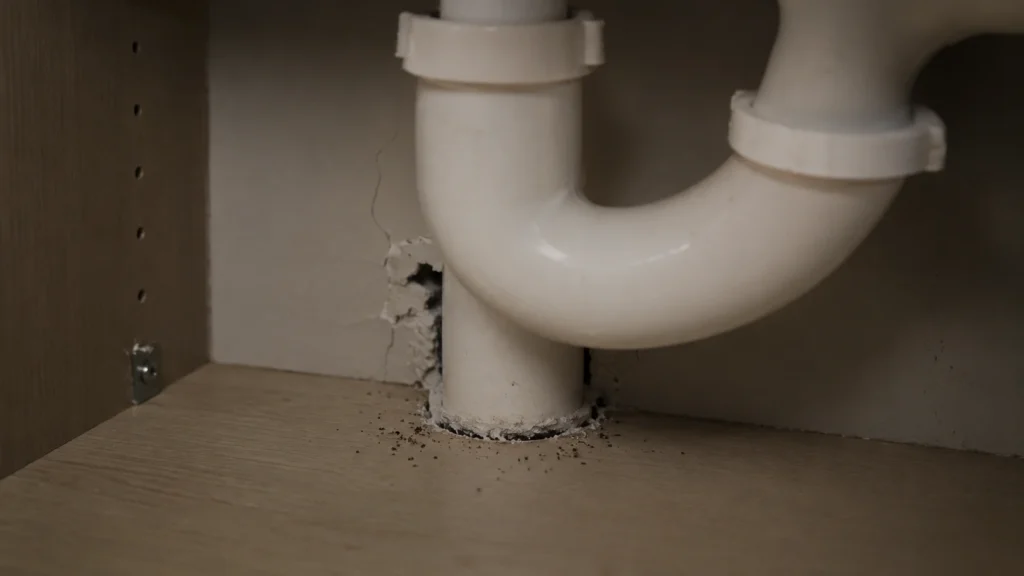
- Fecal smears and droppings: Check the top hinges of your cabinets and the wall directly behind your refrigerator. Roach feces look like coarse black pepper. If you find heavy accumulations, you should immediately investigate if cockroach poop is toxic to your household pets and kids.
- Egg cases (Oothecae): These are dark brown, pill-shaped casings often glued to hidden, protected surfaces, like the underside of a kitchen drawer or behind a dishwasher kickplate.
- Musty odors: A heavy infestation produces an oily, sour smell caused by aggregation pheromones. You will typically notice this immediately when opening a closed under-sink cabinet.
- Shed exoskeletons: Nymphs molt multiple times as they grow. You will find these hollow, amber-colored shells wedged deep into wall crevices or baseboard gaps.
Root Causes
Roaches do not invade your home by accident. They are actively exploiting a breakdown in your home’s perimeter or sanitation defenses.
Moisture is the primary driver. The German cockroach, the most common indoor pest species, cannot survive long without a steady water source. A microscopic drip from a kitchen P-trap or condensation pooling under a refrigerator provides enough hydration to support hundreds of insects.
Readily available carbohydrates and proteins also anchor the colony. Crumbs trapped in the tiny 1/4-inch gap between your stove and the countertop represent an absolute feast.
Many homeowners unknowingly import the problem. Roaches frequently hitchhike inside corrugated cardboard boxes, grocery bags, or second-hand appliances. Once inside, they exploit wall voids, traveling through electrical conduits and plumbing penetrations to move seamlessly between rooms. They seek environments holding a steady temperature above 70°F, which is exactly why the warm motors of your kitchen appliances become prime real estate for their nests.
Step-by-Step Solution
Whether you choose boric acid or food-grade diatomaceous earth, the application technique determines your success. Most homeowners fail because they apply dust in thick mounds. Roaches will simply walk around a pile of powder. You need a nearly invisible layer.
- Prep the environment: Deep clean the target area. Remove grease, crumbs, and standing water. Dust products lose all efficacy if applied to wet or greasy surfaces. If boric acid absorbs ambient moisture, it cakes up and becomes utterly useless.
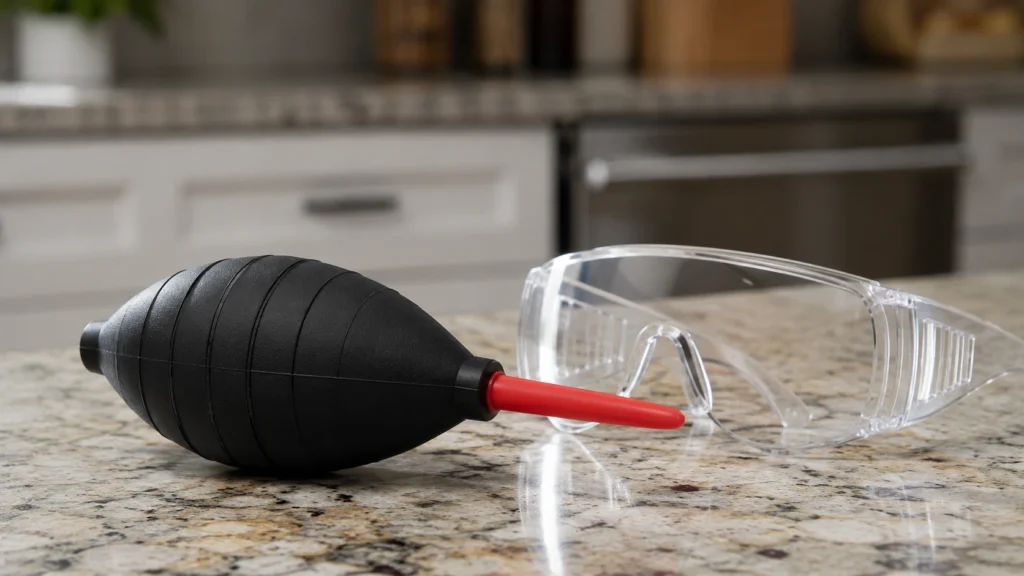
- Load the duster: Fill a handheld bellows bulb duster exactly halfway with your chosen powder. Do not overfill it. You need empty air space inside the rubber bulb to create a fine mist. Add a small metal coin inside the bulb to help agitate the powder when you shake it, preventing clumps.
- Target the voids: Insert the tip of the duster directly into cracks, baseboard gaps, electrical outlets (with the cover removed), and plumbing wall penetrations under the sink. Give the bulb a very gentle, half-squeeze. You want a faint puff of smoke, not a heavy, visible spray.
- Treat appliance hubs: Pull your refrigerator, dishwasher, and stove out from the wall. Lightly dust the flooring directly underneath and behind the warm appliance motors. Roaches congregate near these heat sources. Aim for roughly 1 to 2 oz of dust per 100 sq ft of treated area.
- Leave the dust undisturbed: Do not mop, sweep, or spray liquid pesticides over the treated cracks. Boric acid works slowly. You will start seeing a few dead roaches in 3 to 5 days, but full colony collapse takes roughly two to three weeks of continuous exposure. Reapply the dust only if it becomes physically wet.
- Monitor the perimeter: Set out sticky traps near the dusted areas to track the population decline. If you catch nymphs covered in white powder but the overall numbers aren’t dropping after three weeks, you likely missed the main nesting void.
Professional vs. DIY
| Factor | DIY Dusts (Boric Acid/DE) | Professional Extermination |
| Cost | $ | $$$ |
| Speed | 2-4 Weeks | 3-7 Days |
| Effectiveness | Moderate | High |
| Risk | Moderate | Low |
DIY dusts work exceptionally well for localized, early-stage problems. Boric acid is an excellent, low-cost maintenance tool for minor intrusions. However, if you are seeing nymphs (baby roaches) scattering during the day, the hidden wall void is likely overflowing, forcing them out into the open.
This is where DIY dusts fall drastically short. A professional pest control operator uses non-repellent transfer insecticides like Fipronil or specialized, professional-grade gel baits that target the exact cockroach species. Professionals understand exact harborage locations and can eradicate a heavy German roach infestation in days, while over-the-counter DIY dusts might only dent the massive population over several exhausting weeks.
Common Misdiagnosis
Homeowners frequently buy the wrong product or misidentify the pest completely.
First, never use pool-grade diatomaceous earth indoors. Pool DE is heat-treated and crystallized; it is a severe inhalation hazard and entirely useless against insects. You must use labeled, pest-control or food-grade DE to effectively damage a roach’s exoskeleton.
Second, verify you are actually fighting a true indoor infestation. People often panic over a rogue outdoor roach that wandered inside, immediately wondering how do water bugs get in your house. Large, dark, flying roaches (American or Oriental cockroaches, often called waterbugs) typically live outside in mulch beds or storm sewers. Treating your interior kitchen cabinets for an occasional invader from the yard requires exterior exclusion work, not indoor dusting.
Prevention Tips
Boric acid and DE are reactionary tools. To keep roaches out permanently, you must eliminate their entry points and survival resources around your property.
Seal all plumbing penetrations under your sinks using expanding foam or copper mesh. Gaps around pipes are the number one highway for roaches traveling between apartment units or from a damp crawlspace.
Store all pantry staples in airtight, hard plastic or heavy glass containers. Thin plastic grocery bags and cardboard cereal boxes offer absolutely zero resistance to foraging roaches. Wipe down and dry your kitchen sinks completely before going to bed. Denying them that crucial overnight water source drastically reduces their long-term survival rate. Fix any dripping outdoor spigots that pull pests toward the foundation.
Pro-Tips Box: Most homeowners fail with boric acid because they use it straight from the bottle in high-traffic areas. I always tell my techs to create a bait-dust hybrid for wall voids. Mix 4 parts boric acid with 1 part powdered sugar. The sugar completely masks the chemical presence and actively draws the roaches into the dust layer. Also, buy a duster with a brass tip, not plastic. The brass generates a slight electrostatic charge as the dust exits, making the powder cling instantly to the vertical surfaces inside wall voids instead of dropping straight to the floor.
People Also Ask
Can I mix diatomaceous earth and boric acid together?
Yes, you can mix them, but there is no tactical advantage. Boric acid acts as a stomach poison, while DE damages the exterior shell. Mixing them dilutes the ingestion rate of the boric acid. Pick one product and apply it correctly for the best results.
Is boric acid safe around pets?
Boric acid is highly toxic if ingested in large quantities by dogs or cats. You must apply it exclusively in inaccessible areas, like inside enclosed wall voids, behind heavy appliances, or under secured baseboards where pets cannot lick or inhale the powder.
How long does diatomaceous earth take to kill a roach?
DE can take anywhere from 48 hours to two weeks to kill a cockroach. The insect must walk through the powder, suffer exoskeleton damage, and then slowly dehydrate. It is not an instant contact killer, so patience is strictly required.
What to Read Next
Understanding how to apply lethal powders is a skill you can transfer to other destructive household pests. If you have an active infestation eating your structural wood, knowing how to safely use boric acid for carpenter ants will save your home from costly framing damage down the road.