
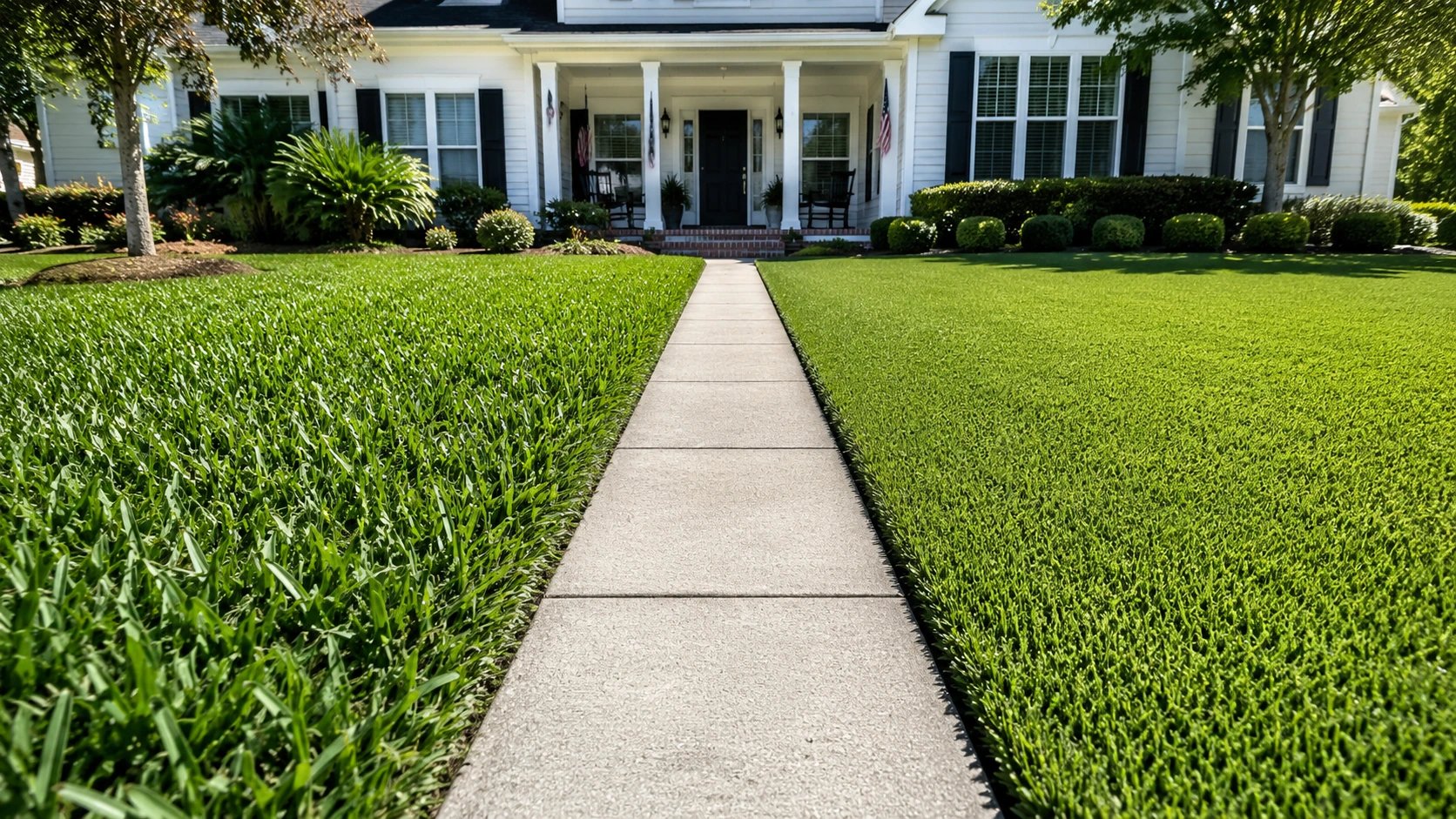
St. Augustine and Zoysia are premium warm-season grasses engineered for completely different yard environments. St. Augustine features broad, flat blades and dominates in shady, humid areas, though it handles heavy foot traffic poorly. Zoysia creates a dense, fine-textured carpet that withstands aggressive wear from kids and dogs, but it recovers slowly from damage and demands regular dethatching to breathe.
Identification Guide
Telling these two turfs apart in the field comes down to texture, growth patterns, and blade shape. If you inherit an established lawn, look closely at the soil level.
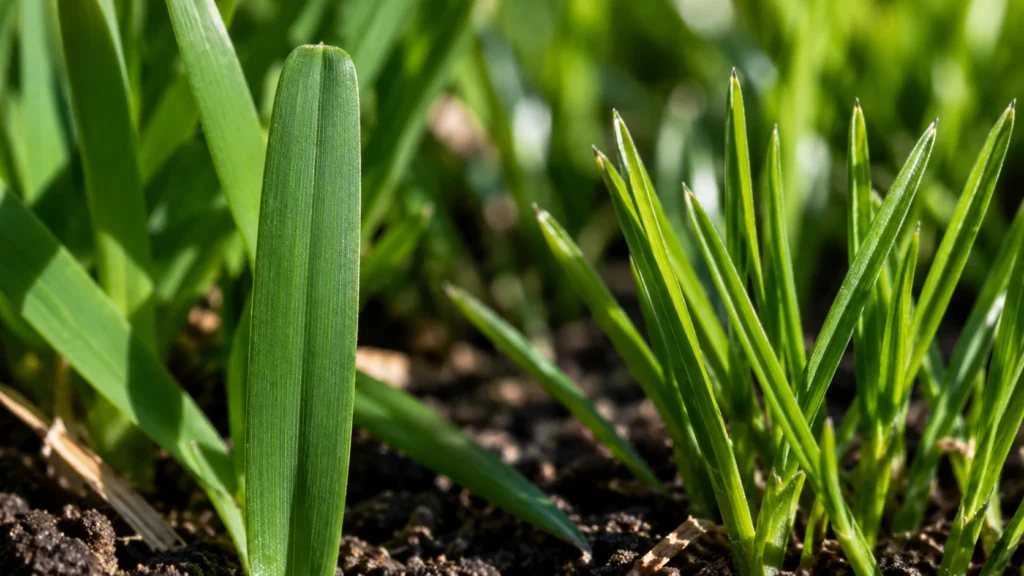
- Blade Shape: St. Augustine has broad, flat blades almost 0.3 inches wide with a distinct, boat-shaped, rounded tip. Zoysia blades are much finer, stiffer, and taper to a sharp, needle-like point.
- Color Profile: A healthy St. Augustine yard throws a deep, dark blue-green hue. Zoysia typically presents a lighter, medium emerald green that turns brown rapidly after the first frost.
- Runner Visibility: Part the grass with your hands. St. Augustine spreads exclusively through thick, above-ground stolons that look like green vines crawling over the dirt. Zoysia spreads via both above-ground stolons and thick, scaly underground rhizomes.
- Density and Feel: Walking barefoot on Zoysia feels like stepping on a dense, prickly carpet that completely hides the soil. St. Augustine feels spongy and loose, leaving the soil line slightly visible between the thick runners.
Root Causes
Homeowners often battle dead patches because they force the wrong grass into the wrong microclimate. Turf failure rarely happens without an environmental trigger. St. Augustine deteriorates rapidly in high-traffic zones. Because it relies entirely on surface runners, trampling crushes the plant’s vascular system. Without underground rhizomes to push new growth, compacted soil and heavy dog traffic will turn a $2,000 sod job into a mud pit within weeks.
Zoysia fails for entirely different reasons. It suffocates itself. The plant grows so aggressively dense that it traps dead organic matter above the soil line. If you do not mechanically dethatch the yard, a thick thatch layer blocks water and fertilizer from reaching the root zone. During drought conditions, water just pools on the surface and evaporates. Zoysia also thins out aggressively if it receives less than four hours of direct sunlight. While it tolerates light shade, planting Zoysia under a massive Oak tree usually results in a bare, dusty ring around the trunk where the grass simply starved for photons.
Step-by-Step Solution
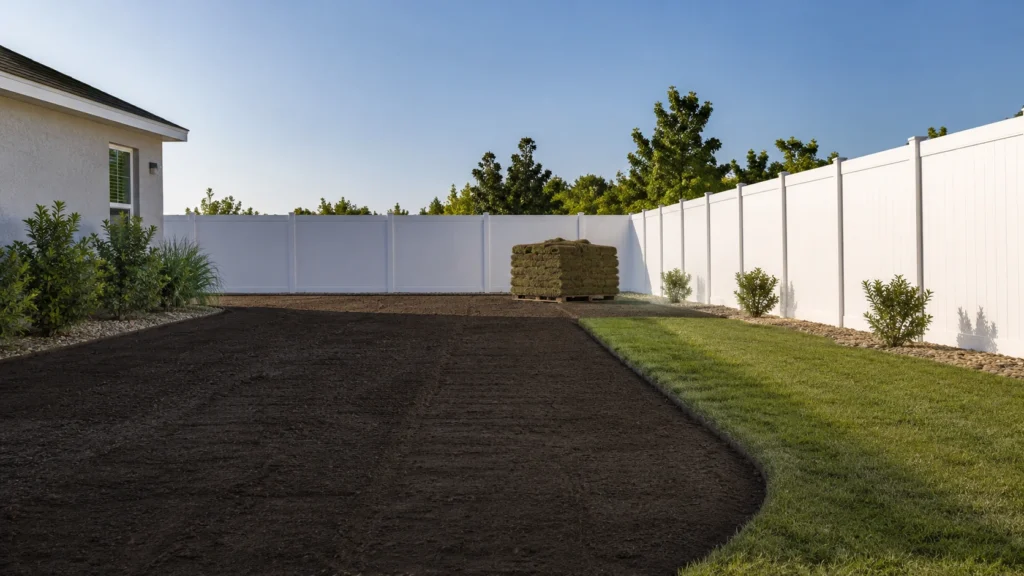
Establishing either turf requires identical groundwork. Do not throw expensive sod over compacted dirt and expect it to survive.
- Kill the Existing Vegetation: Spray the entire yard with a 41% Glyphosate non-selective herbicide. Mix 2.5 oz per gallon of water in your backpack sprayer. Coat the leaves evenly. Wait exactly 14 days for the root systems of the old grass and weeds to die completely.
- Till and Amend the Soil: Rent a rear-tine tiller and break up the top 4 to 6 inches of soil. Broadcast a starter fertilizer directly onto the tilled dirt. Apply 10 lbs per 1,000 sq ft to give the new roots immediate access to phosphorus.
- Lay the Sod: Start along a straight edge like a driveway or sidewalk. Lay the sod pieces tightly against each other without overlapping the edges. Stagger the joints in a brick-like pattern to prevent water from carving runoff channels between the seams.
- Roll the Yard: Push a water-filled lawn roller over the fresh sod. You must ensure perfect contact between the roots and the topsoil to prevent air pockets from drying out the bottom of the turf.
- Water Aggressively: Set your irrigation system to run for 15 minutes, three times a day. Keep the sod soaked like a wet sponge for the first 14 days. Once the grass resists when you gently tug a corner, drop the watering to once a day.
- First Mow and Chemical Block: Wait until the grass reaches 3.5 inches tall before mowing. Bag the clippings for the first cut. After 30 days, apply a pre-emergent herbicide. For Zoysia, apply Prodiamine at 0.4 oz per 1,000 sq ft. For St. Augustine, apply a granular Atrazine weed-and-feed to block winter weeds without stressing the broad blades.
Professional vs. DIY
Installing sod is back-breaking labor. A pallet of sod weighs over 2,000 lbs, and warm-season grasses must be laid within 24 hours of delivery before they overheat and die on the pallet.
| Factor | DIY | Professional |
| Cost | $$ | $$$$ |
| Speed | Weeks | Days |
| Effectiveness | Moderate | High |
| Risk | Moderate | Low |
Tackling a 1,500 sq ft front yard is a reasonable DIY weekend project if you rent a tiller and enlist two friends. For anything over 3,000 sq ft, hire a professional landscape crew. Professionals have the skid steers to properly grade the soil away from your foundation and the manpower to lay 10 pallets of sod before the midday sun cooks the exposed roots.
Common Misdiagnosis
Most homeowners mistake Centipedegrass for St. Augustine. They both feature lighter green, broad blades and spread via thick surface runners. Apply the wrong herbicide, and you will destroy your lawn. Centipede leaves alternate along the runner, while St. Augustine leaves grow opposite each other. St. Augustine handles coastal salt spray effortlessly; Centipede requires acidic, sandy soil and dies quickly near the coast.
Zoysia is frequently confused with common Bermudagrass. Both form incredibly dense, fine-bladed mats. Pull a runner from the ground. Bermudagrass has small hairs right where the blade meets the stem (the ligule), and the leaf edges feel slightly rough. Zoysia blades are completely smooth. Zoysia handles partial shade fairly well, while Bermuda will aggressively die off near fences, structures, or any shadow cast in the yard.
Prevention Tips
Keeping your chosen turf dominant requires specific seasonal habits. St. Augustine thrives when you mow high. Keep your mower deck locked at 3.5 to 4 inches. The tall canopy shades the soil, blocking crabgrass seeds from germinating and retaining soil moisture during 95°F August heat waves.
Zoysia demands mechanical intervention to stay healthy. Because it creates thatch incredibly fast, rent a core aerator every May. Punching 2-inch plugs out of the soil breaks through the thatch layer, allowing oxygen and water to reach the roots. Keep Zoysia mowed low, right around 1.5 to 2 inches, using a sharp blade. Dull mower blades tear the stiff Zoysia leaves, leaving ragged white tips that invite fungal diseases like Brown Patch during humid spring nights.
Pro-Tips Box: Herbicide selection makes or breaks these specific turfs. I have seen homeowners torch a perfect St. Augustine lawn by spraying standard 2,4-D broadleaf weed killer in 90°F weather. If you run St. Augustine, rely strictly on Atrazine applied in early spring before temperatures exceed 85°F. For Zoysia, Quinclorac (Drive XLR8) is your best friend for killing mature crabgrass. Mix it at 1.45 oz per gallon with a methylated seed oil surfactant. Zoysia tolerates Quinclorac perfectly, but spray that same mix on St. Augustine and you will stunt its growth for an entire season.
People Also Ask
Which grass requires more water, St. Augustine or Zoysia?
St. Augustine demands significantly more water. It has poor drought tolerance and requires 1 to 1.5 inches of water per week to maintain its dark green color. Zoysia develops an incredibly deep root system and can survive extended droughts by going dormant, returning to life once rain falls.
Can I mix St. Augustine and Zoysia grass in the same yard?
Never mix the two. They have conflicting maintenance requirements. Zoysia requires low mowing heights (1.5 inches), which will scalp and kill St. Augustine. St. Augustine requires high mowing (3.5 inches), which will suffocate Zoysia. Eventually, the more aggressive Zoysia will choke out patches of St. Augustine, leaving an ugly, uneven yard.
Does Zoysia grass choke out weeds better than St. Augustine?
Yes. Zoysia grows incredibly dense, creating a thick carpet that physically blocks sunlight from reaching the soil. This prevents weed seeds from germinating. St. Augustine grows taller and looser, requiring strict pre-emergent herbicide applications because broadleaf weeds can easily establish themselves between the surface runners.
What to Read Next
Maintaining a flawless warm-season lawn requires more than just water and fertilizer. Soil compaction directly ruins root expansion, which is why knowing exactly when should you aerate your lawn based on your grass type prevents severe thatch buildup. Core aeration guarantees your expensive treatments actually penetrate the soil surface instead of running off into the street.