
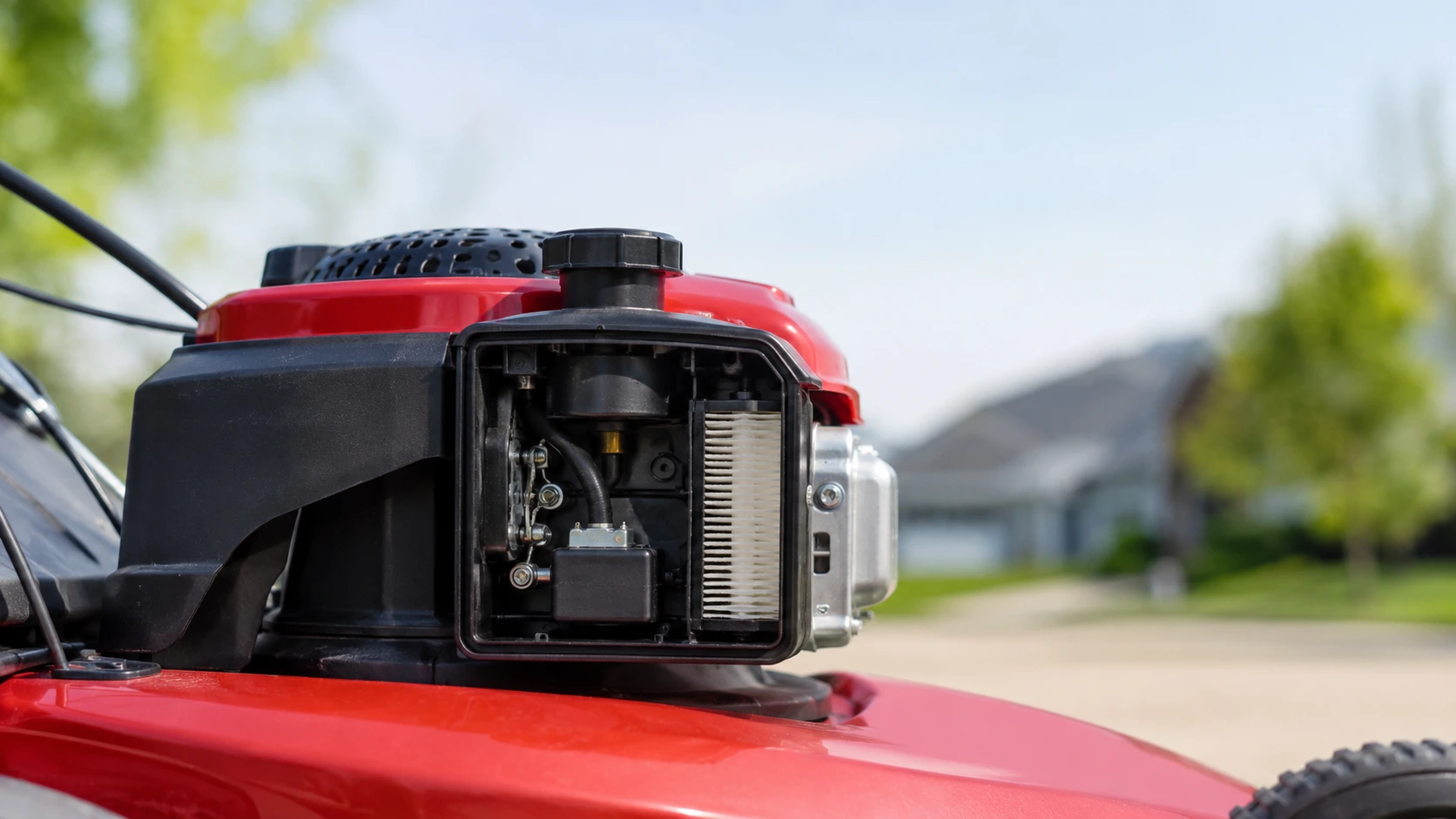
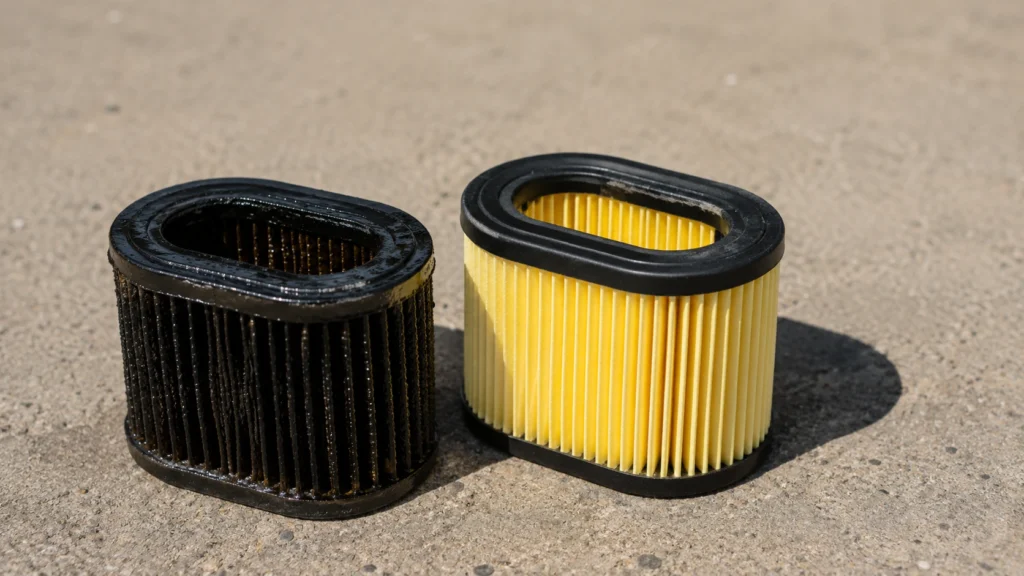
If you find oil in your lawn mower air filter, you either tipped the mower with the carburetor facing down, or you significantly overfilled the crankcase. The oil bypasses the breather tube and saturates the paper or foam filter, choking the engine of oxygen. You need to remove the ruined filter, clean the plastic housing with a degreaser, check the spark plug for oil fouling, and install a brand-new filter before attempting to start the mower again.
Common Mistakes & Wasted Money
The absolute most common error homeowners make is tilting their push mower on its side to scrape clumped grass from the deck without checking which way the engine is facing. If you tilt the mower so the air filter and carburetor are pointed toward the ground, gravity pulls the engine oil straight through the crankcase breather tube directly into the intake. I see this at least five times a week during peak mowing season.
Another major issue is “topping off” the oil blindly. Lawn mower crankcases are small—most only hold 18 to 20 oz of SAE 30 oil. Adding oil without wiping the dipstick and checking the fill line often leads to overfilling. When the engine heats up and builds pressure, that excess oil has nowhere to go but out through the breather valve, blowing back into the air filter box.
Homeowners panic when they see white or blue smoke billowing from the exhaust after doing this and assume they blew a head gasket. Do not take it to a small engine repair shop yet and pay a $150 diagnostic fee. In 95% of cases, the engine is perfectly fine, and you just need a $6 replacement part and ten minutes of labor.
Required Tools & Materials
You do not need specialty tools for this repair. Keep these items on hand:
- Socket set or nut driver (usually 5/16-inch or 3/8-inch for the housing cover)
- Exact replacement air filter for your engine model (Briggs & Stratton, Honda, or Kohler)
- Heavy-duty shop towels
- A mild degreaser like Simple Green
- Spark plug wrench (5/8-inch or 13/16-inch)
- SAE 30 or 10W-30 motor oil (if a top-off is actually needed)
Seasonal Timing & Conditions
You usually encounter this issue right at the start of spring when doing your annual tune-up, or in mid-summer when trying to clean a clogged mower deck. If you are cutting wet grass in the morning, the deck clogs faster, tempting you to tip the mower more frequently. Always scrape your deck on a flat driveway, never on an incline, to prevent oil from sloshing toward the breather tube.
The Execution
Step 1: Remove and Inspect the Filter
Pop off the plastic cover housing. If you have a pleated paper filter and it is saturated with oil, throw it in the trash immediately. You cannot salvage a paper filter once oil clogs the micropores. If your mower runs a sponge-like foam filter, you can squeeze it out into a shop towel, wash it thoroughly, and reuse it once dry.
Step 2: Clean the Housing
The plastic air box behind the filter will be coated in a sticky layer of oil and dirt. Spray a shop towel with Simple Green and wipe out every crevice of the housing. Make sure the breather tube (the small rubber hose connecting the crankcase to the air box) is clear of heavy debris. Do not spray degreaser directly into the carburetor throat.
Step 3: Check the Spark Plug
Take your spark plug wrench and pull the plug. If oil flooded the intake, it likely coated the spark plug electrode as well. A fouled plug will prevent the mower from sparking. Wipe the electrode clean with a dry rag. If the gap is packed with thick, sludgy oil, replace the plug entirely (usually a $4 part like an NGK BPR6ES).
Step 4: Correct the Oil Level
Put the mower on level ground. Pull the dipstick, wipe it, reinsert it fully, and pull it again. If the oil is above the hash marks, you must drain the excess. You can use a fluid extractor pump or tip the mower (correctly, this time) over an oil drain pan until the level drops into the safe operating zone.
Step 5: Start the Engine
Install the new filter and secure the cover. Start the mower outside in a well-ventilated area. It will likely blow a thick cloud of white or bluish smoke for 3 to 5 minutes as the engine burns off the residual oil sitting in the combustion chamber and muffler. Let it run until the exhaust clears.

Professional vs. DIY
| Feature | DIY Approach | Professional Repair Shop |
| Cost | $5 – $15 | $80 – $150 |
| Speed | 10 minutes | 1 – 2 weeks |
| Effectiveness | High | High |
| Risk | Low | Low |
Fixing an oil-soaked air filter is a mandatory DIY skill. Taking a mower to a shop for this wastes your time and money. The only scenario where you need a professional mechanic is if the engine is “hydrolocked.” If you pull the starter rope and it violently yanks back out of your hand, or won’t pull at all, there is so much oil in the cylinder that the piston cannot compress it. While you can clear a hydrolock yourself by pulling the spark plug and cranking the engine to shoot the oil out, it makes a massive mess and scares most homeowners. If you are uncomfortable dealing with a flooded cylinder, haul it to your local small engine shop.
Prevention Tips
- Always tilt the mower so the spark plug is pointing straight up to the sky, or tilt it backward on its rear wheels.
- Never add more than 2 oz of oil at a time when topping off.
- Change your oil when the engine is warm, but let it sit for five minutes on flat ground before checking the final level on the dipstick to ensure all oil has drained into the pan.
People Also Ask
Can I run my lawn mower without an air filter?
No. Running the engine without a filter pulls abrasive dust and grass clippings directly into the carburetor and cylinder, which will score the piston rings and ruin the engine permanently in a matter of hours.
Why is my lawn mower smoking white after I changed the filter?
Residual oil is still trapped inside the muffler and combustion chamber. Let the mower run at full throttle in an open space for 5 to 10 minutes, and the smoke will gradually disappear as the oil burns off.
How often should I change my lawn mower air filter?
Replace paper air filters once per mowing season, or after 25 hours of operation. If you mow in highly dusty conditions or have a large yard, you may need to replace it twice a season.
What to Read Next
While you are maintaining your equipment, keeping your engine breathing properly is only half the battle; if your blade is dull, your yard will still look terrible, which is why understanding why your lawn mower leaves uncut grass will help you achieve a clean, professional cut every weekend.
Great content! Keep up the good work!