
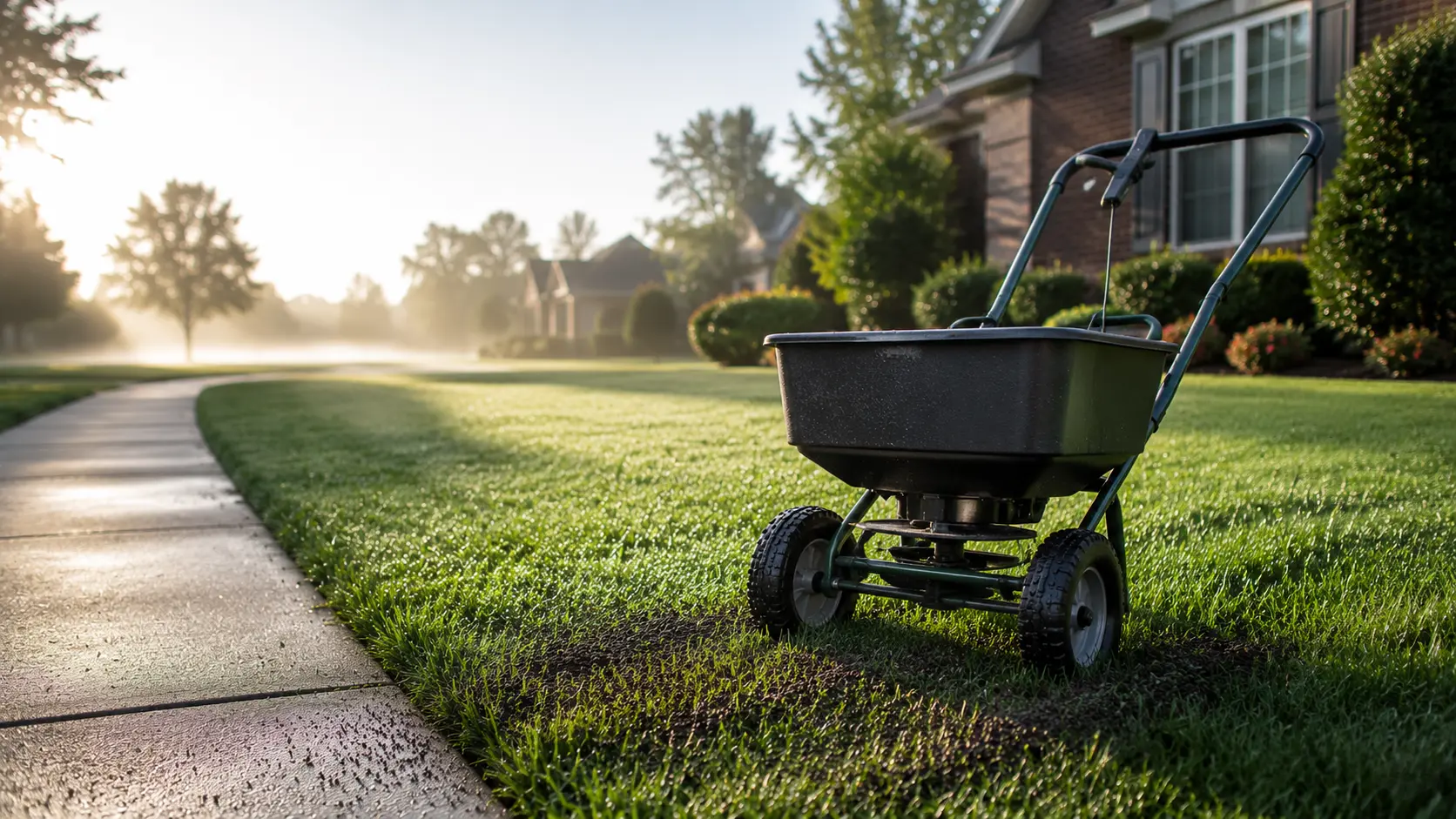
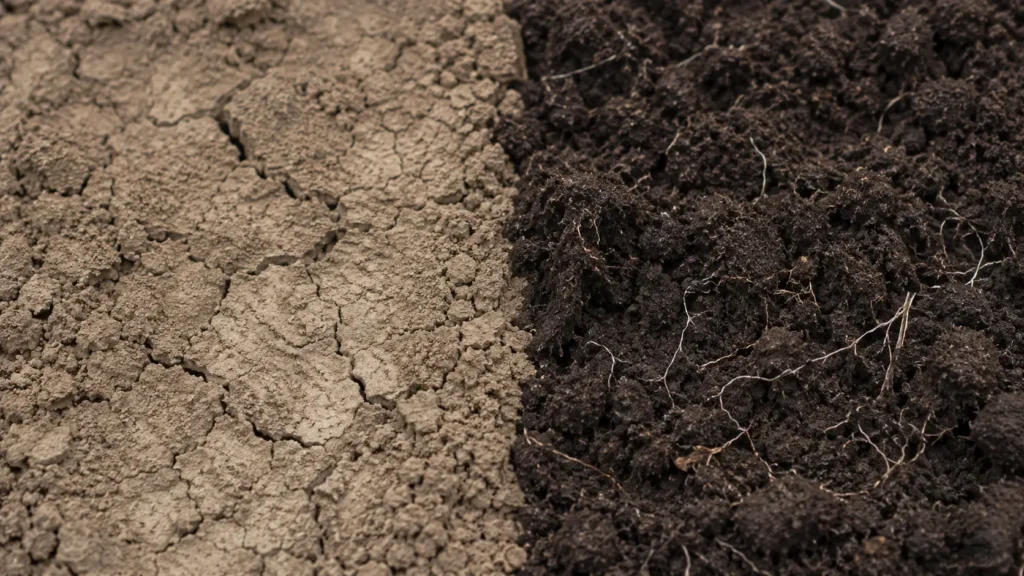
Humic acid is a carbon-rich soil conditioner that chelates (binds to) locked-up nutrients in your soil, making them instantly available for your grass roots to absorb. It breaks down compacted clay, increases water retention in sandy soils, and feeds beneficial microbes, essentially acting as a multiplier that makes your regular fertilizers work up to 30% more effectively.
Required Tools & Materials
You need specific products to alter your soil structure effectively. Humic acid comes in dry granular and liquid formulations, and your choice depends on the size of your yard and your application equipment.
- Granular Humic Acid: The Andersons Humic DG or Simple Lawn Solutions granular blend (excellent for high-clay soils).
- Liquid Humic Acid: BioAdvanced Soil Conditioner or a high-concentration concentrated liquid like GS Plant Foods Liquid Humic Acid.
- Application Equipment: A quality broadcast spreader (like the Scotts Turf Builder EdgeGuard) for granular, or a 2-gallon pump sprayer / hose-end sprayer for liquid concentrate.
- Measuring Gear: A dedicated 16 oz measuring cup (never reuse kitchen cups for yard products).
The Execution
Conditioning your soil requires precision. Dumping raw carbon onto your lawn haphazardly will not force a green-up; you have to apply it so it physically reaches the root zone.
Phase 1: Product Calibration
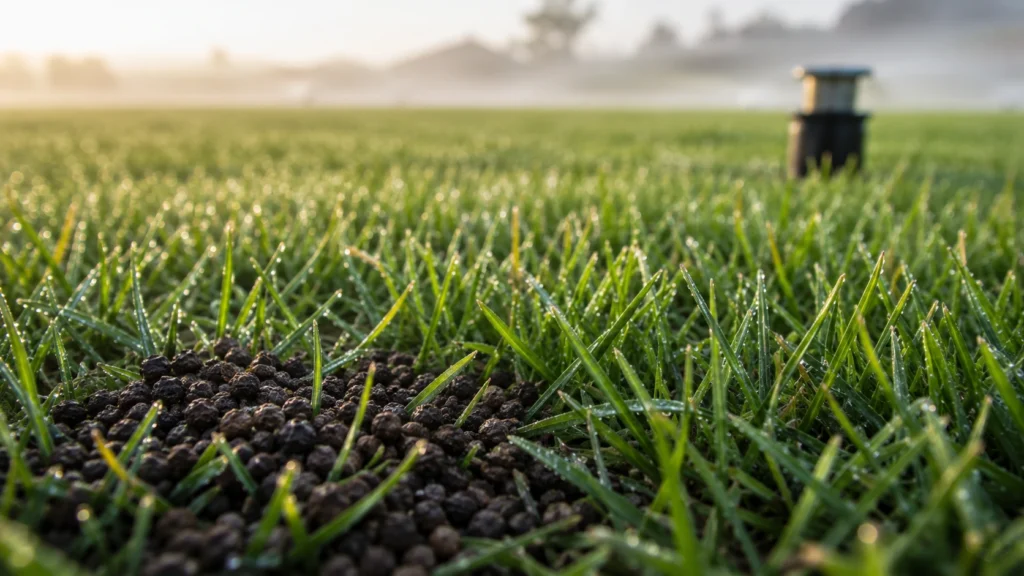
If you choose granular like Humic DG, set your broadcast spreader to deliver roughly 1 to 2 lbs per 1,000 sq ft. For liquid applications, mix 2 to 3 oz of humic acid concentrate per gallon of water in your pump sprayer. One gallon of mixed solution should cover about 1,000 sq ft of lawn. Liquid products absorb faster through the leaf tissue (foliar absorption), while granular products strictly target the soil base.
Phase 2: Application
Walk at a steady pace of about 3 mph. Overlapping your wheel marks by a few inches guarantees you do not leave untreated stripes in the yard. I see guys rushing this step all the time, resulting in a patchy lawn where only half the root system gets the benefit of unlocked nutrients.
Phase 3: Watering In
Granular humic acid requires immediate watering. Apply 0.25 to 0.5 inches of water using your irrigation system or a sprinkler within 24 hours. This water activates the granules, breaking them down so they can penetrate the thatch layer and reach the topsoil. Liquid applications do not require heavy watering, but a light 10-minute misting pushes the product off the grass blades and into the soil where the microbial action actually happens.
Seasonal Timing & Conditions
You get the highest return on your investment when your grass is actively growing and hungry for nutrients.
For cool-season grasses (Kentucky Bluegrass, Fescue, Perennial Ryegrass), target your primary applications in early spring when soil temperatures consistently hit 55°F, and again in early fall. Warm-season grasses (Bermuda, Zoysia, St. Augustine) benefit most from late spring applications just as they break full dormancy, followed by a mid-summer booster. Apply humic acid early in the morning or late in the evening. Spraying liquids during a 90°F afternoon bakes the product onto the leaf blade, rendering it useless.
Common Mistakes & Wasted Money
A massive mistake homeowners make is applying humic acid directly alongside a heavy application of fast-release synthetic nitrogen. Because humic acid dramatically increases the root system’s ability to absorb nutrients, hitting the grass with a 30-0-0 fertilizer on the same day often leads to aggressive nitrogen burn. The grass simply takes in too much, too fast.
Another frequent failure is expecting humic acid to act like fertilizer. It contains zero nitrogen, phosphorus, or potassium. If your yard is entirely depleted of nutrients, humic acid has nothing to “unlock.” You will wait weeks for a dark green color that will never arrive.
Pro-Tips Box: If you are dealing with severely compacted clay in a new construction neighborhood, applying liquid humic acid at 4 oz per gallon two days after mechanical core aeration works wonders. The open aeration plugs allow the carbon to penetrate directly into the root zone, speeding up the breakdown of the clay wall. I combine this with a liquid kelp extract to push rapid root expansion before the summer heat hits.
Professional vs. DIY
| Feature | DIY Approach | Professional Service |
| Cost | $20 – $45 per application | $80 – $150 per treatment |
| Speed | 1 hour | Dependent on scheduling |
| Effectiveness | High (if watered in correctly) | High |
| Risk | Very Low | Zero |
Applying humic acid yourself is incredibly low-risk. Unlike harsh herbicides (like Atrazine or Triclopyr) that can destroy your yard if mixed improperly, humic acid will not burn your grass if you over-apply slightly. Professional companies like TruGreen and Orkin offer soil amendment packages that include humic acid, usually bundled with standard fertilization. Unless you simply lack the time, buying a bag of The Andersons Humic DG and pushing a spreader yourself saves a significant amount of money with identical results.
Prevention Tips
- Test your soil pH every two years; humic acid works best when soil pH is balanced between 6.0 and 7.0.
- Leave grass clippings on the yard after mowing to naturally cycle carbon and organic matter back into the topsoil.
- Avoid driving heavy equipment or vehicles on the grass, as physical compaction defeats the structural improvements created by humic applications.
People Also Ask
Can I apply humic acid and fertilizer at the same time?
Yes, but you should reduce your fertilizer rate by about 20% to 30%. Humic acid increases nutrient uptake efficiency, meaning a standard dose of nitrogen might burn the grass if applied simultaneously.
How long does humic acid take to work on a lawn?
You will typically see improved soil moisture retention in 2 to 3 weeks. Visual greening of the grass blade takes about 3 to 4 weeks as the locked-up iron and nitrogen finally reach the roots.
Can you put too much humic acid on a lawn?
While extremely difficult to burn grass with humic acid, over-applying wastes money. The soil can only process a specific amount of carbon at once; any excess simply sits in the thatch layer doing nothing.
What to Read Next
Improving your soil’s structure is a multi-step process. While humic acid chemically alters the soil profile to relieve compaction and release nutrients, you often need mechanical intervention first, which is why knowing when should you aerate your lawn before the season starts makes all the difference in your yard’s long-term health.