
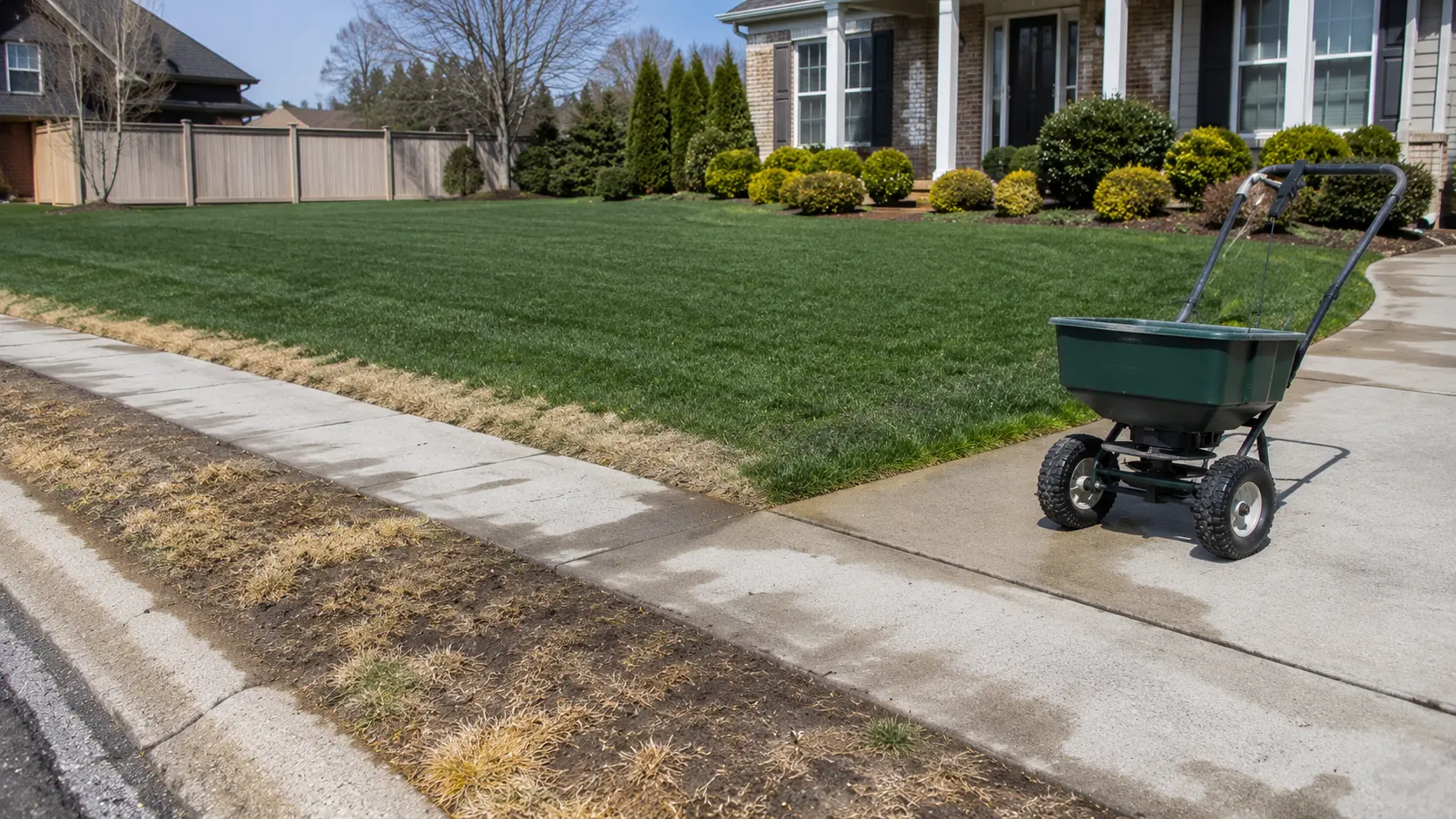
Gypsum (calcium sulfate) is highly effective at repairing sodic soils damaged by winter rock salt runoff, coastal sea spray, or pet urine. It does not relieve standard mechanical soil compaction in heavy clay yards; fixing hard, compacted dirt requires physical core aeration. Applying gypsum to normal, non-sodic soil won’t kill your grass, but it wastes time, money, and effort while leaving your underlying drainage issues completely unsolved.
Common Mistakes & Wasted Money
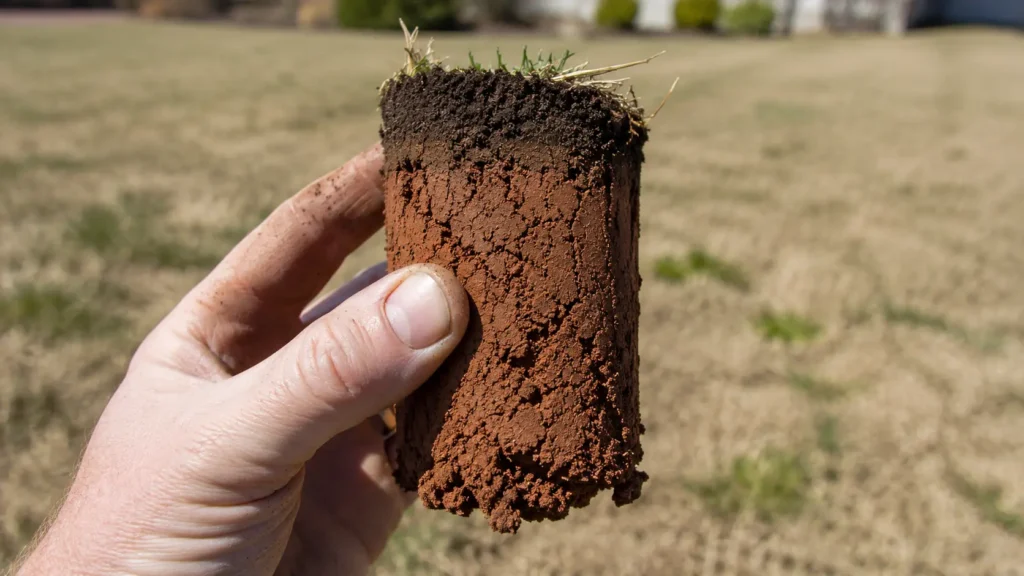
I see homeowners at hardware stores every spring loading up 40-lb bags of pelletized gypsum because the label says “soil loosener.” They spread it over a heavy clay lawn expecting it to act like liquid aeration. Months later, water still pools on the surface after a heavy rain.
Gypsum only loosens soil through a specific chemical reaction: the calcium in the gypsum physically displaces sodium ions binding the soil particles together. If your soil is locked up because of high salt content—like the first 5 feet of grass next to a sidewalk heavily treated with rock salt all winter—gypsum flushes that sodium out. If your yard is compacted because of heavy foot traffic, riding mowers, or naturally dense clay, gypsum does absolutely nothing to soften it. Applying 100 pounds of product per 1,000 sq ft on standard clay is just throwing money into the dirt. Verify you actually have a high-sodium problem before treating.
Required Tools & Materials
- Pelletized Gypsum: Granular calcium sulfate (brands like Jonathan Green Magi-Cal or generic agricultural gypsum).
- Broadcast Spreader: Walk-behind spreader (Scotts Elite or similar) with adjustable dial settings.
- Soil Test Kit: Mail-in laboratory kit to confirm sodium (Na) levels and Cation Exchange Capacity (CEC).
- Irrigation Setup: Oscillating sprinkler or in-ground system capable of delivering 0.5 to 1 inch of water.
Pro-Tips Box: Never buy powdered agricultural gypsum for a residential yard application unless you want your property to look like a powdered donut. It blows everywhere and clogs residential spreaders instantly. Always buy the pelletized version. If you are treating dog urine spots, heavily flood the spot with a hose for 5 minutes first, then apply a handful of gypsum. The water moves the nitrogen, and the gypsum neutralizes the salts.
Seasonal Timing & Conditions
Apply gypsum in the early spring or late fall. Spring applications are ideal in the Midwest and Northeast to flush out the sodium chloride (rock salt) that accumulated over the winter near driveways and roads. Fall applications work well for general soil amending if a soil test dictates high sodium levels across the entire yard.
Never apply gypsum on bone-dry, drought-stressed soil without immediate irrigation. The pellets require significant moisture to break down the calcium sulfate into the soil profile. The absolute best time to put down gypsum is immediately following mechanical core aeration, sweeping the pellets directly into the aeration holes so the chemical reaction occurs deep in the root zone.
The Execution
1. Confirm Sodium Levels
Send a soil sample to your local university extension or use a professional mail-in kit. You are looking specifically for a high ESP (Exchangeable Sodium Percentage). If your ESP is above 15%, your soil is sodic and requires gypsum. If it’s below that, skip the product.
2. Calibrate the Spreader
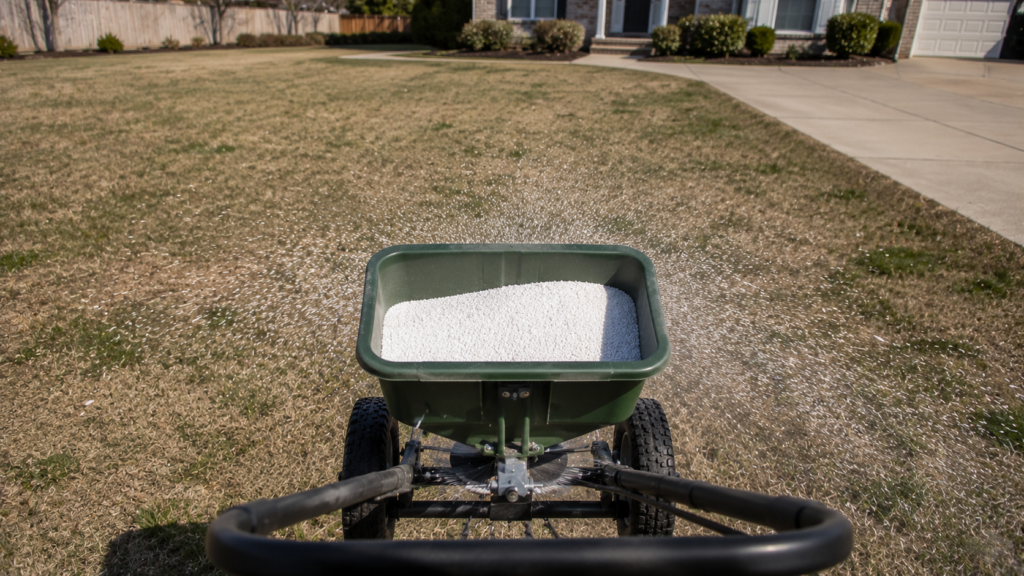
Set your broadcast spreader to deliver the correct volume. For moderate salt damage (like repairing winter street salt edges), apply at a rate of 40 to 50 lbs per 1,000 sq ft. For severe sodic soil remediation across a whole yard, you may need up to 100 lbs per 1,000 sq ft, split into two separate 50 lb applications spaced a month apart.
3. Execute the Application Pattern
Walk at a steady 3 mph pace. Start by doing a “header pass” around the perimeter of the area you are treating. Then, work back and forth across the yard in straight lines, overlapping the tire tracks slightly to ensure even coverage of the pellets.
4. Water It In Aggressively
Gypsum requires heavy watering to push the displaced sodium below the root zone. Immediately run your sprinklers to apply at least 0.5 inches of water. Do not expect overnight results. It takes 30 to 60 days of consistent watering and rainfall for the calcium to fully exchange with the sodium and restructure the soil.
Professional vs. DIY
| Factor | DIY Approach | Professional Service |
| Cost | $15–$25 per 40-lb bag | $100–$250 per treatment |
| Speed | 1–2 hours for an average yard | 30 minutes |
| Effectiveness | High (if soil is properly tested) | High (pro-grade granulars) |
| Risk | Low (non-toxic to turf) | Low |
Handling gypsum is a straightforward DIY task. The material is heavy, but running a walk-behind spreader requires minimal technical skill. You should only hire a professional if your property exceeds one acre and requires a tractor-pulled topdresser to move hundreds of pounds of material, or if you need them to pull professional soil plugs to accurately diagnose a severe sodic condition.
Prevention Tips
Stop the salt damage before it happens. If you live in a region with heavy snowfall, switch from standard rock salt (sodium chloride) to calcium chloride or magnesium chloride for your driveway and walkways. These alternatives melt ice at lower temperatures and do not bind the soil structure of the adjacent grass when the snowbanks melt in the spring. Periodically deep-water the edges of your lawn near the street to flush accumulated municipal salts deep past the root zone.
People Also Ask
Will gypsum raise or lower my soil pH?
Gypsum is pH neutral. It does not significantly raise or lower the acidity or alkalinity of your soil. If you need to raise your pH, use agricultural lime; if you need to lower it, use elemental sulfur.
Can I apply gypsum and fertilizer at the same time?
Yes, you can apply gypsum alongside regular turf fertilizers. Since gypsum does not alter the soil pH, it will not interfere with the uptake of nitrogen, phosphorus, or potassium by the grass roots.
Does gypsum kill lawn weeds?
No, gypsum has absolutely no herbicidal properties. It will not kill crabgrass, dandelions, or any other weed. It only modifies soil structure by removing excess sodium.
What to Read Next
Most homeowners looking to soften hard, compacted clay dirt don’t actually need gypsum; they need mechanical relief to allow oxygen and water into the root zone, which is why knowing when should you aerate your lawn makes all the difference in reviving a struggling yard.