
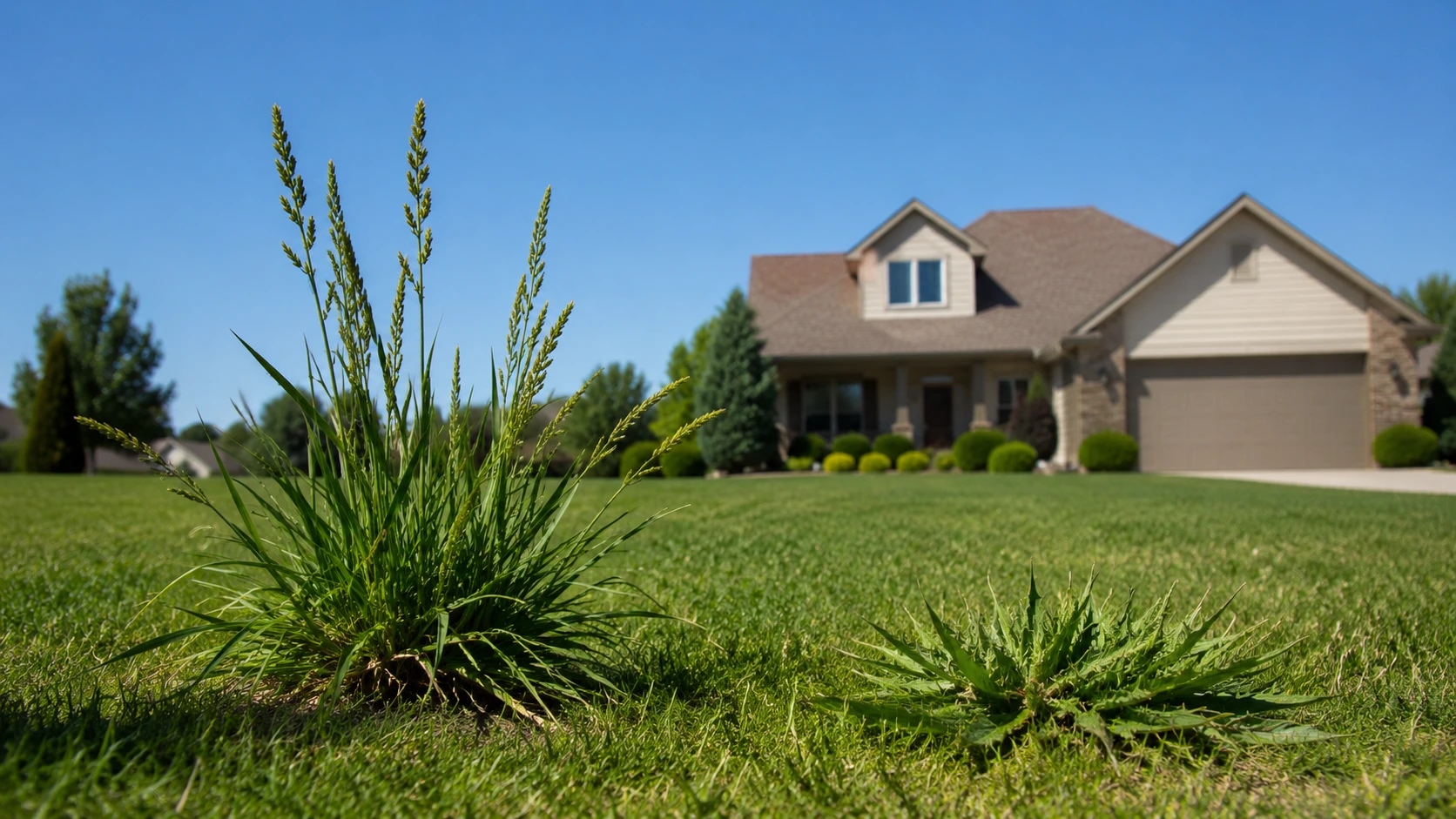
Dallisgrass is a perennial weed that grows in an upright, circular clump with deep rhizomes, surviving winter and returning every spring. Crabgrass is a summer annual that grows flat against the soil in a sprawling starburst pattern, dying off completely after the first hard frost. You cannot treat them the same way; crabgrass control relies heavily on spring pre-emergents, while permanently stopping dallisgrass requires aggressive post-emergent spot treatments to destroy its underground root system.
Identification & Misdiagnosis
Misidentifying these two grassy weeds is the fastest way to waste money on herbicides. I see homeowners spraying Quinclorac on dallisgrass every summer, baffled as to why the weed turns slightly yellow for a week and then bounces right back.
To tell them apart, look closely at the growth habit and the seed heads.
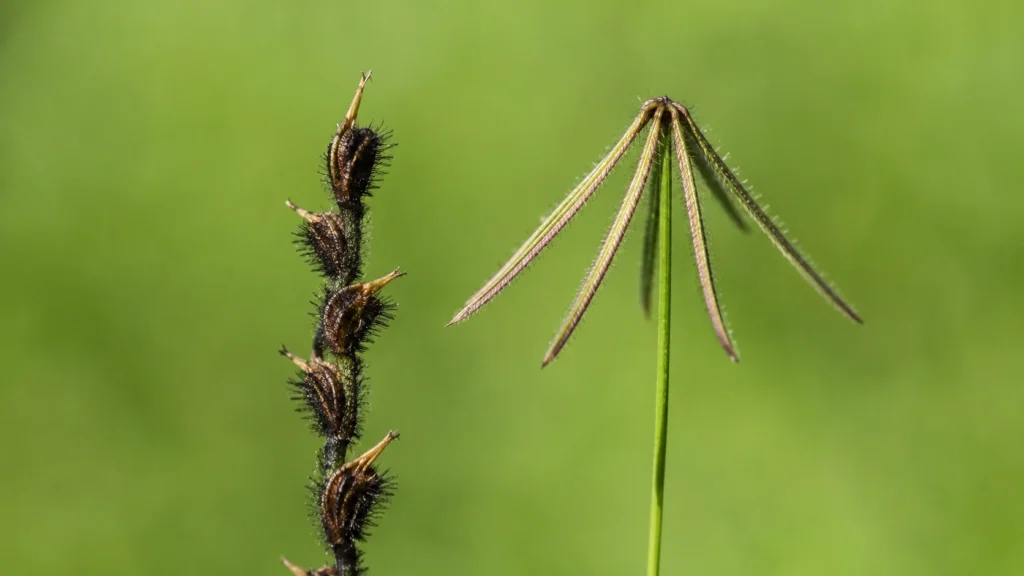
Crabgrass leaves are wider, lighter green, and often hairy near the base. The plant wants to hug the ground, spreading its tillers outward like a flattened spider. Its seed heads look like tiny helicopter rotors, with 3 to 5 spikes radiating from the exact same point at the top of the stem.
Dallisgrass leaves are slightly darker and usually smooth. It grows vertically in a dense, tough clump that poses a tripping hazard in your yard. The easiest giveaway is the seed head: dallisgrass produces 3 to 5 distinct spikelets that alternate down the side of the main stem, covered in tiny, fuzzy black hairs. If you see those black spots on the seeds, you are dealing with dallisgrass.
Pro-Tips Box: If you’re trying to ID a grassy weed in late winter or early spring before soil temps hit 55°F, it is almost certainly dallisgrass. Crabgrass hasn’t germinated yet. Stick a pocket knife into the base of the clump; if you hit a thick, woody, pinkish underground stem (rhizome), that confirms dallisgrass. Crabgrass only has shallow, fibrous roots.
Root Causes & Attractants
Both weeds are opportunists, but they exploit different weaknesses in your lawn.
Crabgrass thrives on bare soil, high heat, and sunlight. If you scalp your lawn down to 1 or 1.5 inches in the heat of July, you are rolling out the red carpet for crabgrass seeds. They also dominate the edges of concrete driveways and sidewalks, where the radiant heat bakes the soil and stresses your primary turfgrass.
Dallisgrass prefers heavy, compacted soils with poor drainage. It frequently shows up in low-lying areas of the yard that stay wet for days after a heavy rain. Because it spreads through underground rhizomes and seeds, a single clump left ignored near a downspout can quickly spawn a dozen new clumps throughout your lawn by next season.
Eradication Plan (Step-by-Step)
The strategy to eliminate these weeds diverges completely based on their life cycles.
Killing Crabgrass (The Annual)
Since crabgrass dies every winter, your primary weapon is stopping the seeds from sprouting.
- Pre-emergent Barrier: Apply Prodiamine (Barricade) or Dithiopyr (Dimension) in early spring just before soil temperatures reach 55°F. Mix 0.55 oz of Prodiamine 65 WDG per gallon of water to cover 1,000 sq ft. This creates a chemical blanket that halts root development. Cost: ~$25 for a season’s supply.
- Post-emergent Rescue: If crabgrass breaks through in summer, use a post-emergent containing Quinclorac (like Drive XLR8). Mix 1.45 fl oz per gallon of water, plus 0.55 fl oz of Methylated Seed Oil (MSO) surfactant. Expect the weed to curl and brown within 7 to 10 days.
Killing Dallisgrass (The Perennial)
This is a much tougher fight. Residential weed killers sold at big box stores generally fail against dallisgrass rhizomes.
- Chemical Control (Warm-Season Turf): If you have Bermuda or Zoysia, Celsius WG or Tribute Total are the professional standards. They are expensive (around $120+ per bottle) but effective. Follow the spot-treatment label rates exactly.
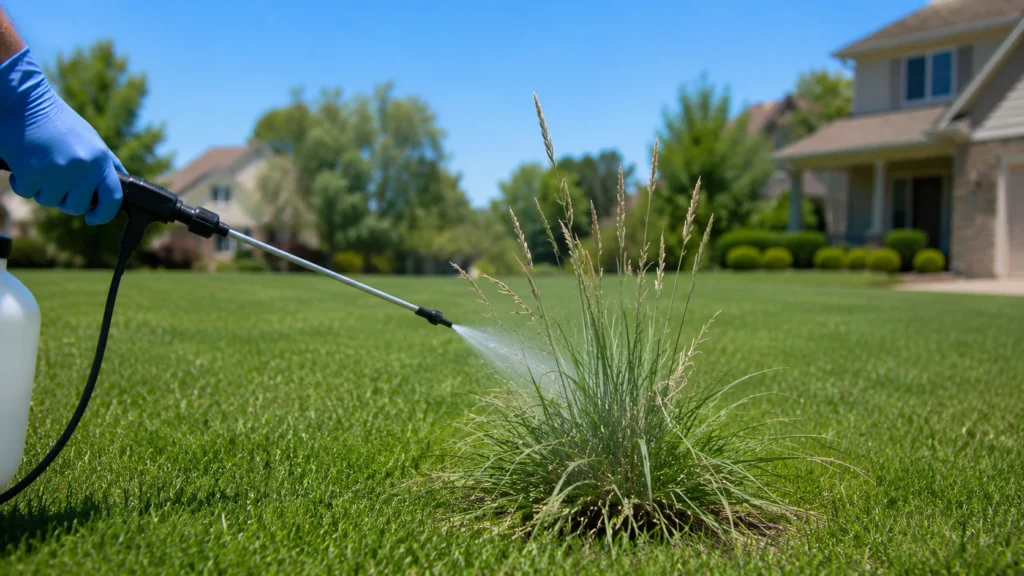
- Chemical Control (Cool-Season Turf): If you have Fescue or Kentucky Bluegrass, there are no highly effective, turf-safe selective herbicides for dallisgrass available to homeowners. Your best option is to put on a chemical-resistant glove, put a cheap cotton glove over it, dip your fingers in a 41% Glyphosate (Roundup) solution, and manually wipe the dallisgrass blades. This kills the weed to the root without killing the surrounding grass.
- Mechanical Removal: For just one or two clumps, use a specialized weed hound or a shovel. You must dig at least 4 inches deep to extract the entire rhizome. If you snap the stem and leave the root, it will regenerate in three weeks.
Pet & Child Safety Warnings
When treating either of these weeds, strict adherence to re-entry intervals is non-negotiable. Whether you are broadcasting Quinclorac for crabgrass or spot-painting Glyphosate on dallisgrass, keep all pets and children completely off the treated area until the liquid has dried thoroughly. On a 90°F afternoon, this might take 2 hours. On a humid, overcast 70°F morning, it can take up to 4 hours. Wet herbicide can be tracked inside on dog paws or absorbed through skin contact.
Professional vs. DIY
| Feature | DIY Approach | Professional Lawn Care |
| Cost | $30 – $150 (chemicals & sprayer) | $50 – $90 per application (annual plan) |
| Speed | Immediate action based on your schedule | Must wait for scheduled technician visits |
| Effectiveness | Excellent for crabgrass; poor for heavy dallisgrass | High; access to restricted-use herbicides |
| Risk | High risk of turf damage if over-applying | Low; techs are insured and calibrated |
Tackling crabgrass is a highly successful DIY project if you nail the pre-emergent timing. However, a severe dallisgrass infestation usually warrants calling a professional. The pro-grade chemicals required to kill perennial grassy weeds selectively (like MSMA, which is heavily restricted) are either illegal for residential broadcast application or prohibitively expensive for a homeowner to buy just to treat a few patches.
Prevention Tips
- Mow High: Keep your mower deck set between 3 and 4 inches for tall fescue, and at the highest recommended setting for your specific warm-season grass. Tall grass shades the soil, dropping the temperature and starving weed seeds of the sunlight they need to germinate.
- Fix Soil Compaction: Core aerate your lawn every fall. Dallisgrass loves hard, compacted soil where your turf struggles to grow roots.
- Overseed: Weeds fill a vacuum. A dense, thick stand of desirable turf is the strongest pre-emergent on earth. Overseed bare patches every September.
People Also Ask
Does pulling crabgrass spread seeds?
Only if the weed has already developed its seed heads (the helicopter-like structures). If you pull it early in the summer before it goes to seed, it will not spread. Ensure you pull the entire fibrous root system.
Will baking soda kill dallisgrass?
No. Baking soda is a contact phytotoxin that might temporarily burn the top foliage, but it will not penetrate the deep rhizomes. The weed will fully recover within a few weeks, and the excess sodium will severely damage your soil.
Can crabgrass survive the winter?
In the vast majority of the US, no. Crabgrass is a true summer annual that dies after a hard frost. However, in extreme southern climates (like South Florida) with no freezing temperatures, it can occasionally survive year-round.
What to Read Next
Correctly identifying the weeds in your yard dictates your entire treatment strategy, which is why understanding the visual cues between flatweed vs dandelion is just as critical as separating your grassy weeds before you fire up the sprayer.