
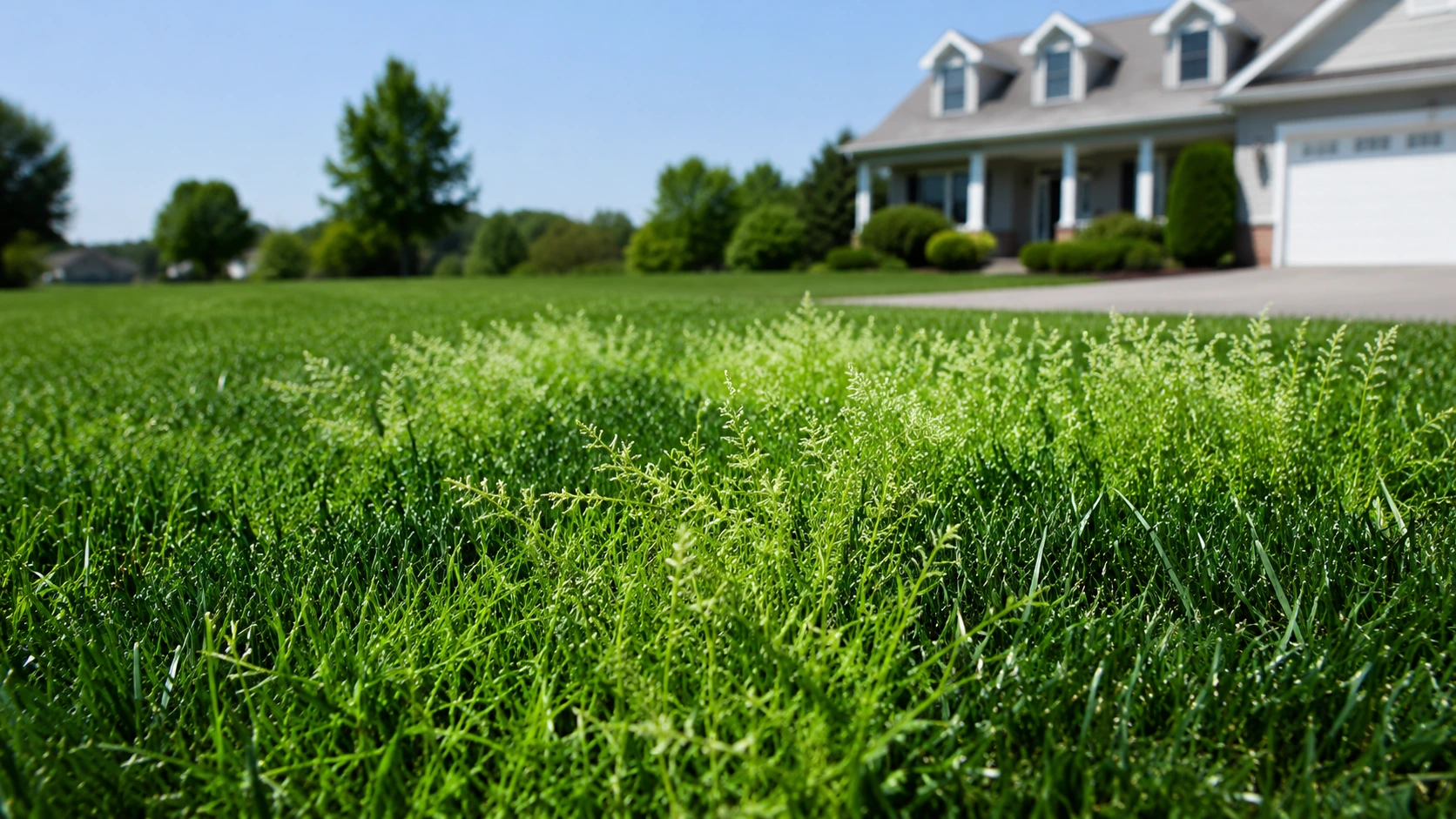
To effectively kill Poa annua (annual bluegrass), you must apply a pre-emergent herbicide like Prodiamine in late summer or early fall when soil temperatures drop to 70°F. If you are dealing with existing, sprouted Poa annua, post-emergent control requires non-selective herbicides like Glyphosate for spot treatments, or specific selective chemicals like Ethofumesate for cool-season lawns and Atrazine for warm-season turf.
Step 1: Pre-Emergent Barrier (The Only Guaranteed Method)
Poa is a winter annual. It germinates in the fall, overwinters as a small plant, explodes with thousands of seeds in the spring, and dies in the summer heat. Blocking the fall germination breaks the cycle entirely.
- Product: Prodiamine 65 WDG (active ingredient: Prodiamine) or Dithiopyr.
- Rate: 0.18 to 0.4 oz per 1,000 sq ft mixed in 1 gallon of water.
- Timing: Apply precisely when soil temperatures fall to 70°F and are trending lower (usually late August to mid-September).
- Cost: $20–$30 for a granular bag, or $60+ for concentrated WDG.
- Expected Result: You will not see any plant matter die on the surface. You simply won’t have an outbreak the following spring.
Step 2: Post-Emergent Selective Control (The Hard Path)
Killing existing Poa in cool-season grass like Fescue or Kentucky Bluegrass is notoriously difficult because both the weed and the turf are cool-season grasses. Standard broadleaf weed killers do absolutely nothing to it.
- For Cool-Season Lawns: Prograss (active ingredient: Ethofumesate). Apply at 1.5 to 2 oz per gallon of water per 1,000 sq ft. Requires 2 to 3 applications spaced 21 to 28 days apart in late fall.
- For Warm-Season Lawns (Bermuda/Zoysia): Image Kills Nutsedge (active ingredient: Imazaquin) or products containing Atrazine during full turf dormancy.
- Cost: Commercial-grade selective herbicides like Ethofumesate often run $150+ per bottle.
- Expected Result: Expect a 14 to 21-day delay before the weed begins yellowing and stunting.
Step 3: Non-Selective Spot Treatment (The Quick Fix)
If you only have isolated clumps scattered across the yard, the “glove of death” method is the fastest approach. You bypass the soil entirely and apply the chemical directly to the weed’s foliage without contaminating your good turf.
- Product: Roundup or a generic equivalent (active ingredient: Glyphosate 41%).
- Mix: 2 oz per gallon of water.
- Method: Wear a chemical-resistant glove, pull a cheap cotton glove over it, dip it in the mixture, and physically wipe the Poa annua blades.
- Cost: $15–$25.
- Expected Result: Complete death in 7 to 10 days.
Identification & Misdiagnosis
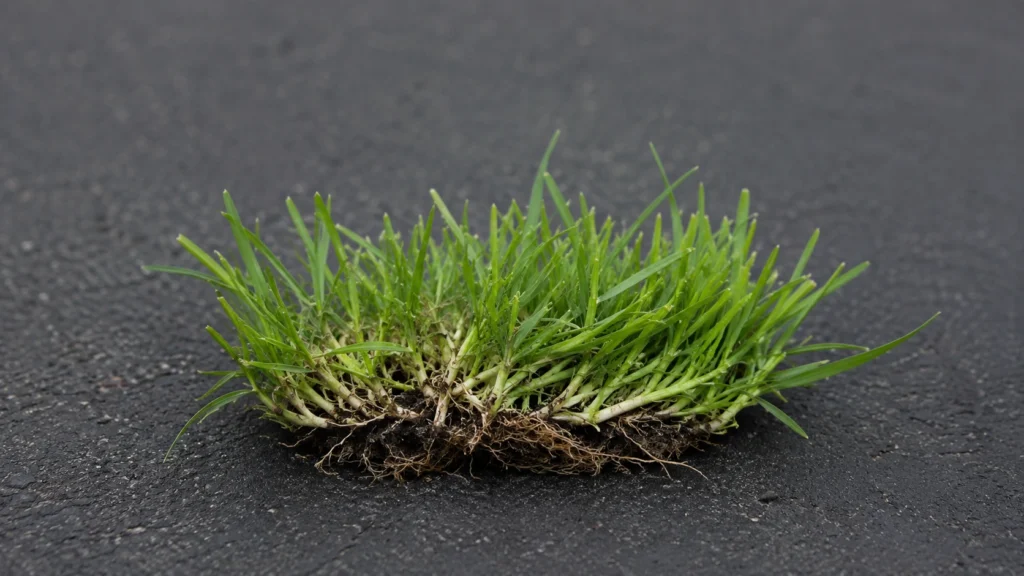
Most homeowners confuse Poa annua with young Kentucky bluegrass or tall fescue. The dead giveaway is the color and the rapid seedhead production. Poa annua grows in a bunch-type clump and is a shockingly bright, almost neon apple-green color that stands out aggressively against darker turf. In the spring, even when mowed down to 2 inches, it relentlessly shoots up hundreds of white, feathery seedheads almost overnight. Another critical identifier is the “boat-shaped” tip of the leaf blade.
I constantly see homeowners spraying weed-and-feed products on these bright green patches. Broadleaf herbicides target dicots like dandelions and clover. Poa annua is a monocot—a grass. Applying standard weed killers just fertilizes the weed and accelerates seed production.
Root Causes & Attractants
Poa annua thrives in compacted, poorly draining, and constantly wet soil. Because it has an extremely shallow root system, it easily dominates areas where your good turf struggles to send roots deep. Daily, light irrigation cycles keep the top half-inch of soil saturated, creating the perfect nursery for annual bluegrass seeds. Shade is another massive factor. Poa tolerates shade much better than Bermuda grass or Kentucky bluegrass, quietly overtaking the damp, shadowed corners of your yard where moisture lingers.
Pet & Child Safety Warnings
When applying pre-emergents like Prodiamine or potent post-emergents like Ethofumesate, keep all children and pets off the treated area until the spray has completely dried. This re-entry interval usually takes 2 to 4 hours depending on local humidity and wind. If you apply a granular pre-emergent and water it in, keep pets off until the grass blades are entirely dry. Dogs walking across wet, freshly treated turf will lick their paws, and ingesting these herbicides causes severe stomach upset and vomiting.
Professional vs. DIY
| Factor | Professional Service | DIY Approach |
| Cost | $60–$100 per application | $30–$150 total (chemicals) |
| Speed | Fast scheduling | Dependent on your free time |
| Effectiveness | High (Access to restricted chemicals) | Medium (Timing is often missed) |
| Risk | Low | High turf damage risk with post-emergents |
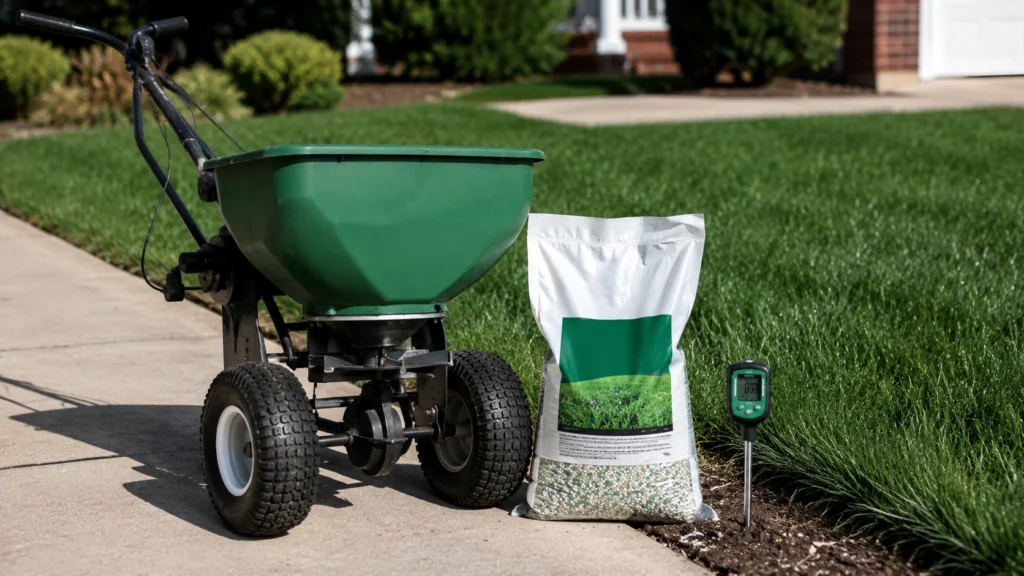
Tackling Poa annua preventatively with Prodiamine is a very manageable DIY project. You buy the chemical, load it in your broadcast spreader, and walk the yard at the right soil temperature. However, if your lawn is already 40% infested and you are trying to rescue cool-season turf, DIY post-emergent control carries significant risk. Products like Prograss cost a fortune upfront and demand strict calibration to avoid scorching your permanent grass.
If you are dealing with a massive outbreak, hiring a licensed technician for the fall and winter seasons is often cheaper than buying commercial-grade selective herbicides yourself. Professional crews have access to restricted tank mixes and equipment calibrated down to the exact ounce to ensure the Poa dies without collateral damage.
Prevention Tips
- Mow high: Keep your mower deck set at 3.5 to 4 inches. Tall grass canopies shade the soil surface, blocking the sunlight required for the thousands of dormant Poa annua seeds waiting to germinate.
- Water deeply and infrequently: Force your grass to grow deep roots by delivering 1 to 1.5 inches of water once or twice a week. Daily light watering caters perfectly to the shallow-rooted Poa.
- Bag your clippings in spring: When Poa annua is actively throwing up white seedheads, stop mulching your clippings. Bag them and dump them in the trash to physically remove the next generation of seeds from the yard.
People Also Ask
Does Poa annua die in the summer?
Yes, annual bluegrass is a winter annual. As soon as daytime temperatures consistently reach 85°F to 90°F, the shallow root system fails, and the plant naturally dies off, leaving brown, bare patches in your lawn.
Will baking soda kill annual bluegrass?
No. Baking soda acts as a contact desiccant that might burn the upper foliage temporarily, but it will not kill the crown or roots of the plant. It will also severely alter your soil pH and damage your surrounding turf.
How long do Poa annua seeds stay in the soil?
Annual bluegrass seeds are incredibly resilient and can remain viable in your soil for up to 5 to 6 years. This is why multi-year pre-emergent applications are mandatory for complete eradication.
What to Read Next
Timing your lawn maintenance is critical because soil disturbance can ruin your weed control efforts, which is why knowing when should you aerate your lawn before applying your fall pre-emergent makes all the difference.