
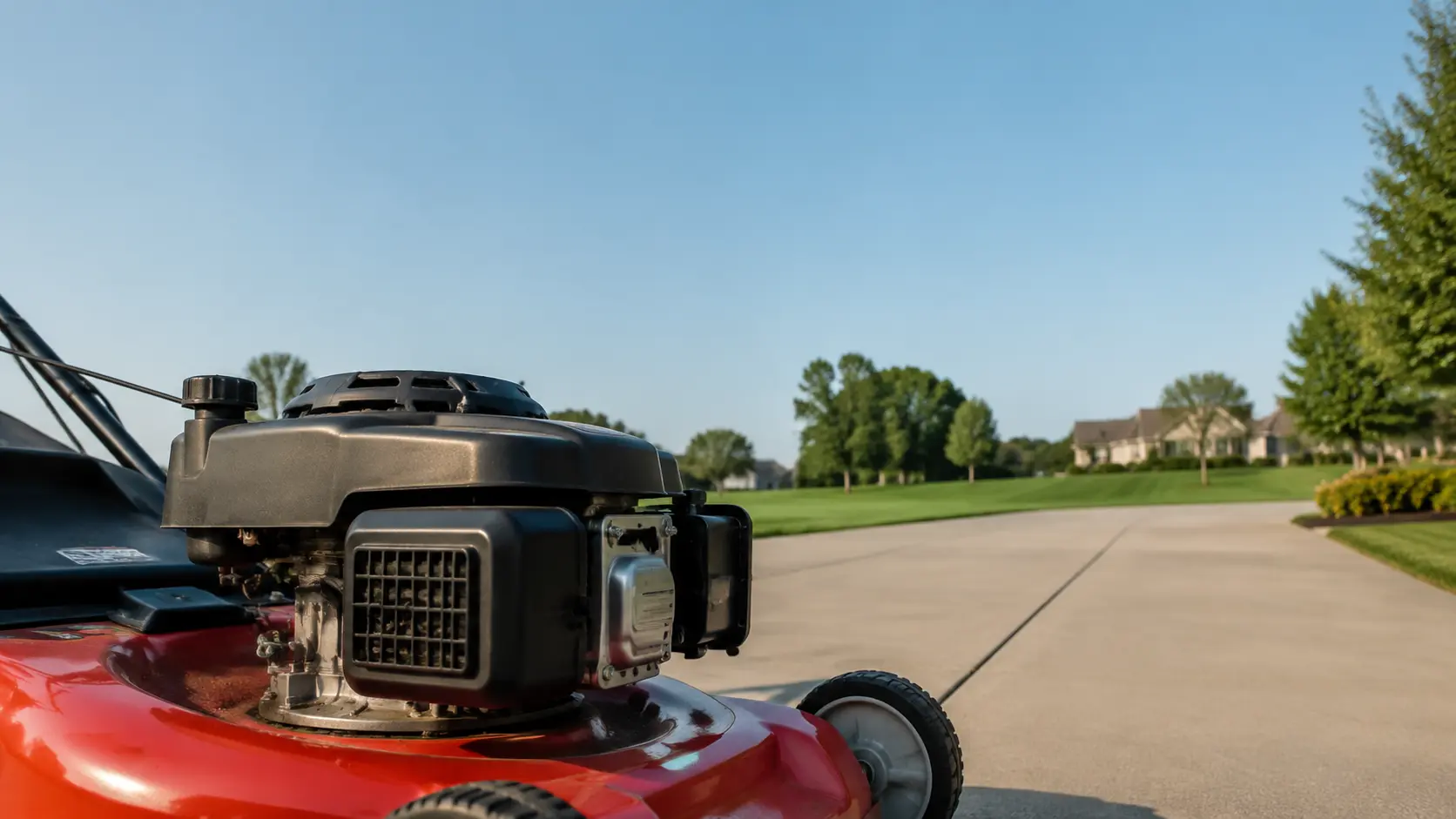
A lawn mower engine surging up and down—often called “hunting”—is almost always the result of a restricted fuel supply causing a lean fuel-to-air mixture. The engine starves for gas, prompting the mechanical governor to snap the throttle wide open to prevent stalling. The engine over-revs, the governor pulls back, and the exhausting cycle repeats itself. Fixing this requires clearing the restriction, which means cleaning out a clogged carburetor jet or replacing gummy gasoline.
Common Mistakes & Wasted Money
Many property owners instantly assume a surging engine means a blown seal or a dead motor, leading them to unnecessarily scrap a perfectly good machine. I pull salvageable mowers off suburban curbs every spring simply because the owner thought a revving engine meant the equipment was beyond repair.
The most frequent error is dumping fresh gas directly on top of old, water-logged ethanol gas from last season. Ethanol absorbs moisture from the air, causing phase separation inside your fuel tank over the winter. That separated water and sticky varnish gets sucked straight into the tiny jets of your carburetor, instantly clogging the system.
Another frequent mistake is spraying aerosol carburetor cleaner straight down the air intake while the engine is running. While this might temporarily smooth out the idle for a few seconds, it absolutely does not dissolve the hardened varnish blocking the main jet inside the float bowl. You are simply feeding the engine highly combustible fluid temporarily, masking the fuel starvation issue without fixing the root cause.
Required Tools & Materials
- Socket wrench set: Typically a 3/8-inch, 1/2-inch, or 10mm socket to drop the carburetor bowl.
- Carburetor cleaner: Aerosol spray like Gumout or B-12 Chemtool with the precision red straw attachment.
- Carb cleaning wires: A set of micro-wires or a stripped metallic twist-tie to poke through the tiny jet holes.
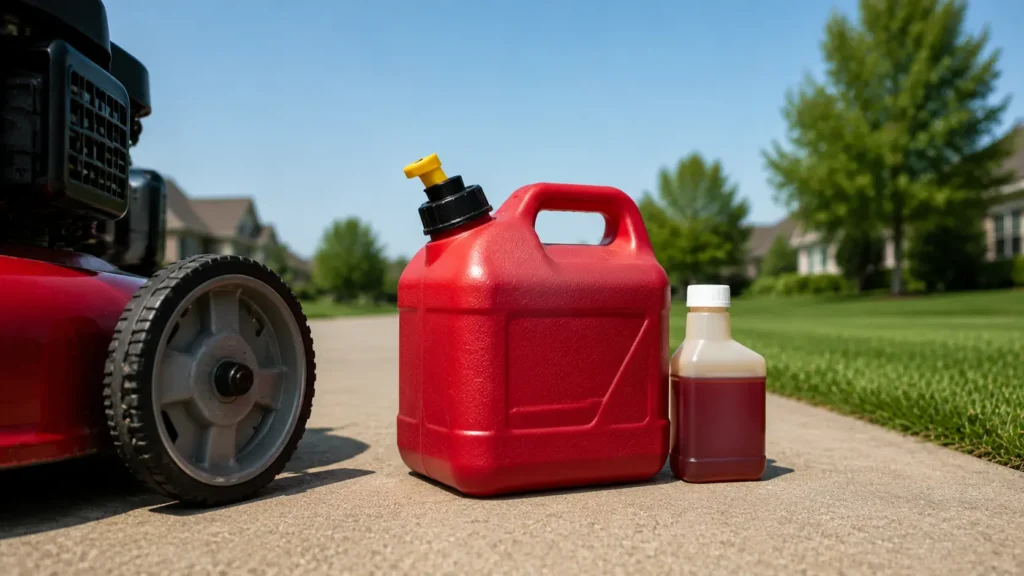
- Fuel treatment: Sea Foam or STA-BIL for treating the fresh fuel mixture.
- Fresh gasoline: High-octane, ethanol-free gas.
- Drain pan: A small container to catch the 2–3 ounces of old gas sitting in the bowl and fuel line.
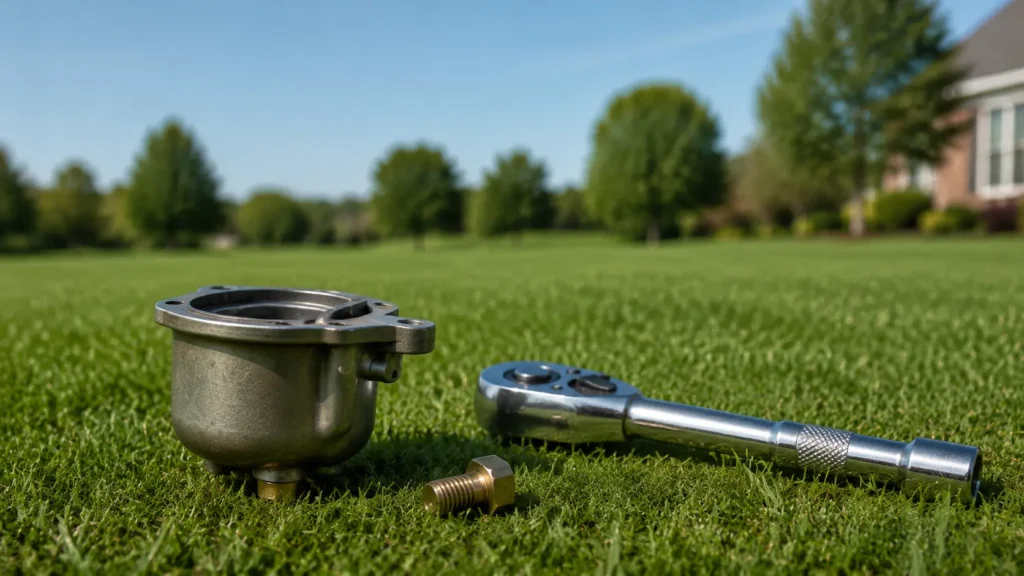
Pro-Tips Box: The brass bolt holding the bottom of the carburetor bowl on your mower isn’t just a fastener—it acts as the main jet. If you look closely at that bolt, you will see a tiny hole running down its center and one across the side. If you don’t poke a wire through those specific orifices, dumping a whole can of carb cleaner over the engine won’t fix the surging. Always wear safety glasses when spraying cleaner through these microscopic holes; the pressure tends to blow the harsh chemicals directly back at your face.
Seasonal Timing & Conditions
This specific mechanical failure overwhelmingly strikes at the beginning of the mowing season, usually during your first or second spring cut. Gasoline containing 10% ethanol (E10) begins to degrade and form varnish in as little as 30 to 45 days if left untreated in a humid shed or uninsulated garage.
If you notice surging appearing suddenly in mid-summer, the culprit is less likely to be stale gas. Mid-season surging usually points to a piece of grass clipping or dry debris that bypassed a heavily soiled air filter and lodged physically in the delicate carburetor linkage or governor springs.
Do not attempt to mow your yard while the engine is surging. The constant RPM fluctuation places immense stress on the internal plastic governor gear. Furthermore, the blades fail to maintain the consistent high speed needed to cleanly shear the grass, resulting in severely torn grass blades that invite fungal diseases into your lawn.
The Execution
Phase 1: Drain the Tank and Check Air Flow
Tilt the mower backward so the spark plug faces up, preventing motor oil from flooding the cylinder head. Disconnect the spark plug wire completely for your safety. Remove the plastic air filter cover and inspect the pleated paper filter. If the filter is soaked in oil or packed solid with dirt, the engine is choking for air. Pinch off the rubber fuel line with a small clamp and drain the existing gas from the tank into your pan. Even if you think the gas is only two months old, drain it.
Phase 2: Drop the Carburetor Bowl
Locate the small metal bowl at the bottom of the carburetor assembly. Place your rag or drain pan underneath the deck.
- Use your socket wrench to loosen the single bolt at the center bottom of the bowl.
- Catch the small spill of residual fuel.
- Carefully lower the bowl and inspect the inside. If the bottom is coated in green or brown syrup, you have definitively found your restriction.
Phase 3: Clear the Main Jet and Emulsion Tube
This is the exact step where the actual fix happens.
- Take the brass bolt you just removed. Spray your aerosol carb cleaner directly through the tiny holes on the sides and down the hollow center.
- Push your micro-wire or stripped twist-tie aggressively through the holes to physically dislodge hardened varnish.
- Look up into the center column of the carburetor where that bolt threads into (the emulsion tube). Spray your cleaner straight up into that cavity.
Phase 4: Reassembly and Fuel Treatment
Reattach the metal bowl, ensuring the rubber O-ring seal sits perfectly flat to avoid leaks. Thread the bolt back in and tighten it snugly, but do not overtighten and strip the soft aluminum threads. Fill your gas tank with fresh, ethanol-free gasoline mixed with 1 ounce of Sea Foam per gallon of fuel. Reconnect the spark plug wire and start the mower. The engine will likely smoke heavily for a few seconds as it burns off the harsh carb cleaner, but the surging should settle into a smooth, steady hum within one minute of running.
Professional vs. DIY
| Feature | DIY Carburetor Clean | Professional Repair Shop |
| Cost | $5 – $10 | $80 – $140 |
| Speed | 30 minutes | 1 to 3 weeks |
| Effectiveness | High for varnish issues | High (usually full replacement) |
| Risk | Low (stripping a bolt) | None |
Cleaning the carburetor yourself costs roughly the price of a single can of B-12 Chemtool and requires basic hand tools. You need absolutely zero specialized small-engine mechanic experience to complete this task in your driveway.
Taking a surging mower to a professional repair shop comes with an automatic $40 to $60 diagnostic fee. Most high-volume shops will not spend the labor time cleaning an old, heavily gunked-up carburetor. They simply order a $30 to $50 OEM replacement part and bolt it on, pushing your final invoice north of $120. If your mower is a standard big-box store model you purchased for $250, a professional repair makes very little financial sense. You should only seek professional help if the surging is accompanied by heavy, continuous blue smoke, loud metallic knocking, or if you’ve already thoroughly cleaned the carburetor and the hunting persists—which points to a complex internal governor failure.
Prevention Tips
- Add a fuel stabilizer like STA-BIL to every single 5-gallon gas can you fill at the pump throughout the year, not just right before winter storage.
- Run the mower completely out of gas before pushing it into the shed for the winter. Let the engine idle until it sputters and dies to fully empty the float bowl.
- Install an inline fuel filter by cutting the rubber fuel line and clamping one in; this catches tiny debris particles before they ever reach the delicate jets.
- Never use gasoline with more than 10% ethanol. Blends like E15 or E85 will destroy small engine carburetors and fuel lines rapidly.
People Also Ask
Why does my mower rev up and down when not under load?
A mower revving up and down without load is constantly adjusting its governor to compensate for fuel starvation. The carburetor main jet is partially blocked, forcing the engine to hunt for a stable air-fuel mixture even when it isn’t cutting grass.
Can a bad spark plug cause a lawn mower to surge?
A fouled or failing spark plug typically causes a mower to sputter, misfire, or refuse to start entirely. While it can contribute to rough running, a rhythmic surging up and down is almost exclusively a fuel delivery and carburetor issue.
How much Sea Foam should I use in my lawn mower?
For regular maintenance and fuel stabilization, add 1 ounce of Sea Foam per gallon of fresh gasoline. If you are trying to clean a slightly dirty carburetor, you can safely increase the ratio to 2 ounces per gallon.
What to Read Next
A poorly running engine impacts the actual cut quality of your yard, which is why knowing the mechanical reasons a lawn mower leaves uncut grass can save your lawn’s appearance before the turf suffers long-term damage.