
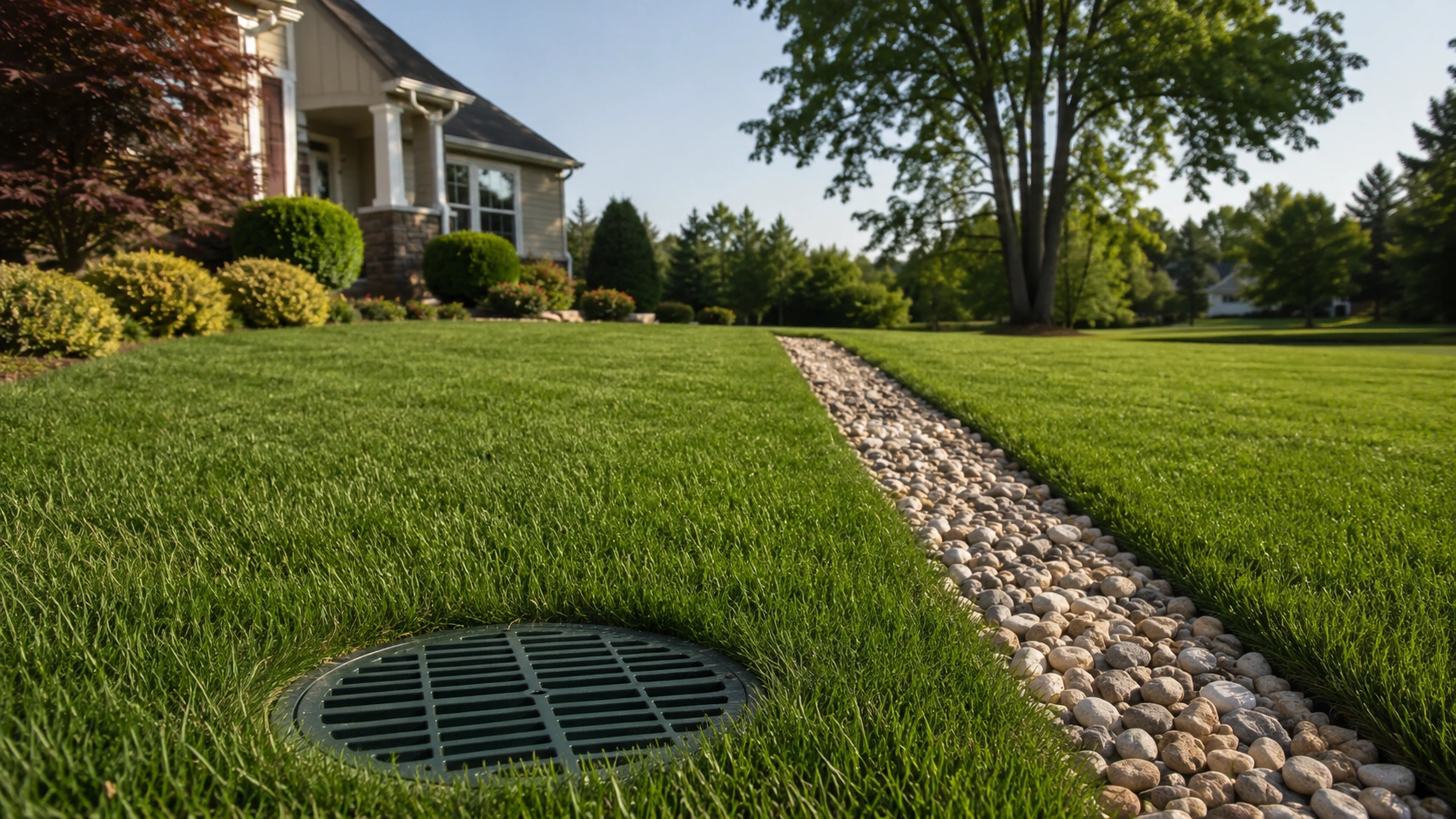
A catch basin handles heavy, fast-moving surface water by collecting it at a single low point through a top grate and directing it into a solid underground pipe. A French drain manages slow-moving, subsurface water over a wide area, using a gravel-filled trench and a perforated pipe to absorb moisture from the surrounding soil and channel it away.
Identification Guide
Look at your yard immediately after a heavy rainstorm. The way water behaves dictates the exact hardware you need to install.
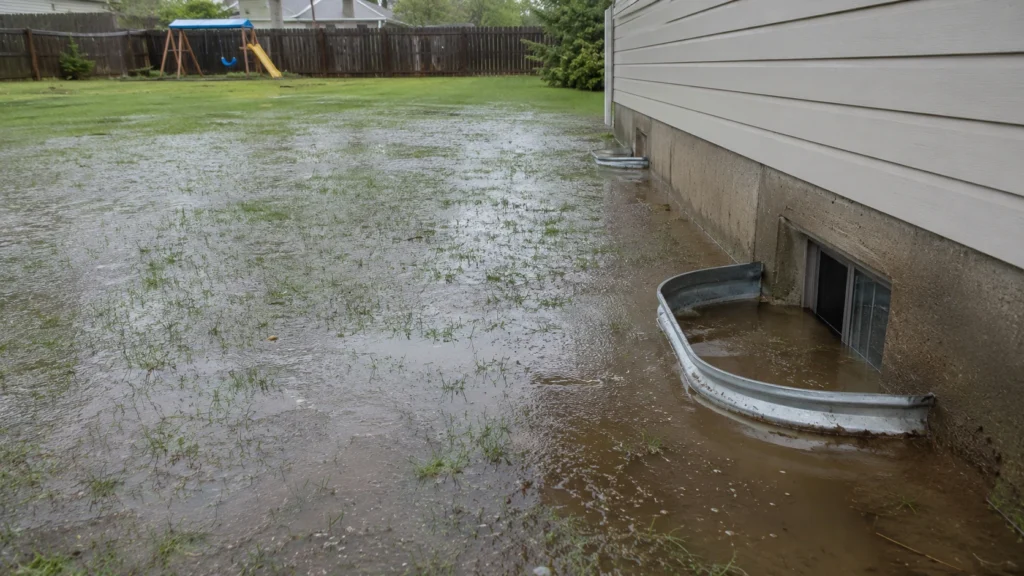
- Deep surface pooling: If you see a distinct puddle, 2 to 3 inches deep, collecting directly under a gutter downspout or at the bottom of a sloped driveway, you need a catch basin. The water is entirely above ground.
- The “sponge” effect: Walk across your lawn. If your boots sink into the turf with a squishing sound, but there is no standing surface water, the soil profile is completely saturated. This requires a French drain.
- Moving sheets of water: If rainwater rushes aggressively across your patio or mulch beds during a storm, threatening to wash out the topsoil, a catch basin with a large grate will intercept that sheer volume instantly.
- Widespread yellowing turf: Roots drowning in subsurface water rot quickly. You will see large, irregular patches of dying grass that give off a sour, swampy odor. This constant dampness creates a perfect environment for lawn diseases. You can easily mistake this for other turf issues, but checking Grub Damage vs Fungus helps rule out pest activity before you start trenching.
Root Causes
Drainage failures in residential yards stem from three primary physical faults: improper grading, heavy clay soil profiles, and concentrated roof runoff.
Standard home construction leaves builders manipulating the grade to move water away from the foundation. Over 10 to 15 years, soil settles. That original 5-degree slope away from your siding flattens out or reverses, creating a bowl effect right at your foundation wall.
Compounding this is the soil composition. Across regions like the Midwest or Southeast, heavy clay soils dominate. Clay particles are microscopic and tightly packed, meaning water percolation drops to less than 0.1 inches per hour. When a massive summer thunderstorm drops 2 inches of rain, the clay simply refuses to absorb it.
Finally, consider the roof footprint. A 2,000 sq ft roof shedding 1 inch of rain produces over 1,200 gallons of water. If your gutters dump that volume directly onto a flat lawn through a single downspout, no soil can handle that localized flood. The turf drowns, the soil structure collapses, and the water eventually looks for the path of least resistance—usually straight down your foundation wall.
Step-by-Step Solution
In many field scenarios, the most bulletproof system combines both elements: a catch basin to grab the heavy roof runoff, transitioning into a solid pipe, and a separate French drain to dry out the soggy yard.
- Map the Slope: You need gravity. Use a string line and a line level. Your trench requires a minimum slope of 1 inch of drop for every 8 feet of run. Mark the highest point (where water pools) to the discharge point (the street, a creek, or a pop-up emitter at a lower elevation).
- Excavate the Trench: Dig a trench 12 inches wide and at least 18 inches deep. Call 811 before you touch a shovel. I once watched a homeowner slice right through his internet fiber line trying to sink a 9-inch basin.
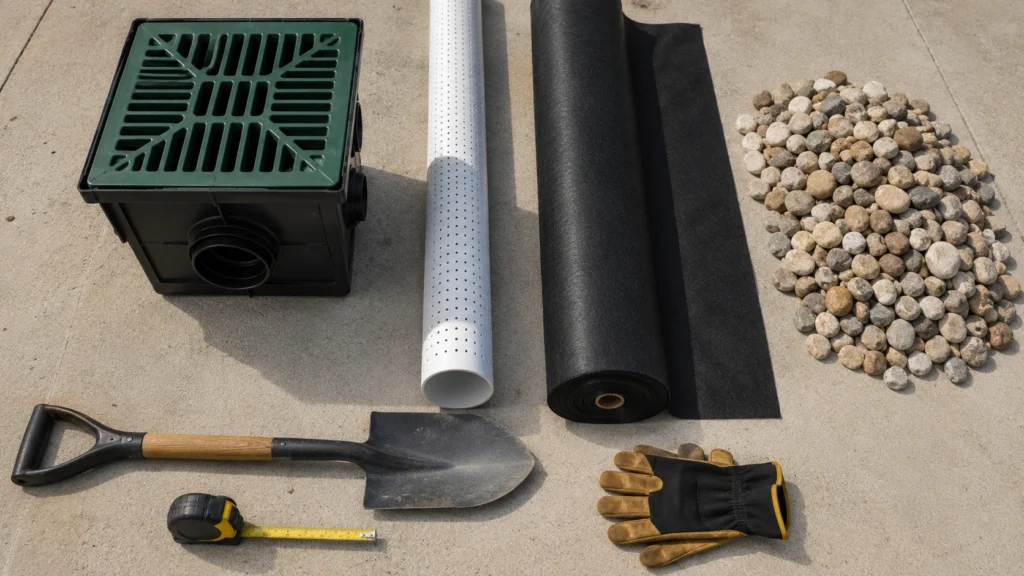
- Set the Catch Basin: At the lowest point of your surface pooling, dig a slightly deeper hole. Set your NDS 12-inch catch basin box into the hole. The top of the grate should sit roughly 1/2 inch below the final grade of your lawn so the mower deck clears it safely.
- Line the Trench: For the French drain section, line the dirt trench with a professional-grade, 4 oz non-woven geotextile fabric. Leave enough excess fabric on the sides to fold over the top later.
- Pipe and Gravel Setup: Pour 2 inches of 1-inch washed river gravel onto the fabric. Lay a 4-inch perforated PVC pipe on top of the gravel. Make sure the holes in the pipe point down, not up. Water fills the trench from the bottom and rises into the pipe.
- Connect and Backfill: Connect your catch basin to a solid 4-inch Schedule 40 PVC pipe to move roof water past the soggy zone. For the French drain, pour more washed gravel over the perforated pipe until you reach 3 inches from the surface.
- Wrap and Cover: Fold the geotextile fabric tightly over the top of the gravel, creating a burrito effect. This stops silt from ruining the system. Top with 3 inches of topsoil and lay fresh sod. Expect this setup to handle massive storms flawlessly for decades.
Professional vs. DIY
Trenching looks simple on paper but breaks backs in reality. Hand-digging a 50-foot trench through clay and roots takes two fit adults an entire weekend of grueling labor.
| Factor | DIY Installation | Professional Crew |
| Cost | $300 – $600 (Materials) | $2,500 – $5,000+ |
| Speed | 1 – 2 Weeks | 1 – 2 Days |
| Effectiveness | Moderate (Slope errors common) | High (Laser transit used) |
| Physical Risk | High (Back injury, utility strikes) | Low |
If your yard has a clear, aggressive downward slope and soft soil, DIY saves thousands. If your yard is dead flat, requires moving utility lines, or demands a trench longer than 50 feet, hire a drainage contractor. A pro uses a laser transit to guarantee the 1-inch fall per 10 feet. If a DIYer gets the grade wrong by half an inch, the water sits entirely stagnant inside the pipe.
Common Misdiagnosis
The biggest mistake is ripping up a lawn for a French drain when the real problem is severe soil compaction. Heavy foot traffic, heavy riding mowers, and baked summer clay create a hardpan layer on your topsoil. Water pools on the surface for a day after rain, making you think the drainage is broken.
Take a 6-inch screwdriver and push it into the damp turf. If you have to force it with all your body weight, your soil is compacted, not necessarily suffering from a high water table. True subsurface water problems persist for days and turn the soil to pudding. If the screwdriver test shows a rock-hard surface under a thin layer of mud, knowing exactly when should you aerate your lawn will solve 90% of the pooling without laying a single pipe. Core aeration pulls 3-inch plugs of soil out, breaking the hardpan and letting surface water drain naturally into the subsoil.
Prevention Tips
Stop surface water before it dictates a massive excavation project. Start by auditing your gutters. Clean them twice a year. Clogged gutters overflow directly down the siding, dumping thousands of gallons right onto the foundation perimeter instead of routing it properly.
Extend your downspouts. Most builder-grade downspouts end with a tiny plastic splash block that leaves water 24 inches from the foundation. Attach a solid black corrugated pipe extension and push that discharge point at least 10 feet away from the house.
Monitor your mulch beds yearly. Over time, adding fresh mulch each spring builds up the bed height higher than the foundation line, trapping water against the bricks. Rake out old, decayed mulch before putting down a new layer, maintaining a distinct downward pitch away from the siding.
Pro-Tips Box: Most homeowners buy the black corrugated pipe with the fabric “sock” already wrapped around it, throw it in a trench, and bury it in dirt. In heavy clay soil, that sock clogs with fine silt in less than two years, rendering the system totally useless. You must wrap the entire gravel trench like a burrito with a separate 4 oz non-woven geotextile fabric, leaving the pipe bare inside the rocks. Also, drill a single 1/4-inch hole in the very bottom of your plastic catch basin. Debris often blocks the main exit pipe, leaving an inch of standing water inside the basin to breed hundreds of mosquitoes. That tiny weep hole drains it out between storms.
People Also Ask
Can I connect a French drain to a catch basin?
Yes, and it is standard practice. You place the catch basin at the lowest point to collect heavy surface water, then run a solid PVC pipe away from it. Further down the line, that solid pipe can transition into a perforated French drain to disburse the water underground.
How deep should a catch basin be?
The top grate must sit completely flush with or slightly below the surrounding grade (usually 1/2 inch below turf level). This allows surface water to fall into it naturally and ensures your mower blades safely clear the heavy plastic or cast iron grate.
Does a French drain need an outlet?
A French drain works best with an outlet, known as daylighting, where the pipe exits at a lower elevation. However, in completely flat yards, you can design a “dry well” system where a massive trench simply holds the water underground until it slowly percolates deep into the subsoil.
What to Read Next
If minor low spots and uneven terrain are causing small puddles instead of severe flooding, complete excavation is overkill. Correcting the grade by dragging new material into the depressions fixes the slope permanently, which is why understanding how to properly layer top soil on top of grass will rescue your lawn without destroying the existing turf.