
Stop wasting time with sonic spikes and homemade pepper sprays. To get rid of voles quickly, you must combine immediate lethal trapping in their active runways with targeted rodenticide baits inside tamper-proof stations. Reduce your lawn’s thatch layer and clear dense mulch away from tree trunks to remove their cover. Voles reproduce every 21 days; hesitation costs you your yard.
Identification Guide
You need to know exactly what you are hunting. Voles spend most of their time above ground but hidden under cover.
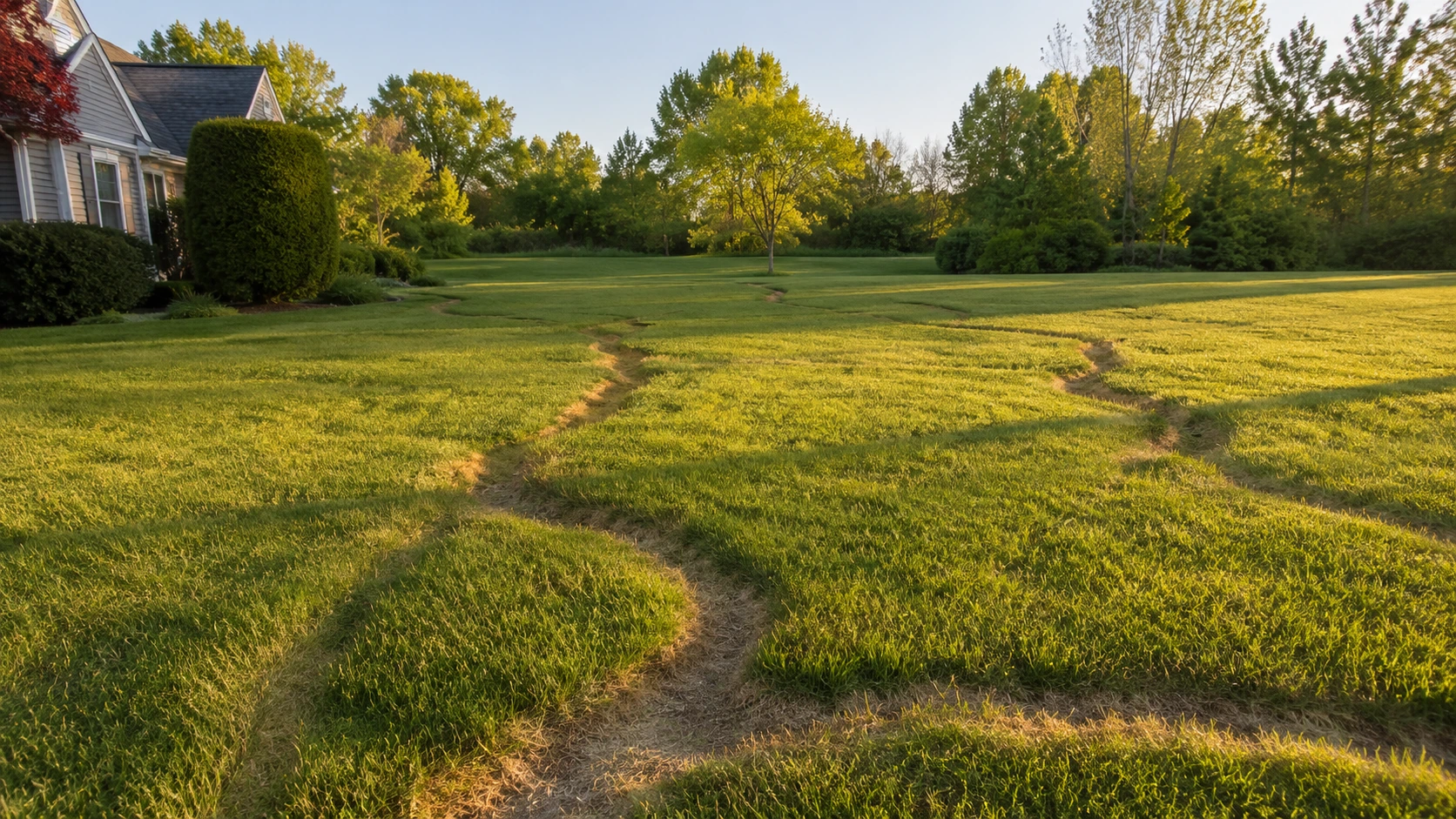
- Surface Runways: Look for 1 to 2-inch wide paths of dead, trampled grass. They look like a miniature highway system connecting burrow holes.
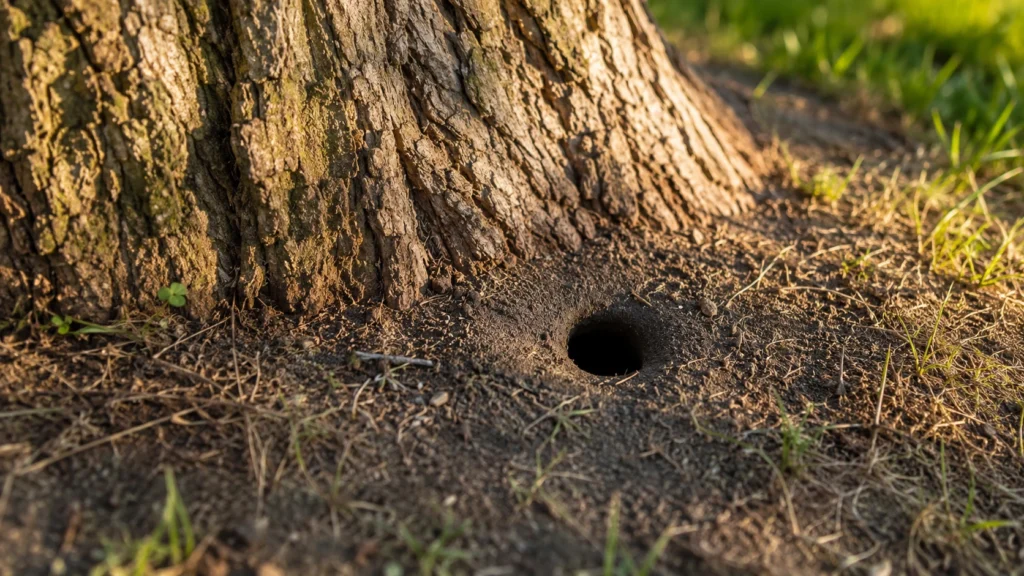
- Clean Burrow Holes: Check near tree roots, under hostas, or along concrete walkways. You will find perfectly round, silver-dollar-sized holes (about 1.5 inches in diameter) with absolutely no dirt mounded around them.
- Girdled Bark: Inspect the base of your ornamental shrubs and young trees. Voles chew off the bark right at the soil line, leaving gnaw marks about 1/8-inch wide.
- Spongy Turf: Walk along the edges of your mulch beds. If the lawn feels abnormally soft or collapses under your boots, voles have excavated shallow feeding tunnels right beneath the turf canopy.
I see homeowners rip up their yard looking for grubs when they see dead grass patches. Check for the distinct runways first.
Root Causes
Voles do not invade a yard by accident. They are prey animals that require heavy cover to survive while foraging.
Thick thatch layers in your lawn create the perfect roof for their surface highways. If you have let thatch build up past 1/2 inch, you are giving them a protected environment from hawks and owls. Dense ground covers like creeping juniper, English ivy, or heavy weed pressure serve the exact same purpose.
Winter snowpack is another major factor. Snow acts as insulation and a physical barrier from predators. Voles will feed aggressively on grass crowns and woody roots under the snow, which is why the damage looks catastrophic when the spring melt happens.
Finally, excessive mulch is a liability. Piling 4 or 5 inches of wood chips against tree trunks gives voles a warm, hidden space to safely strip the bark all winter long.
Step-by-Step Solution
You need to hit them hard and fast. A single female vole can produce up to 10 litters a year.
Step 1: Locate Active Runways
Do not place traps randomly on the lawn. Find a heavily trafficked runway. You can test activity by dropping a small piece of apple in the trench; if it disappears overnight, you have an active zone.
Step 2: Set Lethal Traps
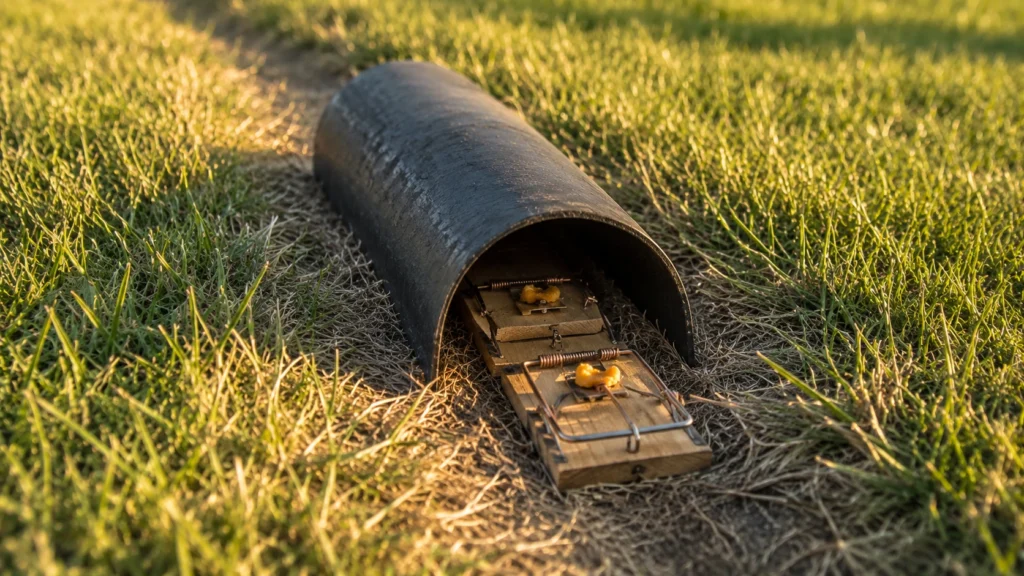
Buy standard wooden mouse snap traps (Victor or Tomcat work fine). You do not need massive rat traps. Place two traps perpendicular to the runway to form a “T” shape, or place them end-to-end directly inside the trench. The triggers must face outward.
Step 3: Bait and Cover
Bait the trap triggers with a tiny smear of peanut butter and a small piece of apple. Voles are herbivores; they ignore cheese or meat. Cover the traps with an inverted cardboard box, a plastic bucket, or a section of 4-inch PVC pipe. Voles avoid open spaces. The cover forces them into the trap and protects neighborhood birds and dogs. Check the traps daily.
Step 4: Deploy Commercial Bait Stations
If the yard is overrun, trapping takes too long. Purchase tamper-proof rodent bait stations. Load them with a commercial-grade bait containing Diphacinone or Zinc Phosphide (like Tomcat Mole & Gopher Bait, though check the label for vole approval in your state). Place stations near burrow entrances and along structural walls. Wait 5 to 7 days for the colony population to crash.
Step 5: Habitat Modification
Cut your lawn short (around 2 inches) going into the winter. Rake out the thatch. Pull all mulch at least 12 inches away from the base of your trees and shrubs. If you eliminate their cover, you eliminate their survival strategy.
Professional vs. DIY
Tackling a few voles under a shrub is manageable. Handling an entire colony requires professional chemical access.
| Factor | DIY | Professional |
| Cost | $ | $$$ |
| Speed | 2-3 Weeks | 3-5 Days |
| Effectiveness | Moderate | High |
| Risk | Moderate | Low |
Call a licensed pest control operator if you have a massive property with extensive ornamental damage. Professionals use restricted-use tracking powders and potent anticoagulant baits that are illegal for homeowners to purchase. The DIY route fails most often when homeowners drastically underestimate the population size and put out two traps for a colony of forty.
Common Misdiagnosis
Voles and moles are entirely different animals requiring completely different treatments.
Moles are carnivorous excavators. They eat earthworms and grubs deep underground. You know you have moles if your yard is covered in large, volcano-shaped mounds of dirt and raised, spongy tunnels that push the turf upward. Moles do not eat plants.
Voles are vegetarian rodents. They eat grass, tubers, and bark. They leave winding surface paths of dead grass and clean, open holes with zero dirt mounding.
A massive mistake I see in the field is a homeowner buying a heavy bag of grub killer to starve out the “moles,” when the culprit is actually a vole colony happily eating their hosta roots. Before applying chemicals, verify if you are dealing with Grub Damage vs Fungus or if you actually have a rodent issue.
Prevention Tips
Keep your yard hostile to small rodents. Mow your lawn frequently and bag your clippings in the fall to prevent dead vegetation from matting down. Keep turf relatively short going into the dormant season.
Install 1/4-inch hardware cloth around the base of vulnerable young trees. Bury the wire mesh at least 6 inches below the soil surface and let it extend 18 inches above ground. This stops voles from chewing the bark during heavy snow accumulations. Never use weed fabric under your mulch; voles love tunneling right between the fabric and the soil line where predators cannot reach them.
Pro-Tips Box: Do not wash your snap traps after you catch a vole. The scent of a dead vole actually attracts other voles to that specific location. Just clear the trap, reset it in the exact same runway, and put the cover back over it. Also, if you use bait stations, anchor them to the ground with landscaping pins. Raccoons and skunks will easily drag unsecured stations into the woods trying to get at the dead rodents inside.
People Also Ask
Do coffee grounds keep voles away?
No. Coffee grounds are completely ineffective at repelling voles. While strong odors might temporarily confuse them, voles will quickly adapt and tunnel right past or through the grounds to reach food sources. Rely on trapping or lethal baiting instead.
Will castor oil get rid of voles?
Castor oil treatments are primarily designed for moles, not voles. Since voles spend most of their time above ground in the thatch layer rather than digging deep subsurface feeding tunnels, soil-soaking repellents rarely achieve the necessary contact to drive them out of a yard.
What is the fastest way to fix vole damage in the lawn?
Rake out the dead, trampled grass from the runways to expose bare soil. Overseed the tracks with a fast-germinating grass species like perennial ryegrass or tall fescue. Lightly dress the area with topsoil, keep it continually moist, and stay off the newly planted sections.
What to Read Next
Once you have eliminated the colony and raked out the dead tracks, you will need to repair those unsightly bare trenches. Knowing how to properly layer peat moss on top of grass seed guarantees high germination rates and protects your new seedlings from birds while the lawn recovers its thick, healthy appearance.