
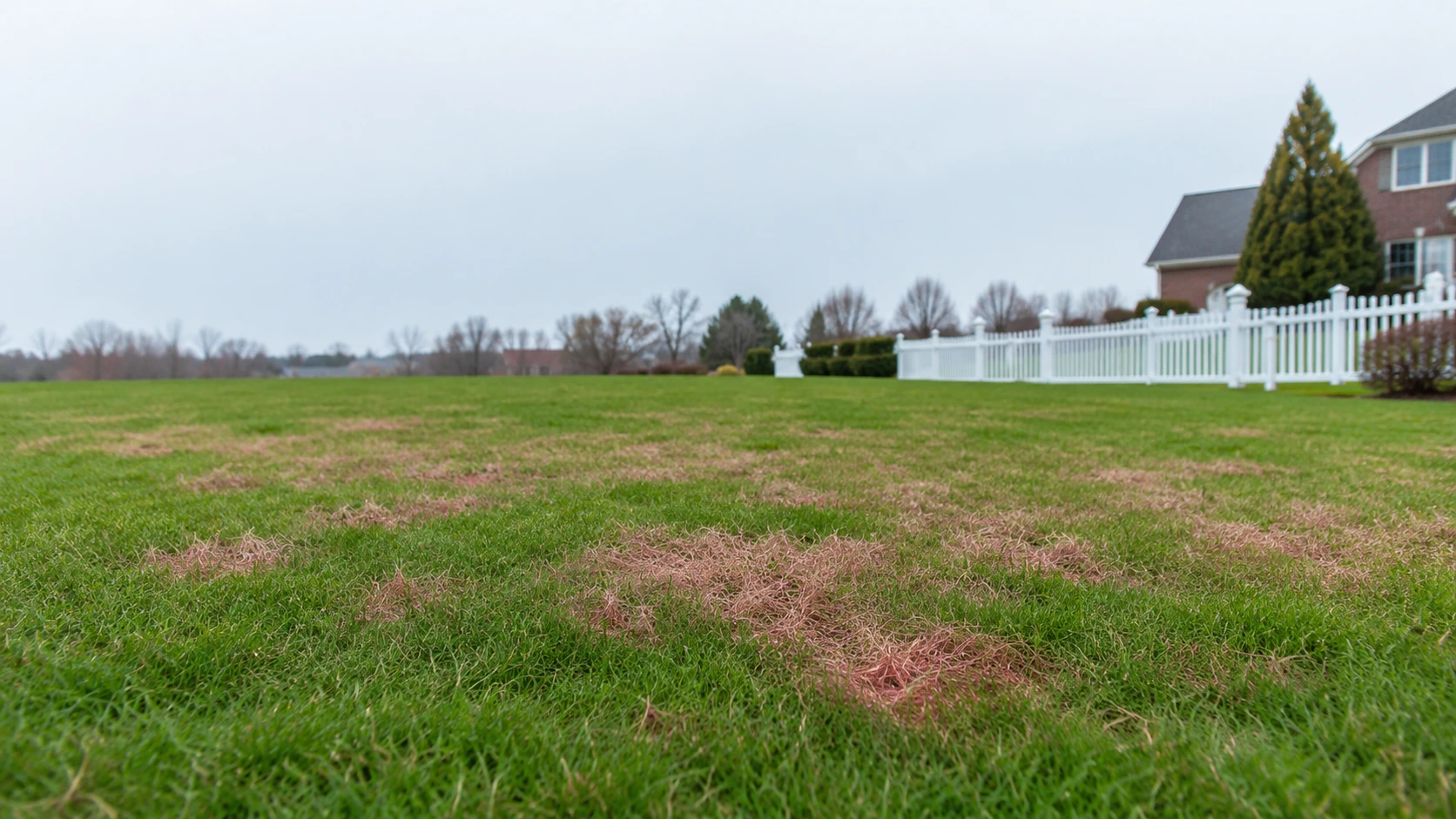
Red thread is a lawn fungus thriving in cool, wet weather, primarily targeting under-fertilized cool-season grasses. The fastest cure is often a fast-release nitrogen fertilizer. If the infection is severe, the most effective red thread fungicides contain Propiconazole or Azoxystrobin. Apply these systemic treatments via a liquid spray for rapid absorption and disease suppression.
Identification Guide
Identify red thread before you spray anything. Treat the wrong disease, and you waste time while your lawn suffers.
- Patch Margins: Look for ragged, irregular tan patches ranging from 4 to 8 inches in diameter scattered across the yard.
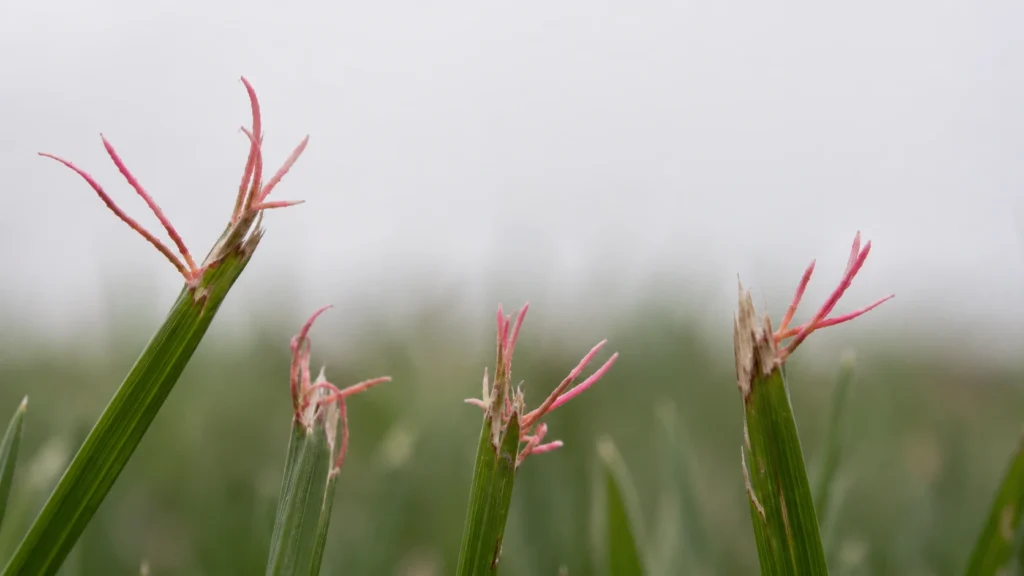
- The “Threads”: Get down on your knees. You will see bright coral-pink, reddish, antler-like fungal structures (sclerotia) growing straight out of the tips of the grass blades.
- The Mycelium Web: Unlike drought stress, the dying grass blades aren’t just dry. They are physically bound together by sticky pink webs, especially visible in shaded areas that hold moisture until noon.
- Equipment Transfer: Walk through your lawn in the early morning dew. Pinkish spores will visibly coat your work boots or mower wheels.
- Target Species: This disease rarely touches warm-season yards. You will almost exclusively see this ripping through perennial ryegrass, Kentucky bluegrass, and fine fescues.
Root Causes
Red thread thrives perfectly when soil temperatures hover between 60°F and 75°F coupled with high humidity. However, the absolute biggest trigger is a nitrogen deficiency. The Laetisaria fuciformis fungus feeds easily on slow-growing, undernourished grass blades.
Prolonged leaf wetness creates the perfect incubation chamber. If you water your yard at 8 PM, you guarantee those blades stay wet for 12 straight hours. Compaction also plays a massive role. Hard, heavily trafficked soil prevents the roots from absorbing what little nitrogen exists in the ground, which is exactly when you should aerate your lawn to improve oxygen and nutrient flow.
I see this constantly in the field. Homeowners blame the rain, but their soil simply lacks the nutritional push required to outgrow the fungal colonization. The grass essentially stalls out, letting the fungus completely take over the leaf canopy.
Step-by-Step Solution
Most homeowners rush straight to the chemical shelf when they see pink webs. That’s a mistake. Red thread rarely kills the crown of the plant, meaning a strategic nutrient push often solves the issue faster than a fungicide.
Step 1: The Nitrogen Push
Apply 0.2 to 0.5 lbs of quick-release nitrogen per 1,000 sq ft. Products containing urea or ammonium sulfate force the grass to aggressively outgrow the fungus. Water the product in immediately to push it to the roots and avoid ending up with a burnt lawn with fertilizer. Wait five days. If the grass greens up and the pink threads vanish, you don’t need chemicals.
Step 2: Choose Your Fungicide
If the disease persists, grab a systemic fungicide. Granular Azoxystrobin (like Scotts DiseaseEx) provides excellent residual control. For faster knockdown on severe outbreaks, use a liquid Propiconazole product (like BioAdvanced Fungus Control for Lawns or a generic Compare-N-Save Propiconazole).
Step 3: Mix and Apply
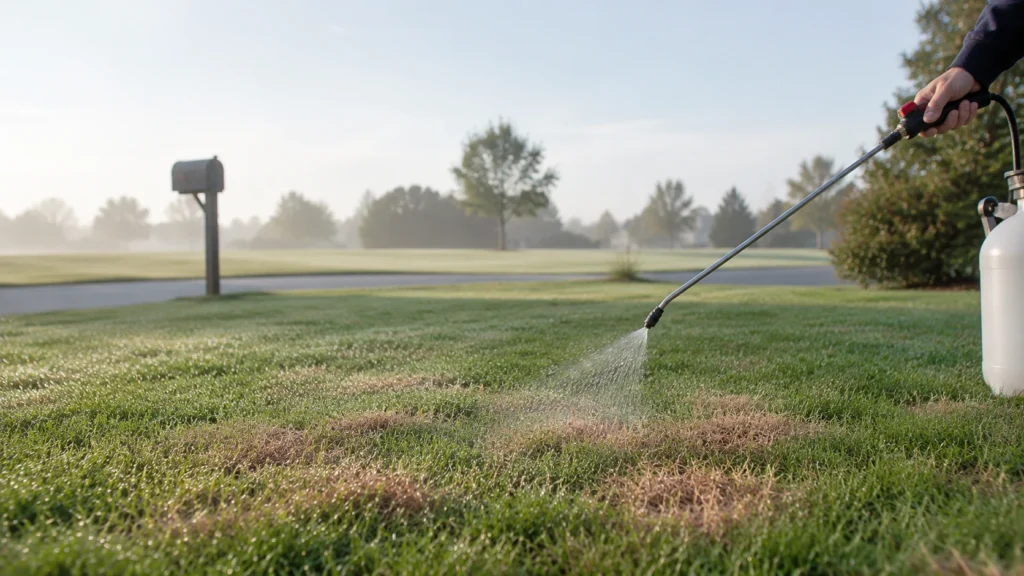
Put on long pants and chemical-resistant gloves. Using a standard 2-gallon pump sprayer, mix 2 fl oz of liquid Propiconazole per gallon of water. This covers roughly 500 sq ft of active infection. Spray the directly affected area, plus a 3-foot perimeter around it. Do not run your sprinklers for at least 24 hours after a liquid application.
Step 4: Bag Your Clippings
Stop mulching immediately. Bag your grass clippings until the lawn is 100% clean. A mower deck acts like a blender, sucking up millions of active spores and shooting them across the healthy sections of your yard.
Don’t expect overnight miracles. With Propiconazole at 2 oz per gallon, you will see the pink structures dry up and turn brown in 5–7 days. The lawn will still look slightly tan until you mow the dead tips off.
Professional vs. DIY
| Factor | DIY | Professional |
| Cost | $$ | $$$$ |
| Speed | Days | Days |
| Effectiveness | High | High |
| Risk | Low | Low |
You absolutely do not need a professional for red thread. It is a surface-level cosmetic disease. A $20 bag of fast-acting nitrogen or a $25 bottle of fungicide from the local hardware store handles 95% of these cases. Call a local lawn care operator only if you have done the nitrogen push, applied two rounds of Propiconazole spaced 14 days apart, and your lawn is still covered in pink webs. At that stage, you likely have a massive underlying soil imbalance requiring professional soil testing.
Common Misdiagnosis
In my 15 years in the field, particularly treating fescue lawns across the Northeast, I’ve watched people treat red thread as pink snow mold. The timing is your best diagnostic tool here. Pink snow mold (Microdochium nivale) shows up immediately after the snowpack melts in late winter while temperatures are near freezing. Red thread requires much warmer spring or fall temperatures.
You might also confuse it with early-stage dollar spot. While dollar spot creates smaller, silver-dollar-sized tan patches, it never produces red strands. If you aren’t certain what you are looking at, comparing Brown Patch vs Dollar Spot helps rule out the heavy hitters before you throw the wrong active ingredient at the problem. Red thread is uniquely identifiable by those bright coral “antlers” on the blade tips.
Prevention Tips
Stop watering your yard in the evening. Sprinklers running at 7 PM guarantee wet blades for 12 hours straight, giving fungal mycelium the exact dark, humid environment it needs to colonize. Set your irrigation system to run at 5 AM. The rising sun dries the canopy just a few hours later.
Establish a strict fertilization schedule. Apply 2 to 3 lbs of actual nitrogen per 1,000 sq ft annually, heavily weighted toward your fall applications. Keep your mower blade razor-sharp. Dull blades tear the grass instead of cutting it cleanly. Those jagged, frayed white edges create massive open wounds, allowing fungal spores to bypass the plant’s natural defenses effortlessly.
Pro-Tips Box: Most homeowners apply granular fungicides when the grass is bone dry, meaning half the product falls past the canopy and just sits uselessly on the soil. If you use a granular systemic like Azoxystrobin, apply it early in the morning while the dew is still heavy on the yard. That moisture acts like glue, helping the granule stick directly to the leaf blade where it can start working immediately. If you prefer spraying liquid Propiconazole, add 0.5 oz of a non-ionic surfactant per gallon to break the surface tension of the grass blade, forcing the chemical to stick rather than bead up and roll off.
People Also Ask
Will red thread fungus go away on its own?
Yes, it frequently disappears once temperatures consistently rise above 80°F or drop below 40°F. The fungus goes dormant during hot, dry summers and freezing winters. However, waiting it out leaves your lawn looking ragged for weeks and allows the disease to spread further.
Can I mow grass with red thread?
You can mow it, but you must bag the clippings. Mulching diseased clippings blows active spores directly into healthy sections of your yard. After mowing an infected patch, wash the underside of your mower deck with rubbing alcohol to prevent cross-contamination.
What is the best fertilizer to get rid of red thread?
Use a quick-release, water-soluble nitrogen fertilizer. Products containing urea or ammonium sulfate provide an immediate nutrient spike. This allows the grass to aggressively push new growth and literally outgrow the fungal infection within a week.
What to Read Next
If you are seeing different discoloration patterns after resolving your red thread issue, identifying those new white patches on grass quickly will save your lawn from more severe structural damage down the line.