
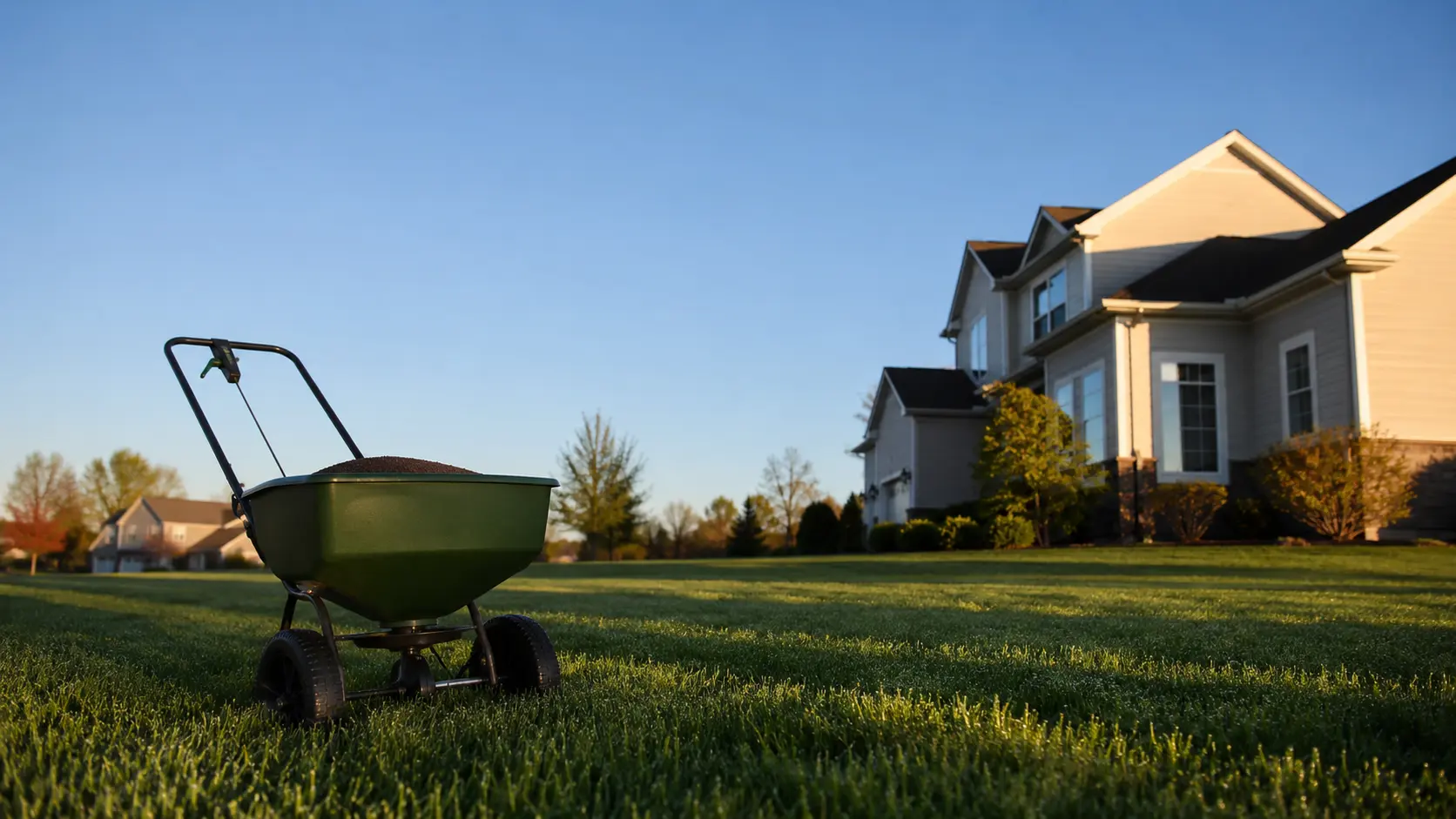
Milorganite is a slow-release, organic nitrogen fertilizer that feeds soil microbes and promotes steady grass growth over 8 to 10 weeks. Ironite is a fast-acting mineral supplement delivering a quick dose of iron to turn yellowing lawns deep green in days without triggering rapid growth. Choose Milorganite for foundational long-term turf health and Ironite for immediate, cosmetic color correction.
Milorganite vs Ironite at a Glance
| Milorganite | Ironite | |
| What it is | Slow-release organic nitrogen fertilizer | Fast-acting iron and mineral supplement |
| Guaranteed analysis | 6-4-0 | 1-0-0 on current bags (older stock: 1-0-1) |
| Total iron | 2.5% | Varies by formulation – check your bag |
| Bag size and coverage | 32 lb covers 2,500 sq ft | 30 lb covers 10,000 sq ft |
| Application rate | About 13 lb per 1,000 sq ft | 3 lb per 1,000 sq ft |
| Time to visible green | 10 to 14 days | Within about one week |
| How long it feeds | 8 to 10 weeks | Supplement only; up to 4 applications per year |
| Burn risk | None, even if spilled | None at label rate; real if over-applied |
| Concrete staining | No | Not at label rate; sweep stray granules off hard surfaces |
| Odor | Yes, fades in 48 to 72 hours | No |
| Typical bag price | About $20 | About $28 to $36 |
| Cost per 1,000 sq ft | About $8 | About $3 |
| Best for | Long-term turf health and steady growth | Fast color with no growth surge |
The short version: Milorganite is a fertilizer, Ironite is a colorant. Milorganite costs more per thousand square feet because you are buying actual nitrogen that feeds the plant for two months. Ironite costs a third as much because you are buying color, and the color fades once the iron is used up. One product builds the lawn, the other paints it.
A note on Ironite formulations: Ironite has shipped under more than one analysis. Pennington currently lists it as 1-0-0, while older bags and some retailers still show 1-0-1, and published iron content ranges from 4.5% to 20% depending on the version. Read the guaranteed analysis panel on the bag in your garage before you calculate rates.
Which One Does Your Lawn Actually Need?
Before loading up your spreader, you need to diagnose exactly what your yard is asking for. Look closely at your turf from an overhead angle in bright daylight.
- General Pale Green (Nitrogen Hunger): The entire lawn looks washed out and lacks vigor. Grass blades are thin, and growth has slowed down significantly. This signals a need for Milorganite.
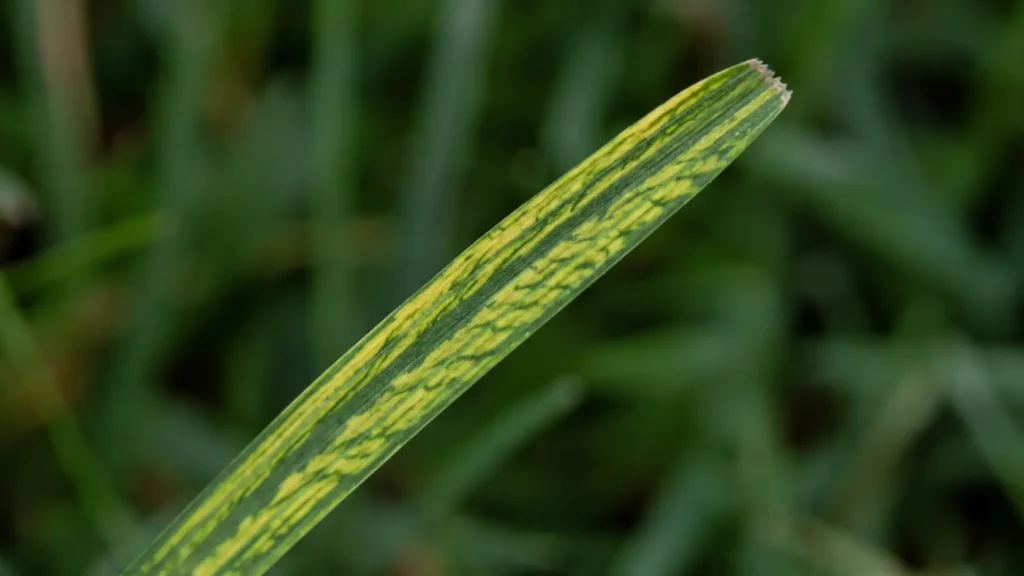
- Interveinal Chlorosis (Iron Deficiency): The grass blades turn bright yellow, but the veins running down the center of the leaf remain dark green. This stark contrast points directly to a lack of iron.
- Patchy Yellowing in High-pH Areas: You notice yellowing exclusively near concrete sidewalks, driveway edges, or foundation walls where leaching lime raises soil pH.
- Mower Stripe Fading: Healthy lawns hold mower striping patterns for days. If your lawn refuses to hold a dark stripe even after a fresh cut, your soil is lacking the deep color-enhancing nutrients found in both products.
Root Causes of Poor Lawn Color
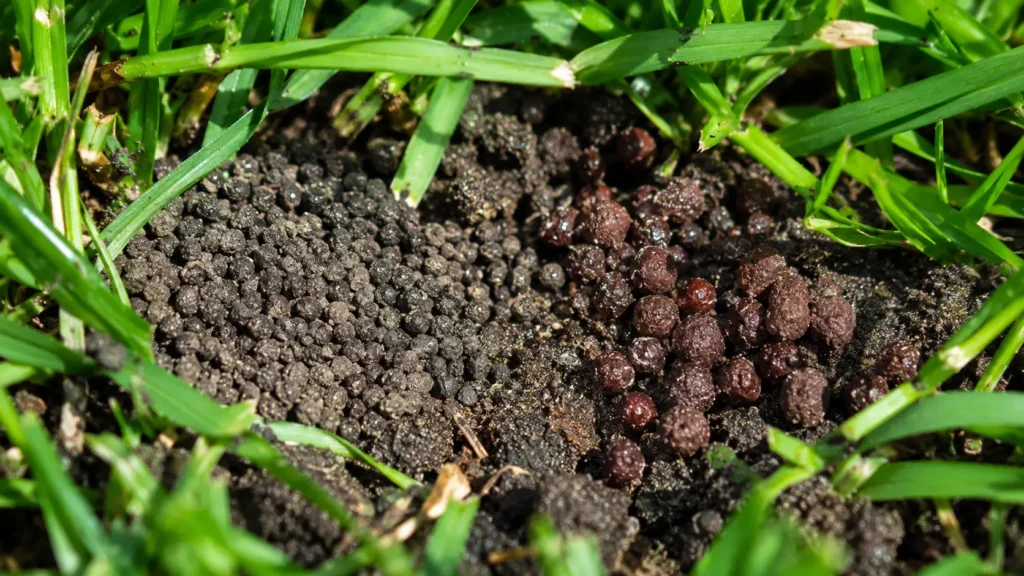
A dull yard rarely happens by accident. Heavy spring rains frequently wash soluble nutrients past the root zone, leaving sandy soils completely stripped of nitrogen. When this happens, the turf starves, turning pale and weak.
Iron deficiency operates differently. Your soil might actually hold plenty of iron, but a high pH level locks it up, making the mineral completely unavailable to your grass roots. Homes built on clay soils or those heavily amended with limestone frequently cross the 7.2 pH threshold, triggering severe chlorosis. Over-irrigating compounds this problem by displacing oxygen in the soil profile, suffocating roots and halting nutrient uptake entirely.
Another massive homeowner mistake involves mowing too short during peak summer heat. Scalping turf removes the plant’s food-producing factories, stressing the crown and causing an instant yellowing that no amount of fertilizer can fix quickly. Sometimes, the problem lies deeper in the soil structure itself. Compacted ground physically prevents roots from reaching the nutrients you apply, requiring mechanical intervention before any chemical treatment.
How to Apply Each: Rates and Spreader Settings
You can apply these products separately or simultaneously. Since Milorganite (6-4-0, 2.5% iron) provides steady macronutrients and Ironite concentrates on iron and other micronutrients, they complement each other perfectly.
- Calculate the Yard Area: Measure your target area in square feet. Never guess this number. A 32 lb bag of Milorganite covers 2,500 sq ft (about 13 lb per 1,000 sq ft), while a 30 lb bag of Ironite covers up to 10,000 sq ft (3 lb per 1,000 sq ft).
- Calibrate the Equipment: For Milorganite, set your Scotts EdgeGuard broadcast spreader to 11.5. For Ironite, dial it back to 3.5. If applying both, do two separate passes to ensure even distribution, as the granule sizes differ wildly.
- Execute the Application: Walk at a steady, 3-mph pace. Overlap your wheel tracks by a few inches on every pass to avoid dark green tiger stripes in your yard a week later.
- Sweep Hard Surfaces Immediately: Pennington labels Ironite as non-staining at the 3 lb per 1,000 sq ft rate, but stray granules left sitting on wet concrete or pavers can still mark them. Blow or sweep loose pellets back into the grass before you water.
- Water It In: Run your irrigation system for 15-20 minutes, delivering roughly 0.25 inches of water. This washes the dust off the grass blades and pushes the granules down to the soil level where microbes and roots can start their work.
- Wait the Proper Time: Keep foot traffic off the wet lawn. Understanding how long after fertilizing is it safe for dogs prevents tracking muddy fertilizer indoors. Milorganite takes 10 to 14 days to show visible results as microbes break it down. Ironite will darken the yard in 48 to 72 hours.
Can You Use Both Together?
Yes, and on most lawns that is the right answer. The two products solve different problems, so running them together covers both the nitrogen deficit and the iron deficit in a single afternoon. What you cannot do is mix them in one hopper: Milorganite granules are noticeably larger than Ironite granules, and a combined load will separate as you walk, laying down stripes of one product and bare gaps of the other.
Run two passes instead. Order does not matter. Set the spreader for Milorganite first, empty the hopper completely, then recalibrate for Ironite and cover the same area walking perpendicular to your first pass. Sweep the hard surfaces, then water both in with the same 15 to 20 minute cycle.
A realistic season for a cool-season lawn looks like this: Milorganite in late spring, again in early fall, and a third time as a late-fall feeding. Ironite slots in between those feedings whenever the color flattens out, up to four applications a year. You are using the Milorganite to build the plant and the Ironite to hold the color between feedings.
Professional vs. DIY
Applying granular fertilizers and supplements falls firmly in the DIY category for most suburban properties.
| Factor | DIY | Professional |
| Cost | $ ($20-$40 per bag) | $$$ ($75-$120 per application) |
| Speed | 1-2 Hours | Dependent on route scheduling |
| Effectiveness | High (if watered correctly) | High (uses liquid synthetics) |
| Risk | Low (Milorganite won’t burn) | Low |
You save significant money handling this yourself. Milorganite is practically idiot-proof because its organic nature means you will not burn your lawn even if you accidentally spill a pile of it. TruGreen and local operators rarely use organic slow-release like Milorganite due to its bulk and strong odor; they prefer highly concentrated synthetic liquids. Call a pro only if you need comprehensive liquid weed control mixed with your fertilizer, or if you manage a property over 1 acre where pushing a spreader becomes physically exhausting.
Common Misdiagnosis
I see yards every July where the homeowner dumped heavy doses of Ironite to fix yellowing grass, only to watch the turf completely die two weeks later. They misdiagnosed a fungal infection for a nutrient deficiency.
Iron chlorosis causes a uniform yellowing across the leaf blade, maintaining a healthy, intact leaf structure. Fungal issues, such as Brown Patch, present as distinct, irregular brown lesions with dark borders on the grass blades. The turf will look melted out or matted down in circular patterns, usually surrounded by a dark “smoke ring” early in the morning. Pushing nitrogen or iron into a fungal outbreak acts like throwing gasoline on a fire. The fungus feeds on the tender new growth. Inspect the blades closely: clear yellow means nutrients; spotted, rotting brown means fungicide.
Prevention Tips
You maintain a deep, dark green lawn by managing soil health, not just reacting to yellow turf. Pull a core soil sample every two years and send it to your local university extension office. If your pH climbs above 7.2, iron gets locked in the soil. Amending with elemental sulfur slowly lowers that pH, naturally releasing the iron you already have.
Change your mowing habits immediately. Raise your mower deck to 3.5 or 4 inches during the summer. Taller grass grows deeper roots, accessing nutrients and moisture that short, stressed grass cannot reach. Finally, leave your grass clippings on the yard. Mulching clippings returns up to 25% of the lawn’s required nitrogen over a full season, reducing the amount of bagged product you need to buy.
Pro-Tips Box: Most homeowners don’t realize you can use Ironite as an incredible winterizer alternative in southern climates. In Florida or Texas, applying Milorganite in late November pushes unwanted top growth when the grass should be slowing down. Instead, throw down Ironite at 1 lb per 100 sq ft just before a cold front. You get that dark, envy-inducing winter green without forcing the plant to burn energy producing new leaves during its natural dormancy period.
People Also Ask
Can I put down Milorganite and Ironite at the same time?
Yes, you can apply them on the exact same day. Because Milorganite carries only 2.5% iron and Ironite carries almost no nitrogen, they do not conflict. Apply them in two separate passes due to differing granule sizes, then water them in thoroughly.
Will Ironite burn my lawn if I apply too much?
Pennington labels Ironite as non-burning when applied at the recommended 3 lb per 1,000 sq ft. The risk comes from over-application: dumping piles or double-covering a strip concentrates the soluble mineral salts and can scorch the turf. Milorganite, being organic matter, will not burn even if you spill a heap of it.
How long does the Milorganite smell last?
The distinctive, earthy odor of Milorganite typically fades within 48 to 72 hours, especially after a deep watering or heavy rain. Applying it just before a scheduled irrigation cycle helps wash the dust into the soil canopy, significantly reducing the temporary smell.
What to Read Next
Sometimes turf refuses to green up regardless of how much fertilizer you apply because the roots are physically suffocating under heavy, dense dirt, which is why knowing exactly when should you aerate your lawn can completely transform the effectiveness of your lawn care routine.