
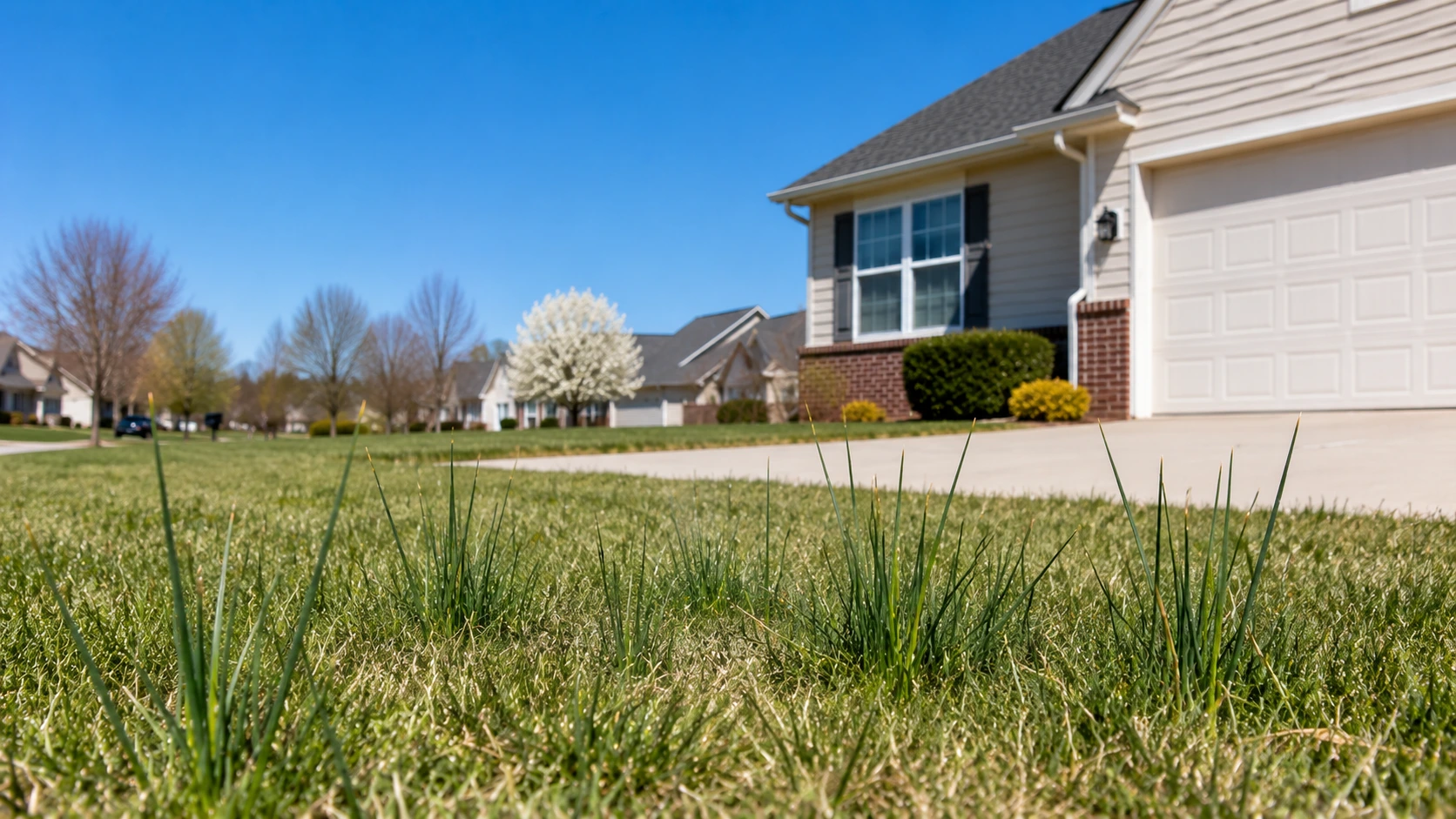
To kill wild onions without killing your grass, you need a selective post-emergent herbicide containing 2,4-D, Dicamba, and Mecoprop (MCPP), such as Ortho Weed B Gon. Because wild onions have a waxy coating, you must mix the herbicide with a non-ionic surfactant so the liquid sticks to the leaves. Spray during early spring when temperatures are between 50°F and 80°F, and never pull them by hand.
Identification Guide
Before you load up the sprayer, confirm what you are dealing with. Wild onions (Allium canadense) and wild garlic are closely related and treated the exact same way, but identifying them early saves your yard from unnecessary chemical stress.
- The Sniff Test: Pinch a leaf and crush it between your fingers. If it smells strongly of onion or garlic, you have your culprit. This separates it from standard grassy weeds.
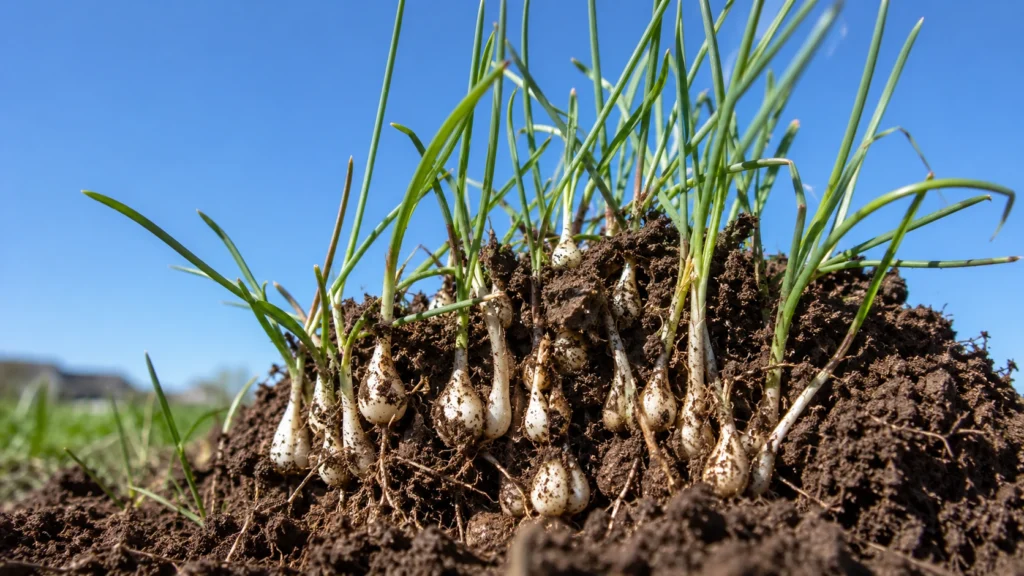
- Tubular Leaves: Look closely at the foliage. Wild onions have hollow, tubular leaves that look like thin green straws.
- Waxy Coating: The stems have a glossy, waxy sheen. This is their built-in armor against water and chemicals.
- Growth Pattern: They shoot up faster than your turfgrass in late winter or early spring. If your lawn is dormant but you see 6-inch dark green spikes standing tall, it is likely wild onion.
- Underground Bulbs: If you dig one up carefully, you will find a small, white teardrop-shaped bulb at the root, surrounded by tiny offset bulblets.
Root Causes
Wild onions don’t just appear overnight. They are winter perennials that thrive in specific yard conditions.
In my years routing through properties in the transition zone, I see wild onions exploding in lawns that struggle with heavy, compacted clay soils. These weeds love poor drainage. When your yard holds moisture over the winter, wild onion bulbs multiply underground undisturbed.
The biggest factor is the life cycle. They sprout from underground bulbs, not just seeds. During late spring, the plant dies back above ground, tricking you into thinking the summer heat killed them. In reality, the bulb is just resting in the soil, storing energy.
Most folks accidentally spread them. When you hit a patch of wild onions with a rototiller or a shovel while doing yard work, you shatter the main bulb into dozens of tiny bulblets. Each one of those will establish a new plant. Tilling a weed problem like this is a disaster waiting to happen.
Step-by-Step Solution
Hand-pulling is the worst thing you can do. The main bulb snaps instantly under pressure, leaving bulblets behind, and next spring you have three aggressive plants instead of one. Chemical control is strictly mandatory here if you want to save your yard.
1. Wait for the Right Weather
Wait for a calm, dry day in early spring. The air temperature must consistently stay between 50°F and 80°F. If you spray when it’s too cold, the weed is not actively absorbing nutrients and won’t take in the chemical. Check the forecast to ensure you understand the best time to spray weeds before or after rain—you need a solid 24 hours of no precipitation for the herbicide to lock in.
2. Mix the Herbicide and Surfactant
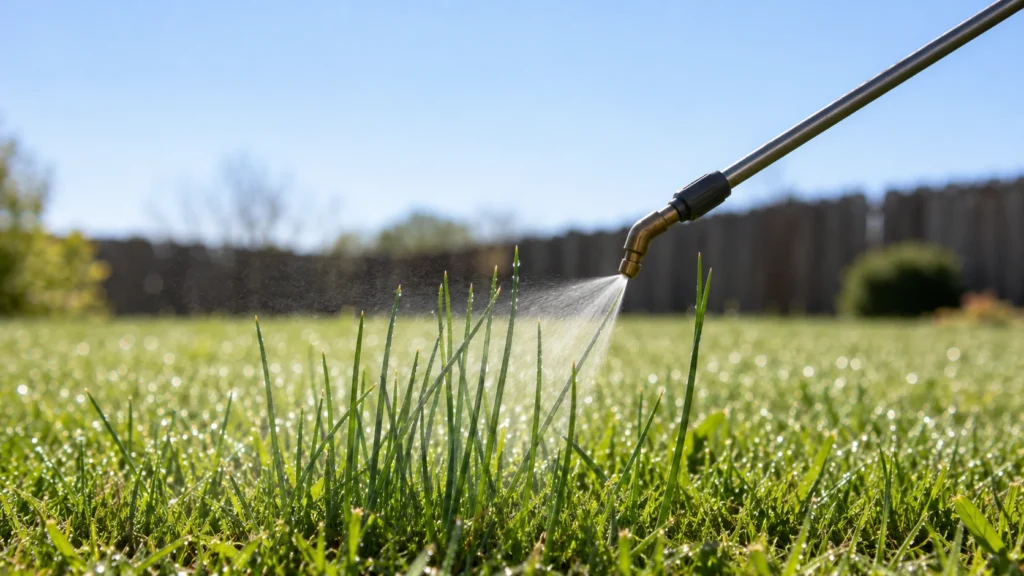
Use a 3-way selective broadleaf herbicide like SpeedZone or Ortho Weed B Gon (Active ingredients: 2,4-D, Dicamba, MCPP). You must add a non-ionic surfactant. I cannot stress this enough. Without the surfactant, the chemical literally beads up and rolls off the waxy onion leaves. Mix 1 to 2 oz of the liquid herbicide and exactly 0.5 oz of non-ionic surfactant per gallon of water in your pump sprayer. One mixed gallon covers roughly 400 sq ft of targeted weeds perfectly.
3. Apply a Fine Mist
Adjust your sprayer nozzle down to a fine mist. Coat the onion leaves evenly until they are wet, but immediately stop before the liquid starts running off into the soil. You want the chemical resting purely on the leaf surface.
4. Leave the Yard Alone
Do not mow for at least two days before and two days after the application. This gives the weed enough leaf surface area to absorb the poison and adequate time to pull it down into the root bulb. If you are unsure about the schedule, review the rules on whether to mow before weed and feed or liquid applications.
5. Monitor and Repeat
Don’t expect overnight results. With a standard 3-way herbicide, you will see the leaves curling downward and yellowing in 10 to 14 days. If the plant is still standing green after three full weeks, do a second spot application at the exact same mix rate.
Professional vs. DIY
Tackling wild onions is entirely possible with DIY methods if you catch them early, but persistent infestations covering massive square footage require stronger intervention.
| Factor | DIY | Professional |
| Cost | $ ($30-$50 for spray/surfactant) | $$$ ($80-$150 per treatment) |
| Speed | 3–4 Weeks | 2–3 Weeks |
| Effectiveness | Moderate | High |
| Risk to Turf | Moderate (over-mixing burns grass) | Low |
Call a pro if your yard is completely overrun and spot-spraying is no longer realistic. Commercial operators carry licensing for advanced ester-based herbicides that penetrate the waxy cuticle of the wild onion far faster than residential amine-based products sold at hardware stores. If you’ve sprayed your lawn twice with consumer-grade 2,4-D and the weeds are still standing tall, DIY is no longer the smart move. Paying a professional saves you from permanently burning your grass out of frustration.
Common Misdiagnosis
People constantly confuse wild onions with Star-of-Bethlehem (Ornithogalum umbellatum) because they show up at the exact same time.
Both are winter bulbs that pop up early in the spring, looking like thick, dark waxy grass. The major difference is the smell. Star-of-Bethlehem has absolutely no onion or garlic odor when crushed. It also features a distinct, pale green to bright white stripe running directly down the center of each leaf.
Treating Star-of-Bethlehem requires entirely different active chemicals, usually Quinclorac or Sulfentrazone. Spraying a standard 2,4-D blend on Star-of-Bethlehem will just waste your money, leave the weed unharmed, and chemically stress your delicate turf. Always do the sniff test before loading your sprayer.
Prevention Tips
You have to permanently change the environment to keep these perennial weeds out for good. Since wild onions notoriously thrive in highly compacted, poorly draining soil profiles, core aeration is your absolute best defense. Aerating the yard deeply every fall breaks up dense clay and improves internal soil drainage, creating an oxygenated environment that wild bulbs hate.
Maintain a thick, healthy turf canopy to choke them out. Mow at a height of 3 to 4 inches for cool-season grasses like Fescue or Kentucky Bluegrass. A tall, dense lawn blocks crucial sunlight from reaching the soil surface, preventing dormant bulbs from ever getting the energy they need to push through. Do not scalp your lawn in the fall; you are just giving winter weeds free real estate.
Pro-Tips Box: Most homeowners apply the product too early and wonder why it doesn’t work. The waxy coating on wild onions repels liquid like a rain jacket. Always crush the tops of the wild onions gently by stepping on them with your boots just before spraying. This bruises the waxy cuticle and creates micro-tears in the leaf surface. When you hit it with a mix of 2,4-D and a surfactant at 0.5 oz per gallon right after bruising them, the herbicide penetrates straight into the vascular system. It cuts the kill time in half.
People Also Ask
Will mowing kill wild onions?
No. Mowing only cuts off the top of the foliage. The robust bulb survives safely underground and will simply push up rapid new growth within days. Regular mowing actually encourages the plant to multiply beneath the soil surface and spread wider across your yard.
Does Roundup kill wild onions?
Yes, Glyphosate (Roundup) will absolutely kill wild onions to the root, but it is a non-selective chemical. It will completely annihilate your turfgrass and any other landscaping vegetation it touches. Never use Glyphosate in the middle of your healthy lawn just to treat scattered wild onions.
Do wild onions mean my soil is acidic?
Wild onions tolerate a wide range of soil pH, but they are incredibly common in highly acidic, physically compacted soils. Conducting a professional soil test and applying agricultural lime to raise the pH properly can significantly help your turf grass outcompete these weeds naturally over time.
What to Read Next
Applying harsh chemicals to your yard requires surgical precision, and understanding the timing of your treatments is half the battle. If your turf has taken a severe beating from accidental chemical overlap, you might need to urgently know how to repair a burnt lawn with fertilizer to get your grass green and healthy again before the harsh summer heat arrives.