
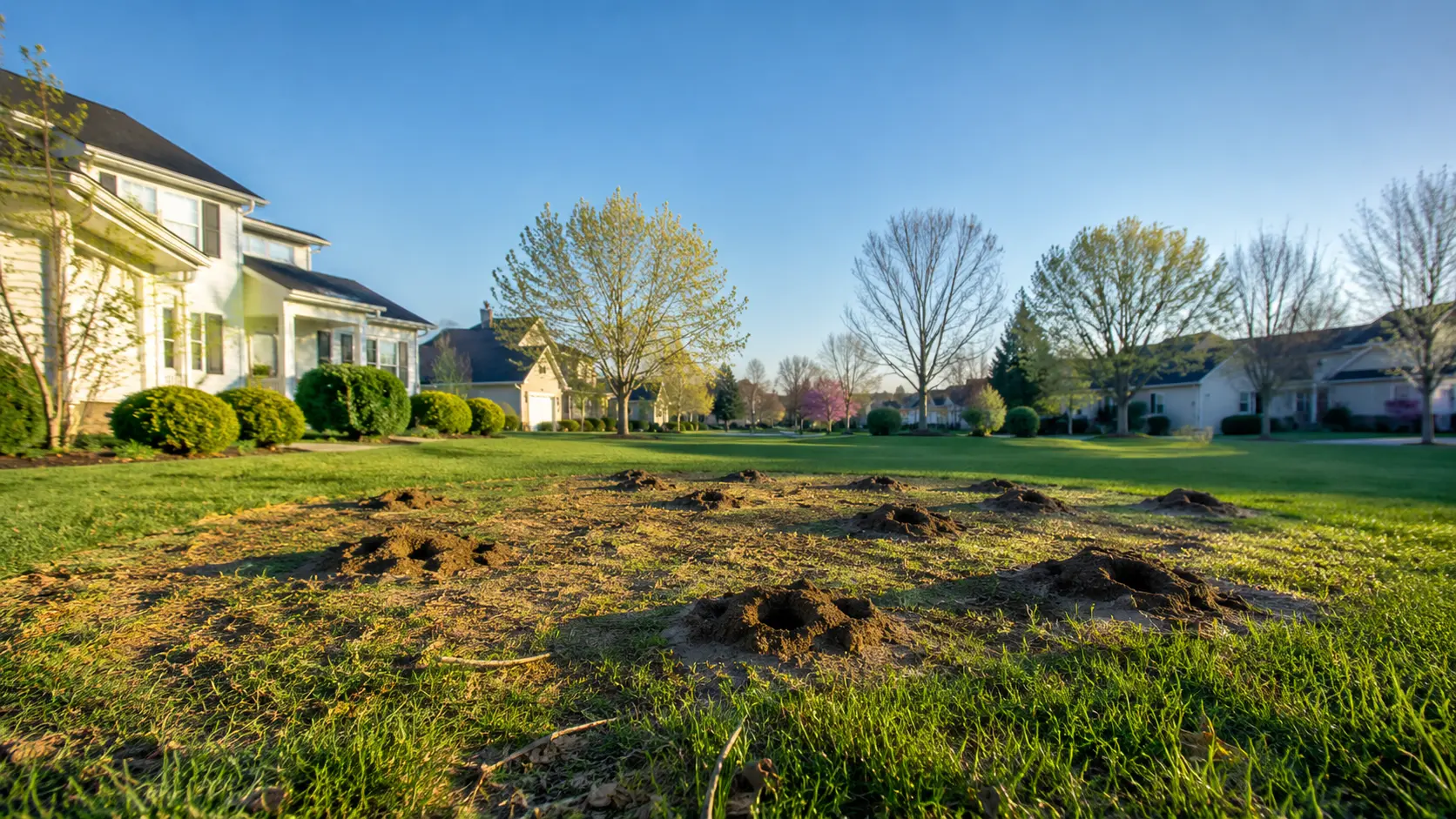
To get rid of ground bees, apply an insecticidal dust containing Deltamethrin or Carbaryl directly into their nest holes at night when the insects are inside and dormant. If the infestation is small and you prefer a chemical-free approach, soaking the soil heavily with a sprinkler for several consecutive days forces them to abandon the area, as these bees require dry, well-draining dirt to nest. Avoid pouring gasoline or boiling water into the burrows, which ruins your soil biology and rarely reaches the deep nesting chambers.
Eradication Plan (Step-by-Step)
Step 1: Wait for Nightfall and Gear Up
Applying any treatment during the day just aggravates the active foragers. Wait until at least two hours after sunset when the bees have returned to their burrows. Wear long sleeves, thick gloves, and pants tucked into your boots. Even though true ground bees are relatively docile, you do not want to take chances if you have misdiagnosed a yellow jacket nest. Use a flashlight with a red filter—stinging insects cannot see red light well, preventing them from flying up at your face while you work.
Step 2: Apply Insecticidal Dust
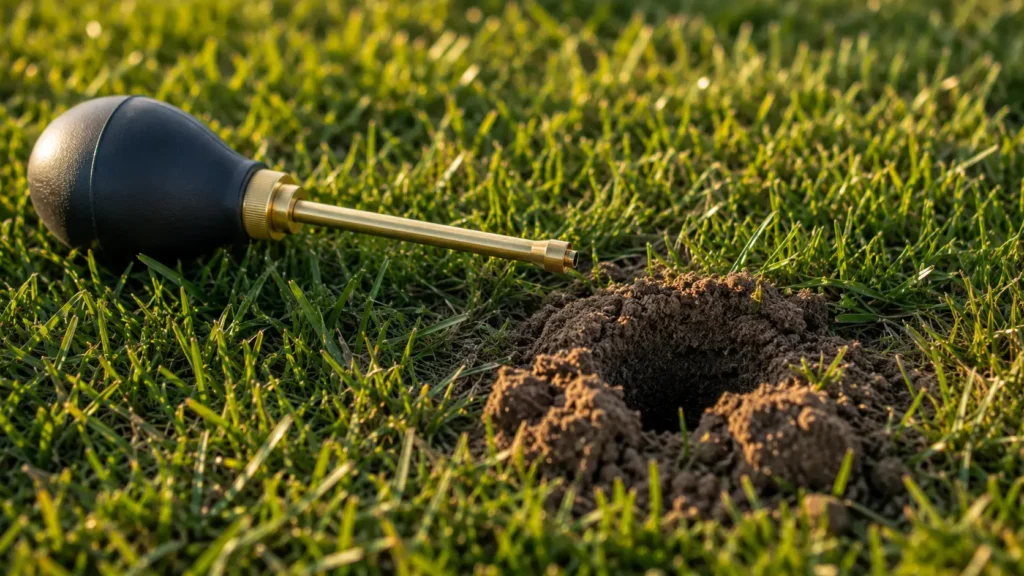
Liquid sprays absorb into the surrounding dirt and miss the deep chambers. You need a dry insecticidal dust that clings to the tunnel walls and the insects’ bodies. Squeeze the bulb duster directly into the entrance hole. As the bees crawl out the next morning, they pick up the lethal dose on their legs and bodies, spreading it deeper into the colony. Leave the holes open so returning foragers also enter and contact the dust.
- Product: DeltaDust (Deltamethrin 0.05%) or Drione Dust.
- Application Rate: 2 to 3 puffs (approx. 0.5 oz) per hole.
- Cost: $30 to $45 for the dust and bulb duster.
- Expected Results: Massive drop in activity within 24 to 48 hours.
Step 3: The Heavy Watering Method (Chemical-Free)
If you prefer not to use pesticides, you can manipulate their habitat. Ground bees select extremely dry, sandy soil. The constant moisture floods the shallow galleries and collapses the tunnel structural integrity, forcing the bees to abandon the site entirely.
- Equipment: Oscillating lawn sprinkler.
- Volume: 1 to 2 inches of water daily.
- Duration: 4 to 5 consecutive days.
- Cost: Only your municipal water bill.
- Expected Results: Full abandonment of the nests in about a week.
Identification & Misdiagnosis
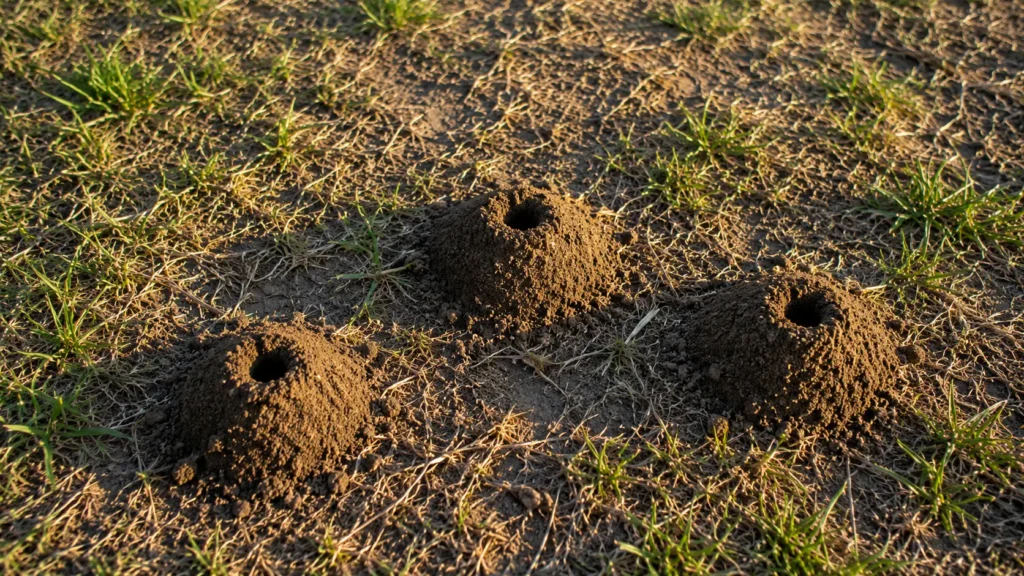
In my 15 years handling stinging insects across the Midwest and South, the vast majority of “ground bee” panic calls turn out to be something else. True ground bees—like mining bees or sweat bees—are solitary insects. You will see dozens of individual holes clustered together, each looking like a miniature volcano about 1 to 2 inches across. These bees are beneficial pollinators, rarely sting, and only hover low over the grass for a few weeks in early spring.
The dangerous misdiagnosis involves ground-nesting yellow jackets. Yellow jackets are highly aggressive wasps that build massive communal colonies underground. They use a single main entrance hole that is often wider, usually 1 to 3 inches in diameter. If you see dozens of yellow-and-black insects flying rapidly in a straight line in and out of one single hole, back away immediately. Treating a yellow jacket nest requires a much heavier application of dust and strict safety protocols.
Root Causes & Attractants
Ground bees do not pick your yard at random. They seek out specific soil conditions to ensure their offspring survive the pupation stage.
- Thin, Bare Turf: They cannot excavate through thick, dense grass roots. They target bare spots where the soil is exposed directly to the sun.
- Dry, Sandy Soil: Heavy clay retains too much moisture and causes their underground brood cells to rot. They prefer loose, sandy, well-draining soil.
- South-Facing Slopes: A slope facing south receives maximum solar radiation, warming the soil early in the spring and providing the perfect incubator for their eggs.
Pet & Child Safety Warnings
Keep dogs, cats, and children out of the yard during the eradication process. If you use a product like DeltaDust, the active ingredient remains potent in the soil for months if it stays dry. Keep pets off the treated area for at least 48 hours to ensure they do not sniff or dig at the burrows and inhale the dust. If you choose the heavy watering method, the area becomes muddy and poses zero chemical risk, but you should still block off the zone so kids do not provoke any remaining active bees while the nest floods.
Professional vs. DIY
| Feature | DIY Eradication | Professional Pest Control |
| Cost | $30 – $50 (Dust + Duster) | $150 – $300 |
| Speed | 24 – 48 Hours | Immediate Knockdown |
| Effectiveness | High for small clusters | Guaranteed |
| Risk | Moderate (Sting potential) | Low (Handled by pro) |
Handling a few solitary ground bee holes is an easy DIY project using standard insecticidal dust. You mix the product, puff it in at night, and walk away.
You must hire a professional if you misdiagnosed the insects and are actually dealing with a yellow jacket nest, or if you have a severe allergy to insect stings. A professional technician wears a full bee suit and uses specialized power dusters (like a B&G bulb duster or Actisol unit) to push high volumes of Pyrethrin dust deep into the intricate tunnel systems of aggressive colonies, eliminating the threat in minutes.
Prevention Tips
Keeping ground bees away long-term requires changing the landscape environment so it no longer supports their nesting habits.
- Overseed Bare Spots: Thick turf is your best defense. Plant a region-appropriate grass seed (like Tall Fescue for cool-season or Bermuda for warm-season climates) over any bare dirt patches in the early fall.
- Increase Irrigation: Adjust your sprinkler system to water deeply twice a week. Ground bees hate moist soil and will bypass a well-watered yard.
- Aerate and Topdress: If your soil is too sandy, core aerate the lawn and topdress with a quarter-inch layer of organic compost to improve moisture retention and soil density.
People Also Ask
Will grass grow back over ground bee holes?
Yes, turf will naturally spread back over the small excavation holes once the bees are gone. You can speed up the process by lightly raking topsoil over the mounds and watering the area to encourage nearby grass runners to fill the gap.
Do ground bees cause structural damage to houses?
No, solitary ground bees only nest in loose soil and lack the jaw strength to chew through wood, drywall, or foundation materials. They pose zero threat to your home’s physical structure.
Are ground bees active all summer?
No, most true ground bees are only active for three to four weeks in the early spring. Once the females lay their eggs and provision the burrows with pollen, they die off, and you will not see them again until next year.
What to Read Next
Sometimes, stinging insects bypass the yard entirely and look for gaps in your home’s siding or foundation to build their colonies. If you notice wasps flying into the exterior cracks of your house instead of digging in the dirt, you need to know how to get yellow jackets out of a wall safely before they chew through the drywall into your living room.