
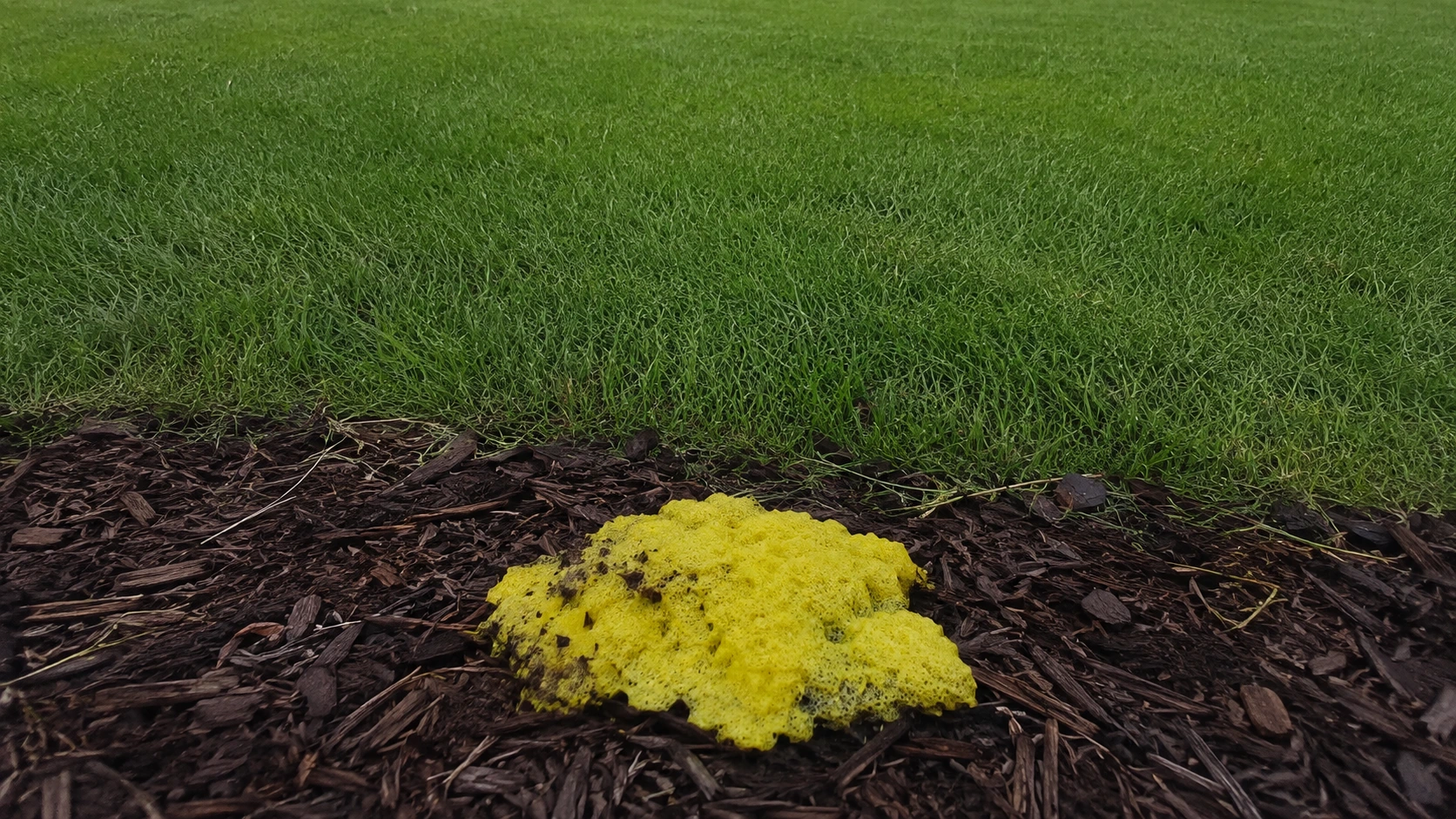
Is yellow slime mold dangerous? No, yellow slime mold is not dangerous to humans, pets, or your landscaping. Commonly known as dog vomit slime mold (Fuligo septica), this organism is completely harmless and non-toxic. It feeds strictly on decaying organic matter in your yard, never on living plant tissue.
Identification Guide
Spotting this organism is straightforward, but recognizing its life stages prevents panic. Look for these distinct visual markers in your yard:
- Initial Color and Shape: It starts as a bright, neon-yellow or pale yellow spongy mass. It sits directly on top of the surface, looking exactly like scrambled eggs or a pile of fresh dog vomit.
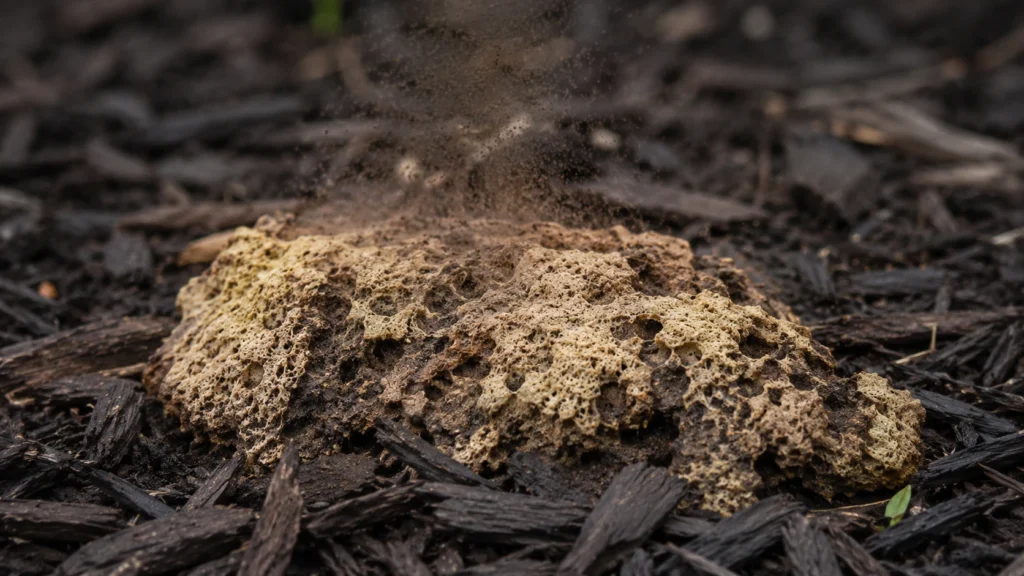
- Rapid Color Shift: Within 24 to 48 hours, the bright yellow fades. As it dries out under the sun, it turns into a crusty, pale tan, or dull brown lump.
- Texture Changes: In its active stage, it is soft, wet, and foamy. Once mature, it hardens into a dry, brittle crust. If you poke it with a stick, the crust crumbles, releasing a cloud of dark brown dust, which are millions of microscopic spores.
- Typical Locations: You will almost always find it on damp hardwood mulch beds, rotting logs, or sometimes creeping a few inches out onto adjacent turfgrass. It rarely appears on bare soil.
- Explosive Growth Rate: It seemingly appears overnight. You can have a perfectly clean mulch bed on Tuesday and find a 10-inch wide, thick yellow blob by Wednesday morning.
Root Causes
Yellow slime mold thrives when three specific environmental factors collide in your yard: high moisture, warm temperatures, and an abundance of decaying organic matter. I see this issue pop up constantly in late spring and summer right after a heavy rainstorm is followed by intense, sticky humidity.
The spores of Fuligo septica are airborne and naturally present in almost all soil. When you lay down fresh hardwood mulch, you provide an all-you-can-eat buffet of decaying wood. The slime mold is actually a mobile organism—a plasmodium. It creeps slowly along the wet wood fibers, consuming bacteria and fungi. It isn’t attacking your plants; it is simply using the wet, rotting wood as a feeding ground.
Poor drainage and overwatering are the biggest catalysts for this problem. If your lawn irrigation system is heavily soaking a shaded mulch bed every single day, the wood never gets a chance to dry out. Moisture gets trapped under the top layer of woodchips, creating a dark, damp incubator.
Step-by-Step Solution
Because this organism is completely harmless, chemical intervention is entirely unnecessary and mostly ineffective. Standard lawn fungicides like those containing Propiconazole or Azoxystrobin do not work well because slime mold is technically an amoeba, not a true fungus. Here is the field-tested approach to managing it without wasting money at the hardware store.
- Do Nothing (The Preferred Method): If the yellow blob is hidden in a back corner of your yard or under a heavy shrub, simply ignore it. Under the heat of the summer sun, it will naturally dry up, turn brown, and blow away within a few days. The ecosystem handles the cleanup for you.
- Scoop and Toss: If the mold looks too ugly right next to your front porch or walkway, grab a flat shovel. Scoop the yellow mass along with the top 1 to 2 inches of the affected mulch directly into a plastic trash bag. Tie the bag tightly and throw it in your regular trash.
- Break It Up with Water: If the organism has already dried into its crusty brown stage, hitting it with a heavy, focused stream from your garden hose will shatter the mass. Be aware that this actively spreads the brown spores across the yard. I only recommend this physical removal technique if the bed gets plenty of direct sunlight to dry things out quickly afterward.
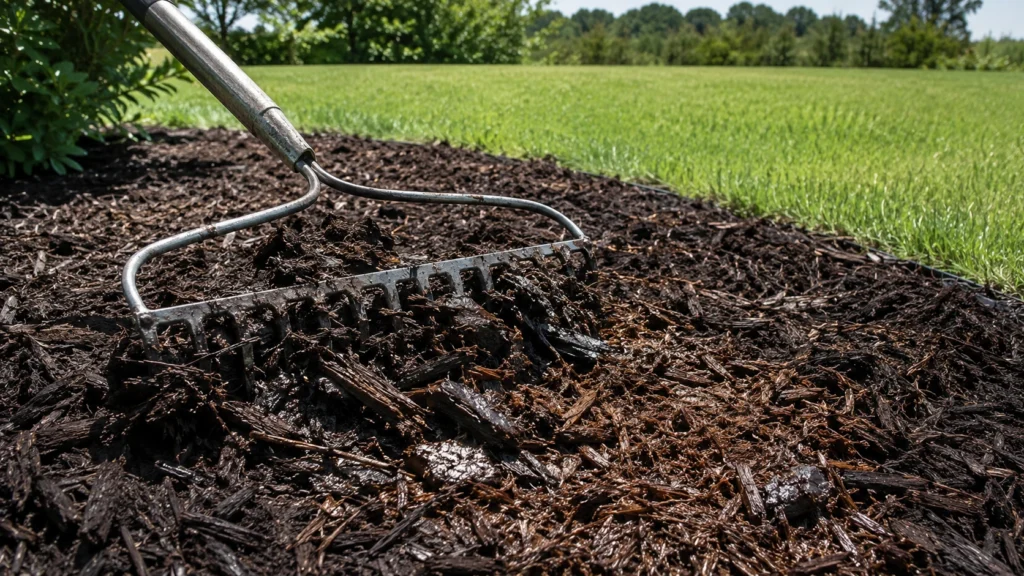
- Rake to Dry the Mulch: Take a heavy steel bow rake and aggressively turn over the top 3 to 4 inches of your mulch bed. This exposes the damp underside to the sun and moving air. Slime mold simply cannot survive without extreme surface moisture. If the wood dries out, the mold dies rapidly.
- Address Drainage Issues: If you suspect the trapped moisture is from poor drainage and ground compaction beneath the mulch, consider broader yard improvements. Learning when should you aerate your lawn can help dry out the surrounding turf areas, pulling standing water away from your plant beds.
Professional vs. DIY
| Factor | DIY | Professional |
| Cost | $0 | $100+ |
| Speed | 1 Day | N/A |
| Effectiveness | High | Low |
| Risk | None | None |
You absolutely do not need to call a professional lawn care or pest control service for dog vomit slime mold. Any company that tries to sell you an expensive chemical spray or a specialized treatment program for this issue is taking advantage of your lack of knowledge. Handle it yourself with a shovel and a heavy rake.
Save your home maintenance budget for real structural threats or aggressive turf diseases. If you start seeing insect activity tunneling inside that same wet wood, that is a different story. You might want to learn how to spot signs of termites in mulch before deciding to call a licensed exterminator for a professional perimeter treatment.
Common Misdiagnosis
Homeowners frequently mistake yellow slime mold for actual dog vomit or sick animal waste. The easiest tell is the texture and the smell. Slime mold is highly uniform, spongy, and leaves a powdery brown spore residue when you poke it with a stick. Animal waste will have a distinct, foul odor, attract heavy fly activity, and won’t turn into dry dust in a single day.
Another common mix-up occurs with black mold on lawn or serious turf fungi like brown patch or dollar spot. Slime mold sits passively on top of the grass blades without creating yellow halos or dead lesions underneath. You can literally wipe it off the grass. True turf diseases will physically attack, discolor, and kill the cellular tissue of the grass.
Prevention Tips
You cannot eliminate slime mold spores from the environment completely, but you can easily remove the damp conditions it needs to activate. First, stop watering your mulch beds directly. Adjust your sprinkler heads so they target the active turfgrass and avoid drenching the dead woodchips.
Make a habit of raking your mulch beds every four to six weeks. This physical action breaks up hidden fungal mats and drastically improves airflow down to the soil line. Finally, limit your mulch layer to no more than 2 to 3 inches thick. Anything deeper than 3 inches acts as a sponge, trapping far too much moisture against the soil surface and creating the perfect breeding ground for both molds and structural pests.
Pro-Tips Box: Keep an eye on your irrigation timing. I see yellow slime mold pop up constantly when yards are scheduled to run sprinklers at 8:00 PM. Watering at night means that mulch stays soaked for 10 straight hours before the sun can dry it. Shift your watering schedule to 4:00 AM or 5:00 AM. This gives the soil time to absorb the moisture, while the morning sun quickly evaporates the excess water off the surface of the mulch and grass blades, cutting off the mold’s primary water supply.
People Also Ask
Can yellow slime mold kill my plants?
No. Slime mold does not feed on living plant tissue. It might climb up the stems of small plants or coat a few grass blades, which can temporarily block sunlight, but it will not infect or kill your plants.
Is yellow slime mold poisonous to dogs?
No, dog vomit slime mold is non-toxic to dogs, cats, and humans. However, if a dog eats a large amount of the mold or the rotting mulch it grows on, it could cause mild stomach upset, but the mold itself is not poisonous.
Does yellow slime mold mean my soil is healthy?
Yes, its presence indicates that organic matter in your yard is actively breaking down, which is a key part of the nutrient cycle. It shows that your mulch environment is biologically active, though perhaps a bit too wet.
What to Read Next
If you are tired of dealing with fungal growth and decaying woodchips every summer, switching your landscaping materials might be the permanent fix you need. Weighing the pro and con of rubber mulch can help you decide if a synthetic, mold-resistant option is the right move for your home’s flower beds.