
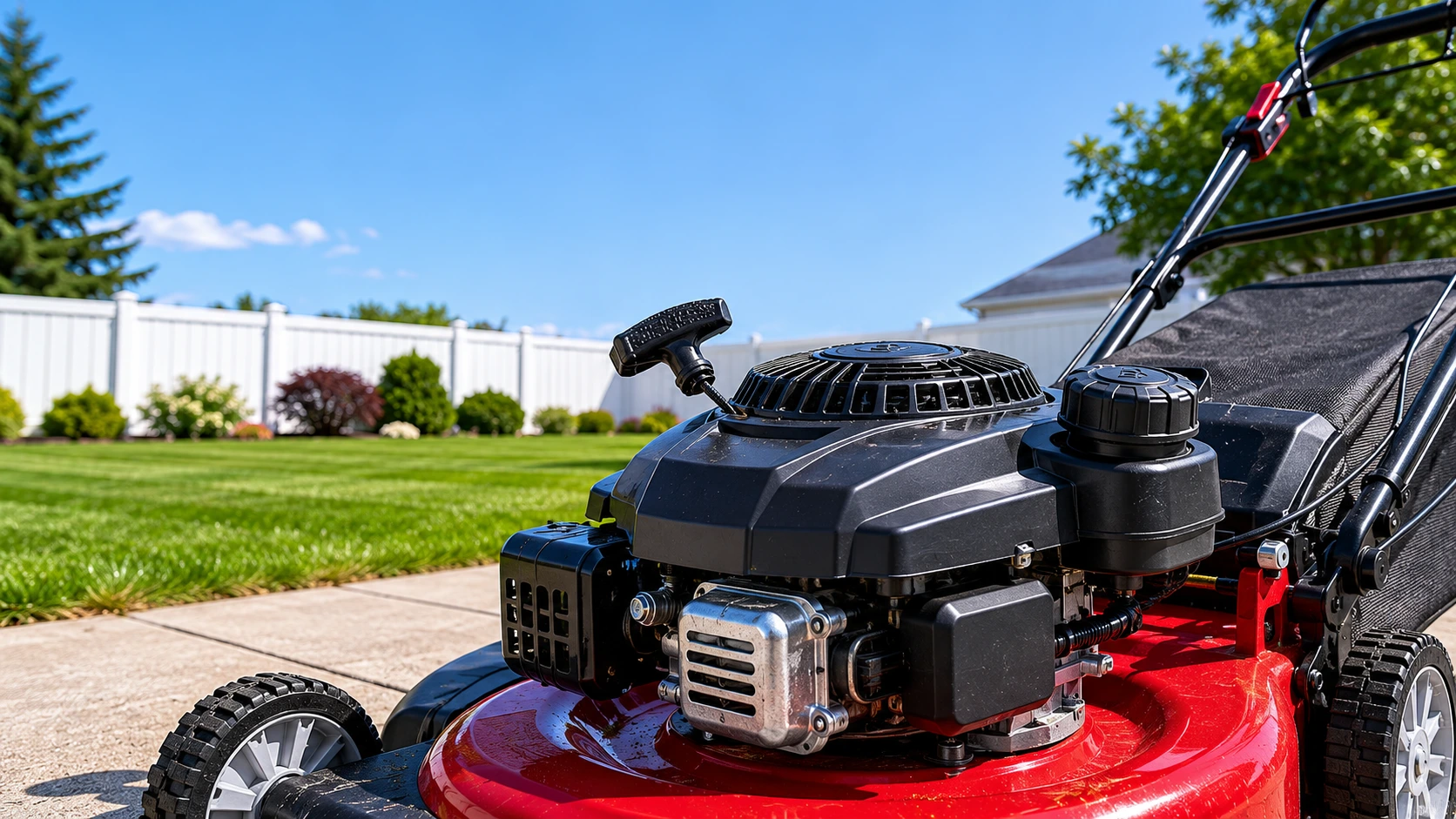
Your lawn mower won’t start after sitting all winter because stale gas has degraded and clogged the carburetor. Gasoline breaks down in as little as 30 days, leaving a varnish-like residue that blocks fuel flow. To fix it, you need to drain the old fuel, clean the carburetor bowl, replace the spark plug, and add fresh gas treated with a stabilizer.
Identification Guide
Before tearing the engine apart, confirm the exact symptoms. A mower that sat through December and January gives specific clues.
- The engine sputters but dies immediately: You have a spark, but the engine is starving for fuel. The carburetor is partially clogged.
- The pull cord is extremely hard to pull: The cylinder might have rusted, or the engine oil thickened drastically during cold weather.
- You smell a strong, varnish-like odor: Pop the gas cap. Stale winter gas doesn’t smell like regular gasoline; it smells sharp and sour.
- The primer bulb is cracked or brittle: Cold weather destroys rubber components. If pressing the bulb doesn’t squirt fuel into the throat of the carburetor, you found the culprit.
- The engine turns over but won’t catch: Pull the spark plug. If the tip is coated in thick black carbon or smells like raw gas, it cannot generate the spark needed to ignite the fuel.
Root Causes
Small engines hate sitting idle. The most common cause is untreated, ethanol-blended fuel left in the tank. Ethanol absorbs moisture from the air during winter temperature fluctuations. This process, known as phase separation, causes water to sink to the bottom of your gas tank.
Once spring arrives, your mower pulls that water directly into the carburetor. The remaining fuel turns into a sticky varnish that glues the carburetor float needle shut and clogs the main jet.
Temperature drops also wreak havoc on oil and metal. Leaving dirty oil in the crankcase over winter allows acidic byproducts to pit internal metal surfaces. Furthermore, mice frequently find their way under the engine shroud to build nests using dry yard debris, chewing through ignition wires and blocking the cooling fins. Moisture in the air also causes bare metal parts like the flywheel magnet and ignition coil to rust, weakening the spark signal before it ever reaches the combustion chamber.
Step-by-Step Solution
You need fresh fuel, a clean path for air, and a hot spark.
1. Drain the old fuel system
Do not try to burn off old gas. Disconnect the fuel line from the base of the fuel tank and drain the sour gas into an approved container. Pinch off the rubber line with a clamp if you need to stop the flow abruptly.
2. Clean the carburetor bowl
Use a 1/2-inch or 3/8-inch socket (depending on your Briggs & Stratton or Honda model) to remove the bolt at the bottom of the carburetor bowl. Expect a few ounces of trapped, gummy fuel to spill out. Spray the inside of the metal bowl with Gumout or STP Carburetor Cleaner. Use the red straw attachment to blast cleaner directly up through the main jet hole in the center of the carburetor.
3. Replace the spark plug
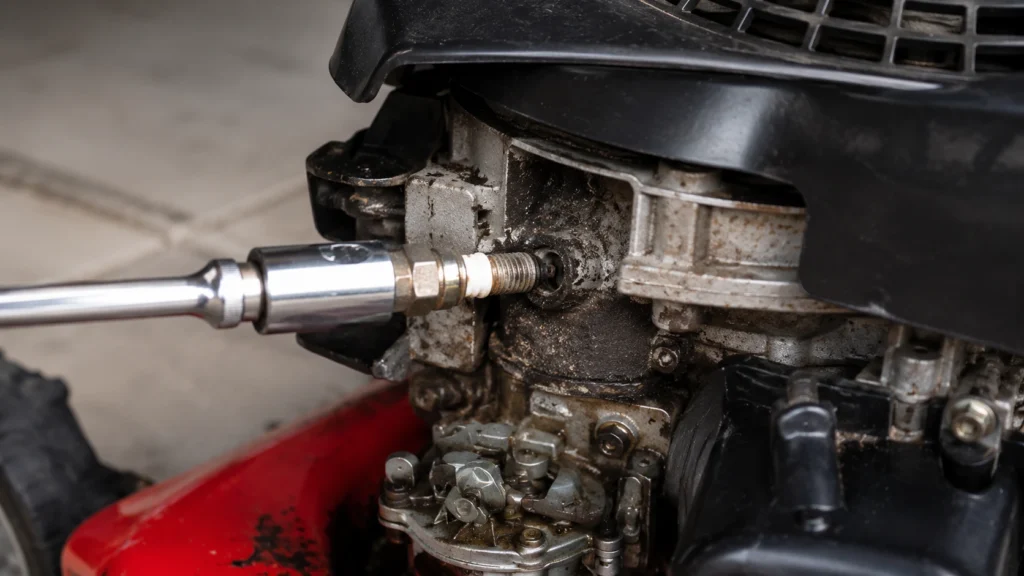
Remove the rubber spark plug boot. Use a 13/16-inch or 5/8-inch spark plug wrench to extract the old plug. Buy an exact replacement, usually an NGK or Champion. Gap the new plug to the manufacturer’s spec, typically 0.030 inches. Thread it in by hand to avoid cross-threading, then tighten a quarter-turn past snug with your wrench.
4. Check the air filter
Remove the plastic air filter cover. If you left a paper filter in all winter and a mouse chewed it, or if it is soaked in oil from tilting the mower incorrectly, throw it out. An engine starving for air runs rich and fouls your brand-new spark plug instantly.
5. Add fresh fuel with stabilizer
Buy 1 gallon of fresh, 87-octane or higher unleaded gas. Add 1 ounce of STA-BIL or Sea Foam directly to the red gas can before pouring it into the mower. This cleans the internal passages as the engine runs.
6. Prime and start
Press the primer bulb 3 to 5 times. Pull the cord briskly. The engine might smoke for the first few seconds while it clears the carburetor cleaner. If your lawn mower smoking white persists, you likely overfilled the crankcase oil.
Professional vs. DIY
| Factor | DIY | Professional |
| Cost | $15 – $30 | $75 – $150 |
| Speed | 1 hour | 2 – 4 weeks (Spring rush) |
| Effectiveness | High for fuel issues | Very High |
| Risk | Moderate | Low |
Cleaning a carburetor bowl and swapping a spark plug is a standard weekend DIY job. You only need a basic socket set, carb cleaner, and fresh gas. However, if you clean the bowl and the mower still surges or refuses to stay running, the entire carburetor likely needs an ultrasonic bath and a rebuild kit.
Local small engine repair shops get backed up for weeks every April. Unless you want to wait a month for a simple fix, tackle the fuel system yourself first. If the engine has zero compression—meaning the pull cord offers absolutely no resistance—take it to a professional immediately.
Common Misdiagnosis
People constantly confuse a dead spark plug with a sheared flywheel key. Both prevent the engine from firing up.
If you pull the cord and the engine violently kicks back, ripping the handle out of your grip, you do not have a fuel or spark plug problem. You have a sheared flywheel key throwing off the engine timing. This usually happens if you hit a rock, water meter cover, or stump during your final mow of the previous fall, and you only notice the damage now.
Another frequent mistake is assuming the internal engine is broken when the safety cable is just stretched. If the cable running from the top handle down to the engine block is slack, the engine brake remains engaged, completely grounding out the ignition coil.
Prevention Tips
Winterizing your equipment stops this cycle. Your last mow of the season dictates exactly how easily your engine starts the following spring.
Never leave untreated ethanol gas in the tank over winter. Add a fuel stabilizer to a fresh tank of gas, run the mower for five minutes to circulate the treated fuel through the entire carburetor, and shut it off. Alternatively, turn off the fuel shut-off valve and let the engine run until it dies, completely emptying the carburetor bowl of all liquid.
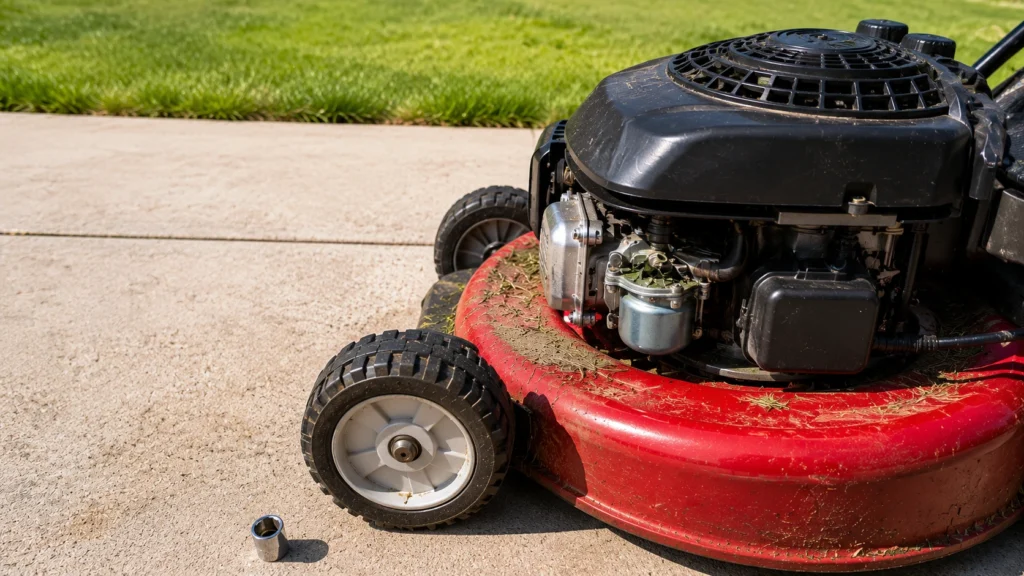
Store the mower in a dry shed or garage. Leaving it outside under a tarp traps ground moisture, accelerating rust on the sensitive ignition components. Always check your blade sharpness before storage too; a tuned engine means nothing if your lawn mower leaves uncut grass once the active mowing season starts.
Pro Tips Box
Pro-Tips Box: Don’t use starting fluid (ether) to force a stubborn mower to start after a long winter. It strips the protective oil film off the cylinder walls and causes severe internal engine damage. Instead, remove the spark plug and pour exactly one teaspoon of fresh gasoline directly into the spark plug hole. Replace the plug and pull the cord. If it fires for two seconds and dies, your ignition system works perfectly and your problem is 100% inside the carburetor.
People Also Ask
How do you fix a lawn mower that won’t start after winter?
Drain the stale gasoline from the tank and the carburetor bowl. Spray the main jet with carburetor cleaner. Replace the spark plug and the air filter, then fill the tank with fresh, ethanol-free fuel mixed with a stabilizer. Pull the cord briskly to flush out the system.
Is it bad to leave gas in a lawn mower over winter?
Yes. Gasoline breaks down and loses its volatility in 30 to 60 days. Ethanol in the fuel absorbs moisture, which causes the gas to separate and form a sticky varnish that clogs the tiny passages inside your carburetor.
Should I try starting fluid on my lawn mower?
Avoid starting fluid on small engines. Ether is highly combustible and burns dry, removing the thin layer of oil protecting the piston and cylinder rings. It can cause scoring or completely lock up the engine if used excessively.
What to Read Next
Getting the engine running is only the first step of spring preparation. If you want a healthy, dense yard this year, timing is everything, which is why knowing exactly when to start mowing lawn in the spring prevents you from scalping dormant grass or stressing new root growth.