
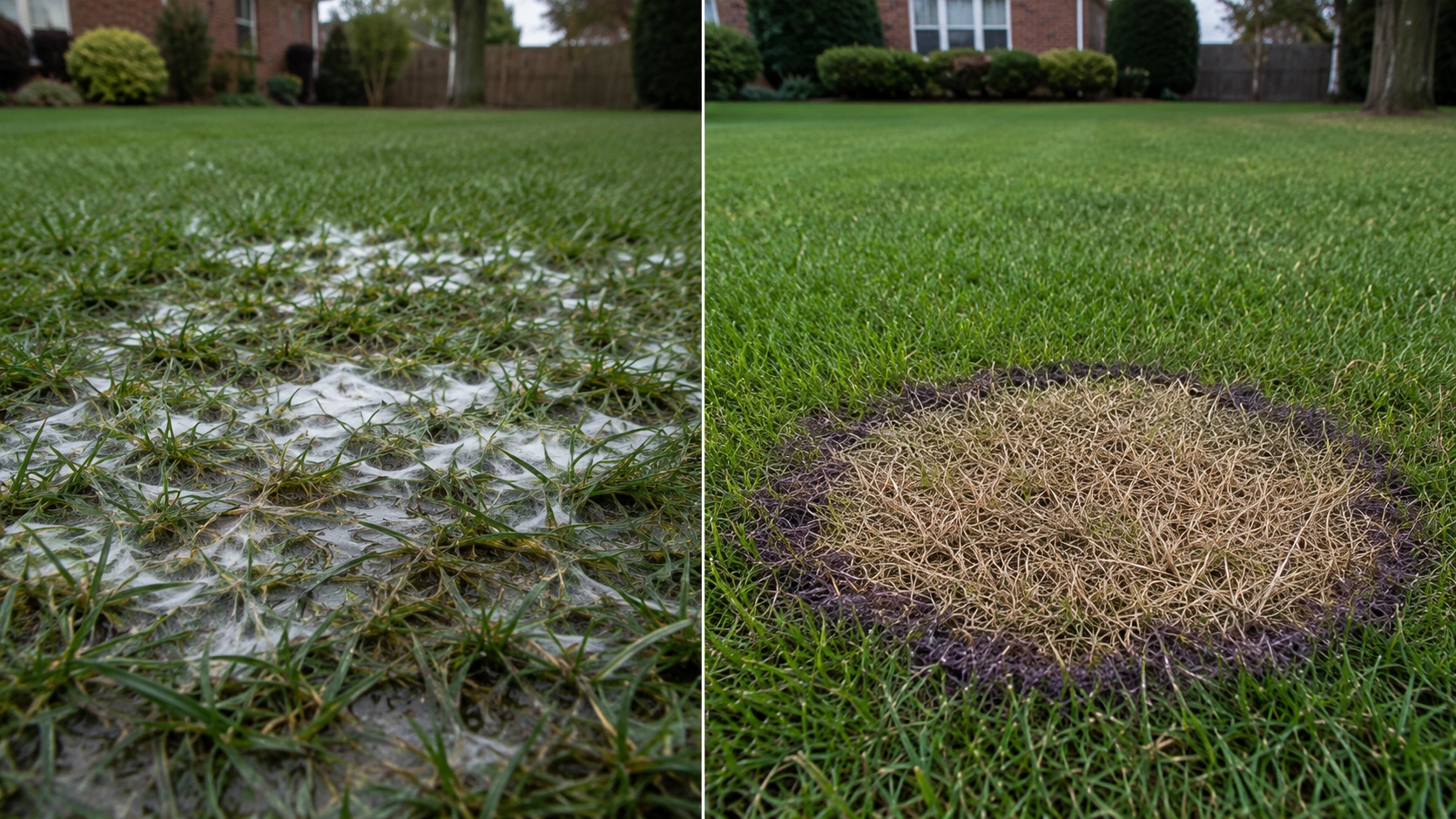
Pythium blight acts like a fast-moving wildfire, turning grass greasy, matted, and brown within 24 hours. Brown patch is slower, forming distinct circular patches with a dark, purplish “smoke ring” around the active edges. While brown patch damages the grass blades, pythium destroys the entire crown and root system. Both thrive in hot, humid weather, but pythium is a true turfgrass emergency.
Identification Guide
Mistaking these two fungal issues will cost you your lawn. Pythium blight requires an entirely different chemical class than most summer lawn diseases.
Look for these specific visual cues in your yard early in the morning before the sun dries the dew:
- Pythium Blight Indicators:
- Texture: Grass blades look greasy, slimy, and dark before collapsing into a matted, light brown mess.
- The Cotton Test: Look closely at the ground. You will see white, fluffy mycelium that looks exactly like cotton candy clinging to the wet blades.
- Smell: Advanced pythium infections often carry a faint odor similar to rotting fish.
- Spread: It moves fast. Damage follows water drainage patterns or mower tracks across the yard.
- Brown Patch Indicators:
- Shape: Roughly circular patches ranging from 6 inches to several feet in diameter.
- The Smoke Ring: The definitive sign. Look for a half-inch wide, dark purplish-gray ring bordering the dead brown grass and the healthy green grass.
- Structure: The grass blades remain upright even as they turn yellow and brown. They do not turn to a slimy mush.
Root Causes
Pathogens exist in your soil year-round. They only erupt into full-blown lawn diseases when the environmental triangle aligns: high heat, trapped moisture, and a susceptible host.
Nighttime watering is the number one driver of both diseases. When sprinkler systems run at 8 PM, moisture sits on the leaf canopy for over 10 hours. Add nighttime temperatures staying above 70°F and heavy humidity, and the turf becomes the perfect incubator.
Excessive nitrogen application early in the summer also triggers severe outbreaks. Granular fertilizers with fast-release nitrogen push a flush of lush, weak top growth that fungal spores easily penetrate. Your grass grows fast, but its cellular walls are incredibly weak.
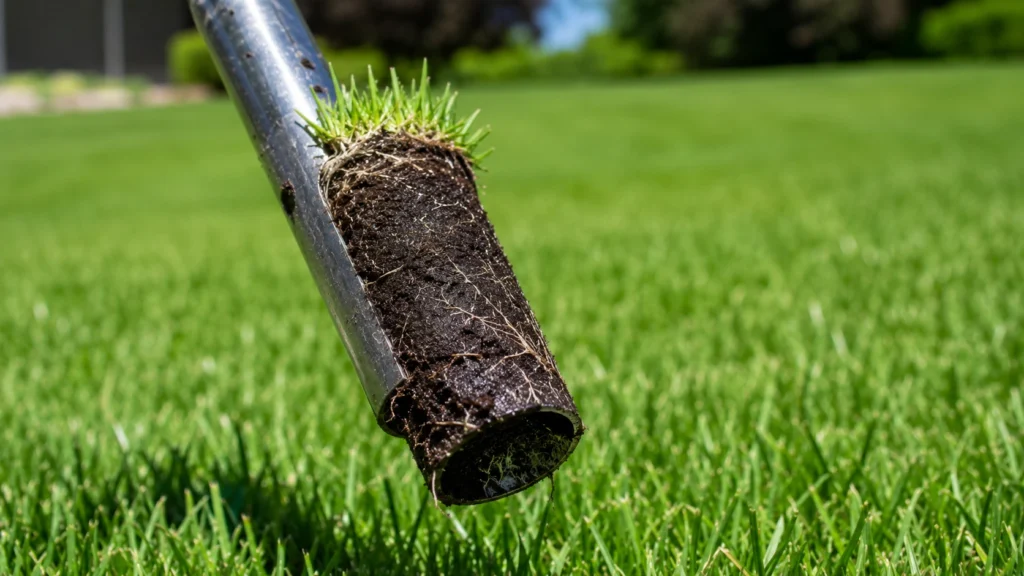
Finally, heavy soil compaction chokes the root zone. When the ground is hard, water pools at the surface instead of driving deep into the soil. Knowing exactly when should you aerate your lawn breaks up this compaction layer, allowing the soil to drain properly and removing the excess surface moisture that fungi thrive on.
Step-by-Step Solution
Stop all watering immediately. Shut off the irrigation controller. Applying water to an active pythium outbreak will wash the spores across the rest of the yard, destroying it within days.
Standard DIY fungicides available at big box stores (like Propiconazole or Myclobutanil) will treat brown patch effectively. They will do absolutely nothing to stop pythium blight.
Step 1: Confirm Your Target
If the grass is slimy and rotting to the crown, you have pythium. If the grass is standing upright with a dark outer ring, it is brown patch.
Step 2: Choose the Exact Chemical
- For Brown Patch: Purchase a liquid fungicide containing Azoxystrobin (like Heritage) or Propiconazole (like BioAdvanced Fungus Control).
- For Pythium: You must use specialized active ingredients. Mefenoxam (Subdue Maxx) or Propamocarb (Banol) are required.
Step 3: Measure and Mix (Brown Patch Protocol)
Pour 1 fl oz of Azoxystrobin concentrate into a pump sprayer. Add 1 gallon of water. Swirl the tank gently. This specific mixture covers exactly 1,000 sq ft of turf.
Step 4: Application Technique
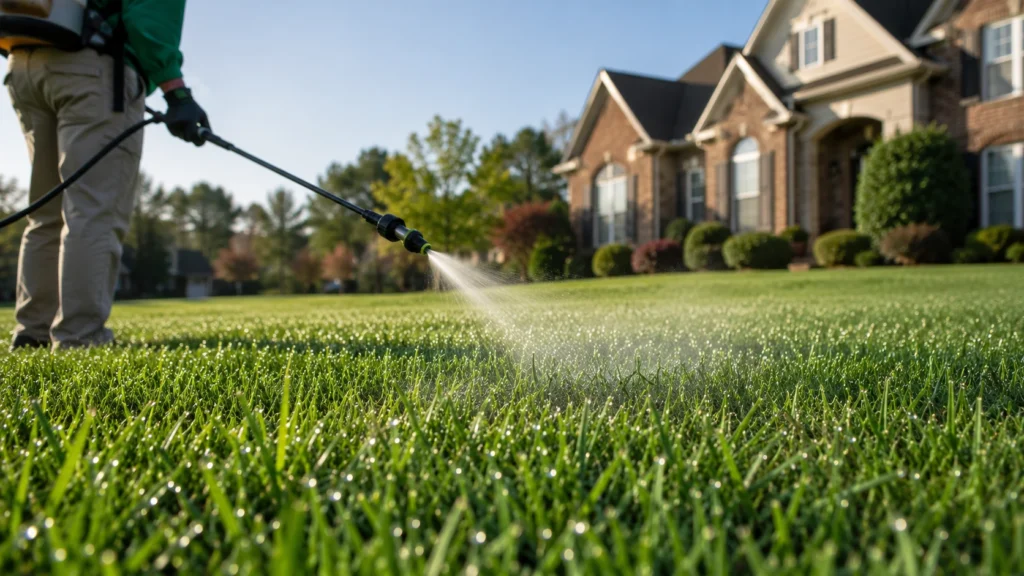
Set your sprayer nozzle to a fine mist. Walk at a steady pace, spraying evenly across the affected area and extending at least 3 feet into the surrounding healthy grass. Fungicides work best preventatively. Protecting the border stops the spread.
Step 5: Post-Treatment Protocol
Do not mow for 48 hours after application. Give the active ingredient time to absorb through the foliar tissue. You will not see the dead brown grass turn green again. You are looking for the dark smoke ring to disappear and the active spread to stop.
Step 6: The 14-Day Reapplication
Fungicides break down. Reapply the exact same mixture 14 to 21 days later to protect the newly growing grass blades from residual soil spores.
Professional vs. DIY
Tackling lawn diseases requires knowing your limits. Brown patch is a highly manageable DIY project. Pythium blight often warrants calling a certified lawn care operator immediately.
| Factor | DIY Brown Patch | Professional Pythium Control |
| Cost | $ ($25 – $45 per bottle) | $$$$ ($150+ per application) |
| Speed | Days | Hours |
| Effectiveness | High with Azoxystrobin | Absolute (Commercial grade chemicals) |
| Risk of Turf Loss | Low to Moderate | Extremely High |
Commercial operators have immediate access to bulk Mefenoxam, which costs upwards of $200 for a small homeowner bottle. If you misdiagnose pythium as brown patch and apply a standard DIY fungicide, you will likely lose the entire lawn section before you realize the chemical failed.
Common Misdiagnosis
The biggest mistake homeowners make is confusing fungal diseases with insect damage. Throwing insecticides at a fungal problem wastes money and delays critical treatment.
It is incredibly common to confuse grub damage vs fungus. Both create large dead patches of brown grass in late summer.
To tell the difference, walk up to the dead patch and grab a handful of the brown grass. Pull upward. If the grass comes up easily in your hand like a loose piece of carpet, roots and all, you have grubs chewing off the root system below ground. If the grass stays firmly rooted in the soil but the blades snap off or look diseased, you are dealing with a fungus.
Prevention Tips
You cannot control the weather, but you can control turf moisture. Change your irrigation timer to run exclusively between 4 AM and 6 AM. Watering just before dawn ensures the rising sun dries the grass canopy quickly, denying fungal spores the 10 hours of continuous moisture they need to germinate.
Drop your lawnmower deck one notch higher during the peak heat of summer. Taller grass blades cast shade on the soil, regulating ground temperature and reducing heat stress.
Switch your fertilizer program in late spring. Stop using quick-release synthetic nitrogen by June. Move to slow-release organic fertilizers like Milorganite, which feed the soil microbes slowly without pushing the rapid, weak foliar growth that pathogens exploit.
Pro-Tips Box: Most homeowners rely entirely on one fungicide all summer and inadvertently breed super-fungi. Pathogens build resistance fast. If you apply Azoxystrobin in June, switch to a Group 3 fungicide like Propiconazole for your July application. Never apply the same chemical class more than twice in a row. Also, always add a non-ionic surfactant (0.5 oz per gallon) to your tank mix. Fungicides tend to bead up and roll off the waxy grass blades; the surfactant breaks surface tension, forcing the chemical to stick and absorb.
People Also Ask
Can pythium blight be cured once it starts?
You cannot cure the grass blades that have already turned to mush. Specialized fungicides like Mefenoxam halt the active spread immediately, protecting the remaining healthy turf. The dead areas will need to be raked out and reseeded in the early fall.
Does lawn fertilizer make brown patch worse?
Yes. Applying fast-release nitrogen fertilizer during an active brown patch outbreak will severely accelerate the disease. The nitrogen pushes rapid, weak leaf growth that the fungus aggressively attacks. Wait until the disease is fully controlled before feeding the lawn.
Will a brown patch lawn recover on its own?
If the weather patterns change, breaking the high heat and humidity cycle, the disease will naturally stop spreading. Because brown patch primarily attacks the leaf blades rather than the roots, the grass will eventually grow out the damage with cooler fall temperatures.
What to Read Next
Understanding how moisture levels and nutrient deficiencies trigger different pathogens is vital for a healthy yard, which is why reviewing a visual breakdown of Brown Patch vs Dollar Spot will help you precisely identify the exact spots appearing on your turf.