
The best time to apply Scotts Turf Builder is in early spring (typically between February and April) right as your grass breaks dormancy and soil temperatures reach 55°F. If you are using a weed and feed formula containing 2,4-D or Dicamba, apply it to a damp lawn when daytime highs are consistently between 60°F and 85°F, ensuring no heavy rain is forecasted for at least 24 hours.
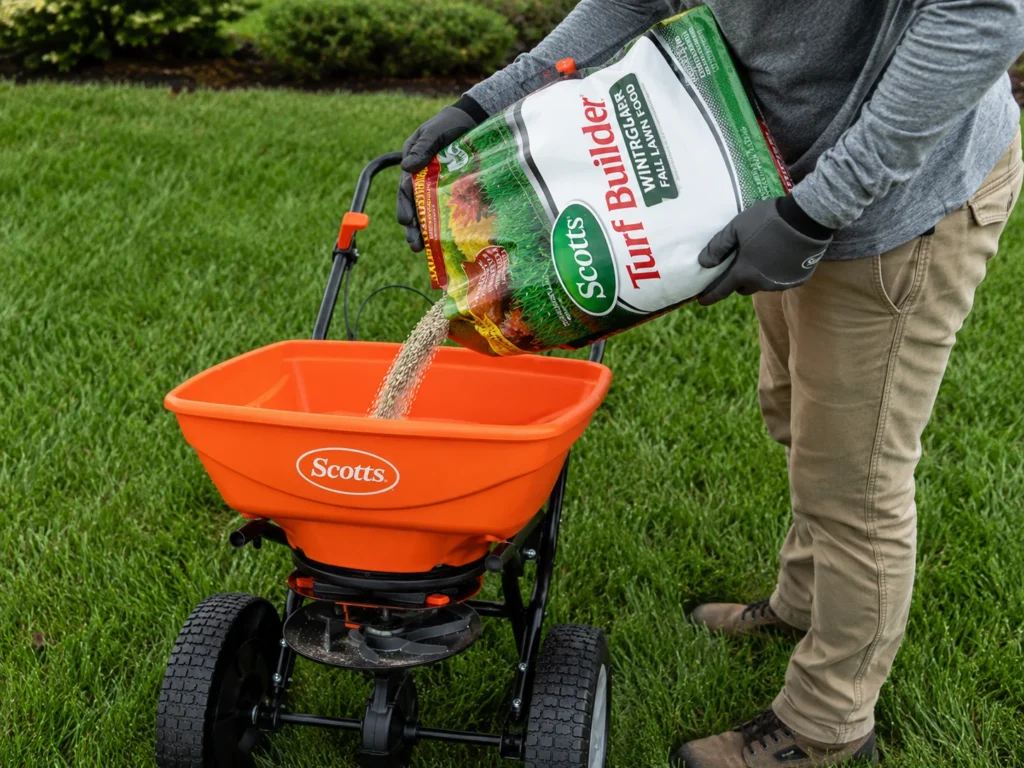
Identification Guide: Signs It’s Time for Turf Builder
Knowing exactly when your yard is ready for its first feeding is crucial. If you apply too early, the grass roots can’t absorb the Nitrogen; too late, and you miss the optimal growth window. Look for these specific visual cues:
- Active Green-Up: Your cool-season grass (like Tall Fescue or Kentucky Bluegrass) has started to naturally transition from winter brown to light green.
- Mowing Readiness: The grass has grown enough to require its first structural cut of the season. Always check if you should mow before weed and feed to maximize granular contact.
- Soil Temperature: A soil thermometer inserted 2 inches deep consistently reads 55°F for at least three consecutive days.
- Weed Emergence: For Scotts Turf Builder Weed & Feed specifically, target broadleaf weeds like dandelions are young, actively growing, and clearly visible.
Root Causes: Why Lawns Struggle Before Turf Builder
Even a healthy yard looks rough coming out of winter. Understanding what is happening beneath the surface helps you understand why timing your application correctly is so important.
Throughout winter, snowmelt and heavy rains leach essential macronutrients deep into the soil, pushing them below the root zone. By early spring, your turf is starving for Nitrogen and Potassium to rebuild its cell walls and initiate blade growth.
Soil Compaction
Months of freeze-thaw cycles and winter foot traffic press soil particles together. This restricts oxygen and water flow. If your soil is heavily compacted, even the best fertilizer won’t penetrate deeply.
Early Weed Pressure
As soil temperatures rise, opportunistic broadleaf weeds germinate faster than your dormant turf can spread. If left unchecked, weeds steal the limited moisture and nutrients available. Applying Scotts Turf Builder Triple Action provides a crucial pre-emergent barrier against crabgrass while knocking down existing dandelions.
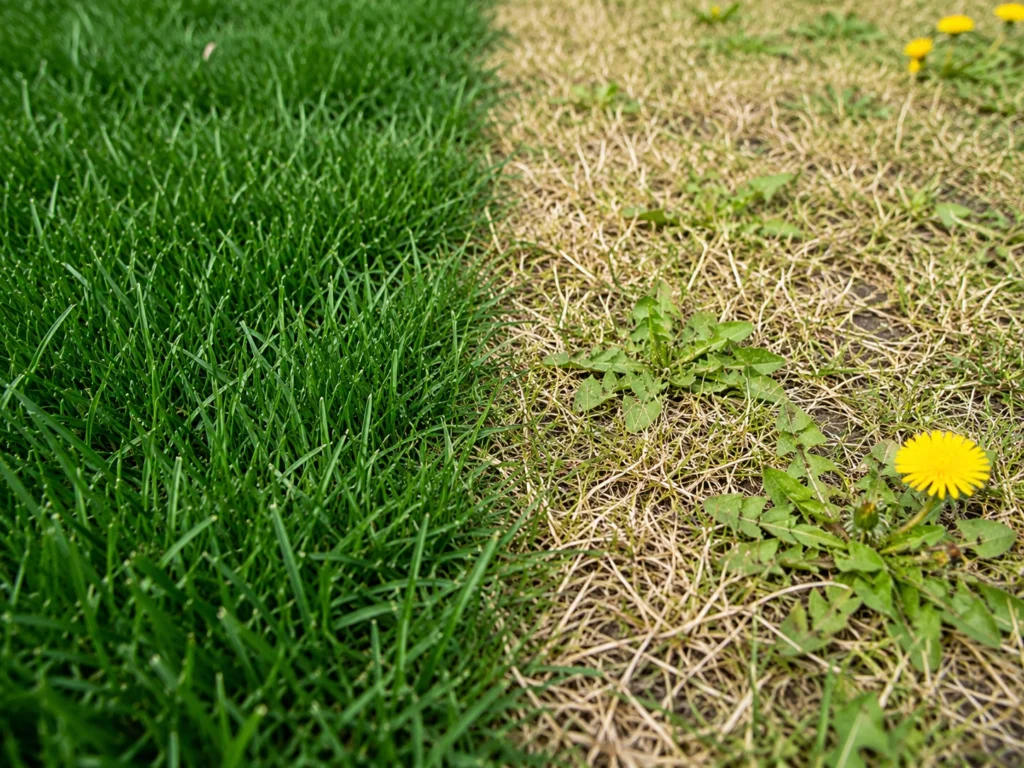
Step-by-Step Solution: Applying Scotts Turf Builder Like a Pro
Applying fertilizer isn’t just about walking around the yard. To get commercial-grade results without risking a burnt lawn with fertilizer, follow this strict protocol.
- Step 1: Prep the Yard and Equipment
Clear the yard of debris. Calibrate your Scotts EdgeGuard Mini Broadcast Spreader. Check the back of your specific bag for the correct dial setting—usually between 3 ¼ and 3 ½ for most standard applications. - Step 2: Time the Weather
Check the local forecast. You need temperatures strictly under 90°F. If applying a Weed & Feed, water the lawn lightly in the morning or apply while morning dew is present. The granules must stick to the wet weed leaves to absorb the herbicide. - Step 3: Establish a Header Strip
Walk the perimeter of your yard twice with the edge guard engaged. This creates a safe “header strip” so you can turn the spreader around without dumping excess product into your garden beds or onto the driveway. - Step 4: Walk the Grid
Walk back and forth in straight lines at a steady, normal walking pace (about 3 mph). Overlap the wheel tracks by exactly 5 feet to ensure even coverage and prevent dark green racing stripes. - Step 5: Post-Application Care
If you used standard Scotts Turf Builder Lawn Food, water it in immediately with about 0.5 inches of water. If you used a weed control product, hold off on watering for 24 to 48 hours to let the chemicals work on the foliage. Wait at least 6 to 8 weeks before applying any subsequent treatments.

Expert Comparison: Standard Lawn Food vs. Weed & Feed
A common homeowner mistake is using the wrong product at the wrong time. Understanding the difference dictates your application strategy.
- Standard Lawn Food: This is pure nutrition (typically a 32-0-4 NPK ratio). It is safe to apply at almost any time during the active growing season. It requires immediate watering to push the nitrogen into the root zone and prevent surface burning.
- Weed & Feed Formulations: These contain active herbicides (like 2,4-D). They must be applied only when weeds are actively growing, strictly avoiding periods of high heat or drought stress. The application requires a wet lawn for granular adhesion and a dry period afterward.
Pro-Tips Box
Professional to Homeowner: Never overlap your spreader passes too tightly. If you overlap the distribution throw rather than just the wheel tracks, you’re applying a double dose of nitrogen. This is the #1 cause of fertilizer burn. Also, if you have a Warm-Season grass like Bermudagrass, wait until late spring when the yard is 100% green before doing your first heavy nitrogen push.
What to Read Next
Once your lawn is fed and looking pristine, the next critical step is ensuring your outdoor space is completely safe for your family and pets. Chemical absorption takes time, and knowing the exact re-entry windows is non-negotiable. Learn the exact timelines and safety protocols in our guide on how long after fertilizing is it safe for dogs.
People Also Ask (FAQ)
Can I apply Scotts Turf Builder in the summer?
You should avoid applying standard nitrogen-heavy fertilizers during the peak heat of summer, especially if temperatures consistently exceed 90°F or if the lawn is suffering from drought stress. Instead, opt for a product specifically designed for heat, like Scotts Turf Builder SummerGuard, which contains insect control like Bifenthrin and helps the soil retain moisture.
How long does it take to see results from Scotts Turf Builder?
When applied correctly to a well-watered yard, you will typically see a deeper green color and increased blade growth within 3 to 7 days. If you applied a weed control variant, you will notice the weeds curling, wilting, and dying off within 14 to 21 days as the herbicide translocates to the roots.
Do I need to aerate before applying Turf Builder?
While not strictly required for every application, core aeration significantly improves fertilizer efficiency by allowing the granules, water, and oxygen to reach deeper into the root system. If your soil is heavily compacted clay, aerating before your fall fertilizer application will yield massive improvements the following spring.