
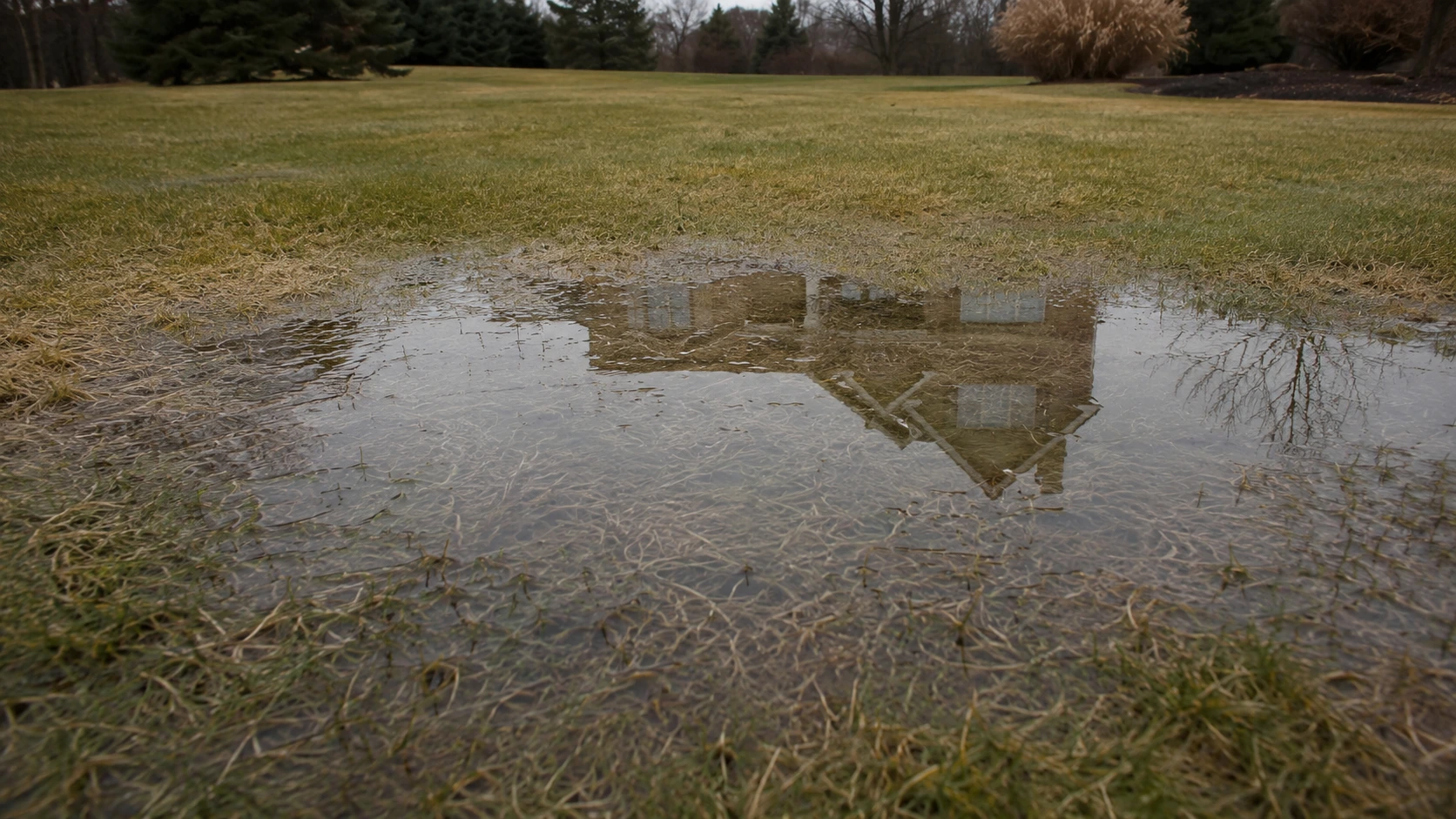
To drain standing water from your yard, you must identify the primary low spot and force the water elsewhere using gravity. For minor surface pooling, aerating the turf and applying topdressing often restores absorption. For severe flooding, you need to dig a trench, install a catch basin or a French drain lined with landscape fabric, and lay a 4-inch perforated pipe to redirect the runoff to a safe discharge zone.
Identification Guide
You need to know exactly what kind of drainage issue you are fighting before breaking ground. In my years of dealing with swampy lawns, misdiagnosing the symptoms leads to thousands of wasted dollars.
Look for these specific visual cues:
- Lingering puddles: Surface water remains visible for more than 24 hours after a standard rainfall. Healthy soil should absorb 1 to 2 inches of water per hour.
- Spongy, squishy turf: You sink into the yard when walking across it, and muddy footprints remain visible long after the rain stops.
- Turf discoloration: The grass in the depression turns pale yellow or brown, indicating root rot from oxygen deprivation.
- Swampy odors: A sour, rotten-egg smell wafts from the thatch layer, meaning anaerobic bacteria are actively decomposing the dead organic matter in the flooded zone.
- Mosquito breeding: Sudden swarms of mosquitoes cluster around a specific section of the yard, using the stagnant surface water to lay eggs.
Root Causes
Water always finds the lowest point. If it pools in the middle of your turf, your yard is failing to manage its hydrological load. Working on thousands of properties, I can tell you the number one culprit is usually human error, not the weather.
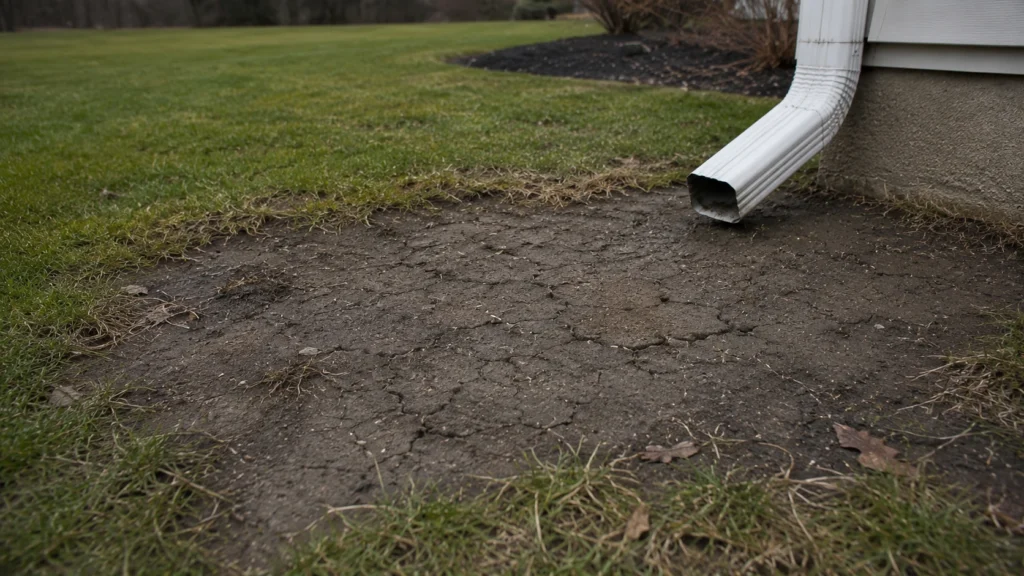
Heavy soil compaction blocks absorption entirely. New subdivision builders notoriously scrape off the native topsoil, leaving behind dense subsoil clay that heavy construction equipment then compresses into concrete. When rain hits this compacted layer, it has nowhere to go but up. Diagnosing when you should aerate your lawn is your first line of defense before bringing in heavy trenching machinery.
Poor grading is the second major factor. Your yard should drop at least 6 inches over the first 10 feet away from your foundation. If the soil has settled, it creates a bowl effect. Downspout configuration compounds this issue. A standard roof sheds hundreds of gallons of water during a 15-minute storm. Dumping that volume directly onto a flat, clay-heavy lawn guarantees a flood.
Step-by-Step Solution
Moving water requires a functional trench system. A French drain collects subsurface water, while a catch basin handles surface-level flooding. I have seen too many homeowners skip the filter fabric and wonder why their pipe clogs with silt just two years later. Do this right the first time.
1. Map the Route and Call 811
Identify the lowest spot in your yard where the water pools. Plan a trench route leading from that spot to a safe discharge area (a municipal storm drain, a dry well, or a downhill slope). Call 811 to mark underground utilities. You do not want to strike a gas line with a trenching shovel.
2. Dig the Trench
Dig a trench 12 to 18 inches deep and 8 inches wide. You need a slope of 1 inch of drop for every 10 feet of distance. Check your pitch constantly using a string line and a torpedo level. Water will not flow uphill.
3. Line the Trench and Add Gravel
Lay non-woven, professional-grade landscape fabric inside the trench. Leave enough excess fabric on the sides to wrap the pipe later. Pour 2 to 3 inches of washed drainage gravel (3/4-inch to 1.5-inch stone) into the bottom.
4. Install the Pipe
Lay a 4-inch perforated PVC pipe on top of the gravel. The holes must face down. Subsurface water rises from the bottom of the trench into the pipe. If you face the holes up, the trench has to fill with water before the pipe does anything.
5. Wrap and Backfill
Pour more gravel over the pipe until it is covered by 3 inches of stone. Fold the excess landscape fabric over the top of the gravel, creating a burrito-like wrap. This prevents dirt from clogging the system.
6. Restore the Surface
Fill the remaining space with a high-quality topsoil, packing it firmly. Apply a premium grass seed and a starter fertilizer like Scotts Turf Builder to speed up the recovery of the excavated area. Keep the soil moist until the new turf establishes.
Professional vs. DIY
Trenching is brutal, backbreaking work. I routinely consult on failed DIY jobs, and the issue is almost always a miscalculated slope or extreme fatigue leading to shortcuts.
| Factor | DIY | Professional |
| Cost | $ | |
| Speed | 1 to 2 Weeks | 1 to 2 Days |
| Effectiveness | Moderate | High |
| Risk of Utility Strike | High | Low |
Tackle the job yourself if you only need a 20-foot run through an open lawn with a clear natural slope. Hire a professional landscaping or drainage crew if you need to move water around tight corners, cut through tree roots, run pipe under concrete walkways, or regrade the entire foundation line.
Common Misdiagnosis
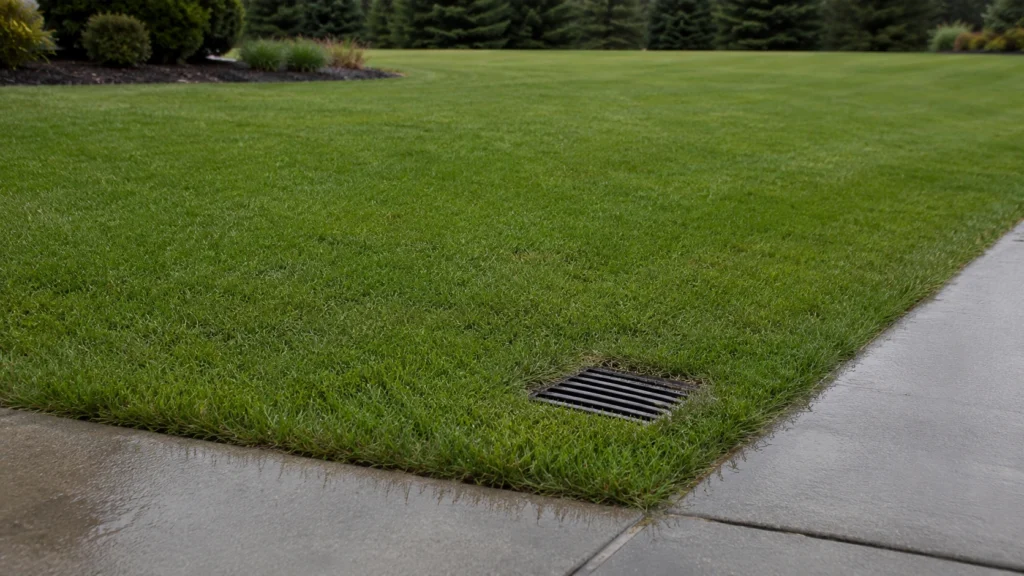
You wouldn’t believe how many “drainage problems” I have diagnosed that turned out to be broken plumbing. Homeowners frequently mistake a ruptured underground irrigation line for a natural low spot.
If a specific area of your yard remains swampy during a dry spell, or if you notice a sudden spike in your monthly water bill, you likely have a shattered PVC sprinkler pipe leaking under the turf. To test this, shut off the main water supply to your irrigation system for 48 hours. If the standing water recedes and the ground begins to harden, your sprinklers are the problem, not your soil grading.
Additionally, heavy thatch buildup (over 1/2 inch thick) acts like a sponge, holding morning dew at the surface and making the lawn feel constantly wet, even if the underlying soil drains perfectly fine.
Prevention Tips
The lawns that stay dry long-term are the ones getting consistent mechanical maintenance. You must relieve the soil pressure before it seals off completely.
Rent a core aerator every fall. Punching 2-inch to 3-inch plugs out of the soil breaks through the surface tension of dense clay, allowing oxygen and water to penetrate deep into the root zone instead of sheeting off the surface.
Direct your downspouts further away. Slapping a splash block at the base of your gutter is not enough. Attach a solid 4-inch corrugated pipe to the downspout and route the roof runoff at least 10 feet away from the foundation. Keep your gutters clean; overflowing gutters drop massive sheets of water directly onto the foundation soil, causing instant erosion and pooling.
Pro-Tips Box: Stop wasting money on flexible corrugated black pipe for shallow lawn trenches. In my 15 years in the field, I’ve pulled up miles of crushed, root-infested corrugated lines that completely collapsed under the weight of a riding mower. Spend the extra money on rigid 4-inch Schedule 40 PVC if you are routing water anywhere near trees or high-traffic areas. Also, never install a catch basin without drilling a few 1/4-inch weep holes in the very bottom of the plastic bucket. This allows the residual water sitting below the pipe exit to slowly drain into the soil, preventing mosquitoes from breeding inside the dark basin.
People Also Ask
Does standing water eventually drain?
It depends on the soil composition and the water table. In sandy soils, standing water usually drains within a few hours. In dense clay soils or compacted areas, surface water relies heavily on evaporation, which can take days and lead to dead turf or fungal lawn diseases.
Can I use sand to level a wet yard?
Never mix pure sand into a wet, clay-heavy yard. Combining sand and wet clay creates a mixture that dries with the structural consistency of concrete, completely sealing the surface. Always use a blended topsoil mix with organic compost to fill low spots.
Will a lawn aerator fix a flooded yard?
Core aeration fixes minor puddling caused by surface compaction, but it will not fix a flooded yard caused by poor grading or a high water table. If your yard lacks the proper slope, aeration simply creates thousands of tiny holes that will also fill with standing water.
What to Read Next
Fixing a drainage issue often leaves you with bare spots, trench lines, and uneven ground. Leveling your yard back to its pristine state requires correct grading techniques, which is why understanding the mechanics behind adding top soil on top of grass will help you seamlessly blend the repaired area with the rest of your healthy turf.