
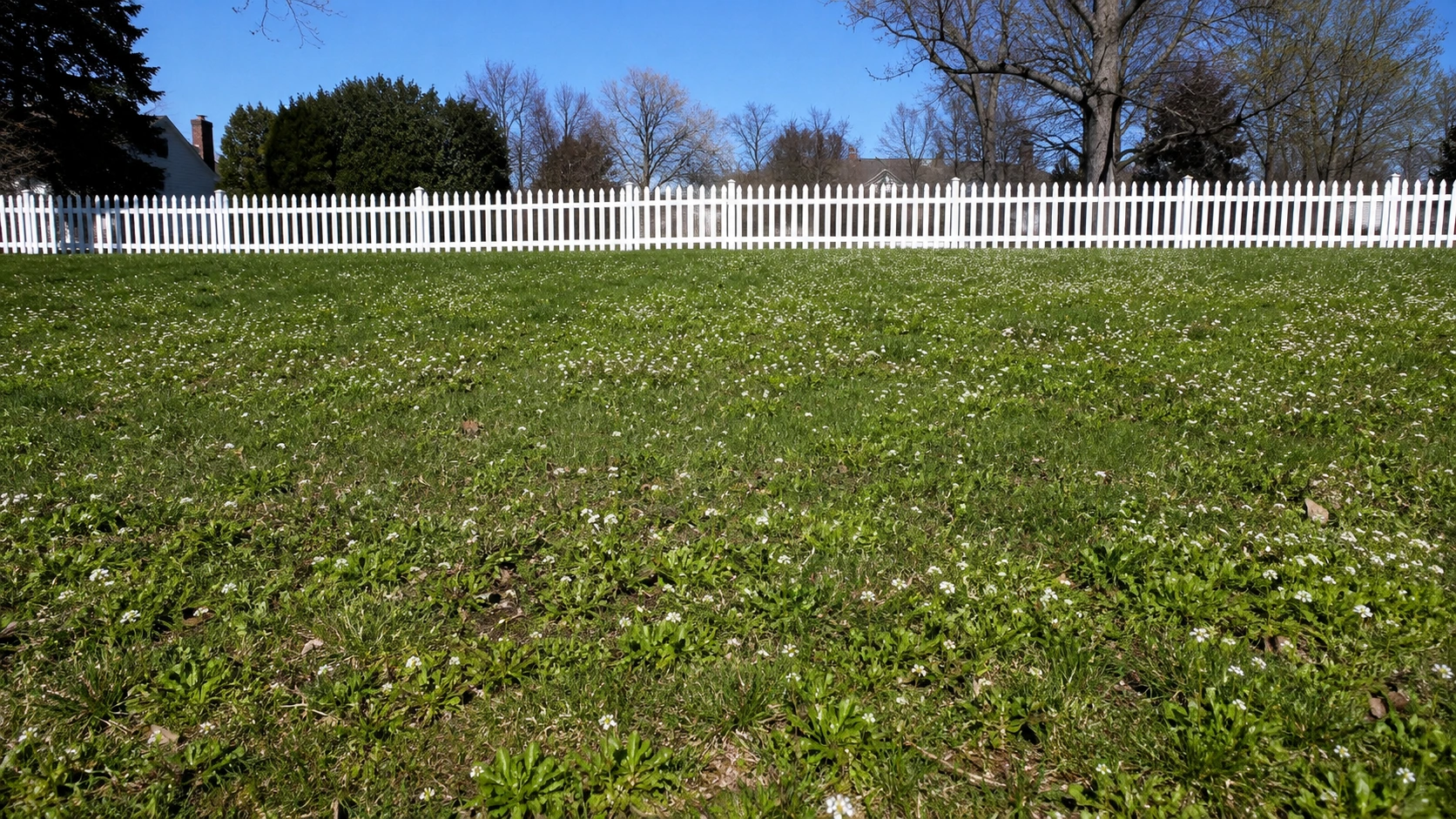
To kill hairy bittercress, apply a post-emergent broadleaf herbicide containing 2,4-D, dicamba, or triclopyr directly to the green rosettes before they bloom and shoot their seeds. For permanent control, you must apply a pre-emergent herbicide containing prodiamine or isoxaben in early fall to prevent the winter annual seeds from germinating in the bare spots of your lawn.
Eradication Plan (Step-by-Step)
I’ve walked onto properties in April where merely dragging a hose across the yard triggers a chain reaction of bittercress seeds popping like miniature popcorn. If you wait until you see those tiny white flowers, you are fighting a losing battle for the current season.
Phase 1: Post-Emergent Chemical Application
Do not try to pull mature hairy bittercress by hand. The physical disturbance will cause the seed pods to explode, launching up to 5,000 seeds up to 10 feet away.
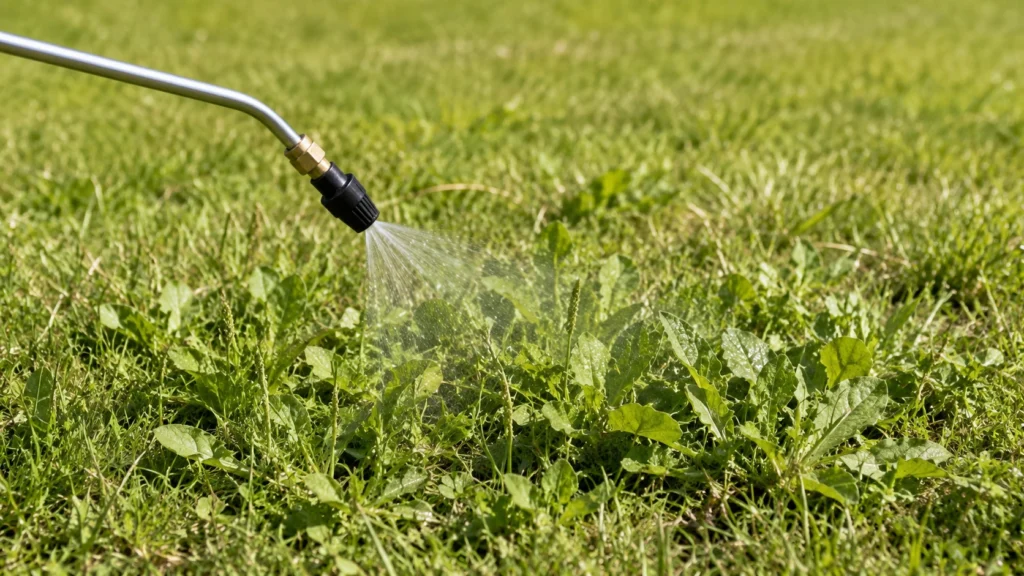
- The Chemical: Use a three-way broadleaf herbicide containing 2,4-D, dicamba, and mecoprop (MCPP), or a product with triclopyr. Gordon’s SpeedZone or Ortho Weed B Gon are highly effective.
- The Mix: For a standard 2,4-D concentrate, mix 1.5 to 2 oz per gallon of water in a pump sprayer. Add 0.5 oz of non-ionic surfactant so the chemical sticks to the weed’s waxy leaves.
- The Application: Spray directly on the center of the rosette until wet, but not dripping. Do this on a calm, dry day when temperatures are between 55°F and 80°F.
- The Wait: Expect to see the weed curl and wilt within 3 to 5 days. Complete death takes 10 to 14 days. Cost is minimal, around $20–$30 for a bottle of concentrate that will cover an average yard for years.
Phase 2: Mowing and Bagging
If the weed has already developed the slender, vertical seed pods, your priority shifts to damage control. Attach the bagger to your mower. Set the deck height to 2.5 inches and mow over the infested areas to suck up as many seed heads as possible. Empty the clippings directly into a yard waste bag. Never mulch hairy bittercress once it has flowered.
Identification & Misdiagnosis
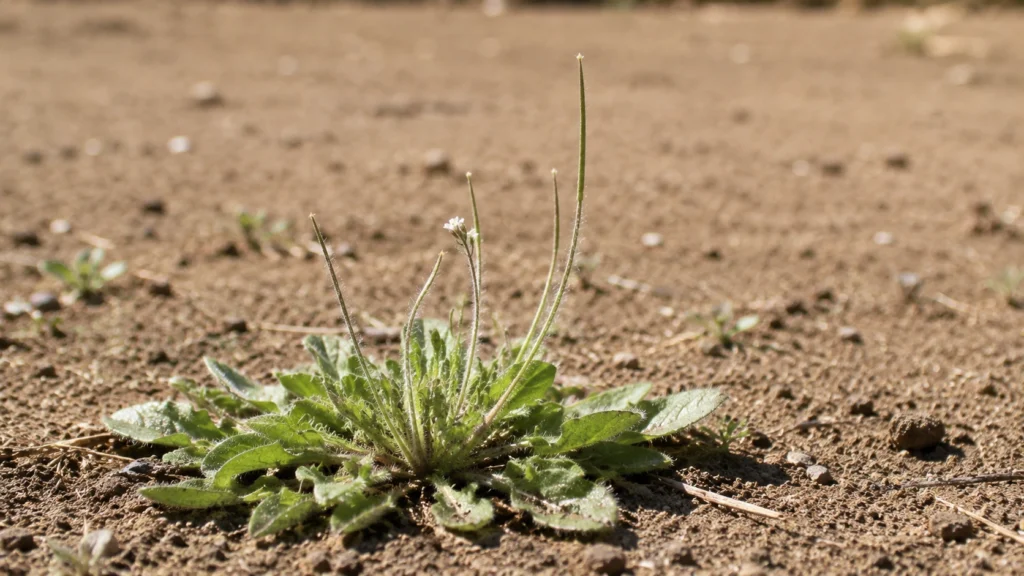
Hairy bittercress (Cardamine hirsuta) starts as a small, flat basal rosette of compound leaves hugging the soil tightly. By early spring, it shoots up slender stems up to 12 inches tall, topped with clusters of tiny, four-petaled white flowers.
The defining feature is the silique—a thin, vertical, toothpick-like seed pod that develops right below the flower. As these pods dry out, the slightest touch causes them to coil rapidly, violently ejecting seeds in every direction.
Homeowners frequently misdiagnose hairy bittercress as common chickweed. Both are winter annuals that show up at the exact same time. Chickweed, however, has a creeping, mat-like growth habit with smooth, tear-drop shaped leaves and lacks the explosive, vertical seed pods. Treating for the wrong weed usually means using a weaker chemical that won’t penetrate the bittercress rosette.
Root Causes & Attractants
Most homeowners apply a standard spring pre-emergent like crabgrass preventer in April, expecting it to stop hairy bittercress. That is a massive error. Hairy bittercress is a winter annual. The seeds germinated last September. The plant spent the entire winter hiding under the frost line as a tiny rosette, waiting for the first warm spring day to explode in growth. Your spring pre-emergent does absolutely nothing to it.
This weed thrives in:
- Thin, bare spots in the turf where grass struggles to compete.
- Compacted soil alongside driveways and sidewalks.
- Areas with poor drainage that stay consistently wet during winter.
Pro-Tips Box: Stop wasting money spraying post-emergents on dead bittercress in June. By early summer, the heat has naturally killed off the mother plant. The damage is already done, and the seeds are safely in the soil. Shift your focus and budget to a heavy Prodiamine granular application in the second week of September. Target the bare patches specifically at a rate of 0.4 oz per 1,000 sq ft before soil temperatures drop below 70°F.
Pet & Child Safety Warnings
When applying 2,4-D or Triclopyr products, strict re-entry intervals must be enforced. Keep all dogs, cats, and children completely off the treated areas until the liquid is 100% dry. On a sunny 70°F day, this takes about 2 to 4 hours. For maximum safety, wait a full 24 hours before allowing pets back onto the lawn. If a pet walks on wet herbicide and licks its paws, it can cause severe gastrointestinal distress.
Professional vs. DIY
| Feature | Professional Service | DIY Approach |
| Cost | $60 – $100 per application | $25 – $40 total |
| Speed | 1–2 weeks for scheduling | Immediate |
| Effectiveness | High (commercial grade) | High (if timed right) |
| Risk | Low | Medium (mixing errors) |
If you catch the weed early while it’s still just a flat rosette, DIY control is fast and inexpensive. You can spot-treat a 5,000 sq ft yard in 15 minutes with a $15 pump sprayer and an over-the-counter concentrate.
You need to call a professional if you have missed the window for the last three years and your yard is currently 80% bittercress and 20% grass. In those cases, a professional lawn care operator can apply a blanket spray using a calibrated boom rig with commercial-grade combinations like Triplet SF or SpeedZone, ensuring total coverage without scorching the surviving turf.
Prevention Tips
You cannot spray your way out of a hairy bittercress problem year after year. You must change the environment.
- Fall Overseeding: The seeds require bare soil and sunlight to germinate in September. Overseed your yard with high-quality Turf Type Tall Fescue or Kentucky Bluegrass in early fall to choke out the weed seeds.
- Pre-Emergent Timing: Apply a pre-emergent herbicide like Prodiamine or Dithiopyr in late summer/early fall.
- Raise the Deck: Mow your grass at a height of 3 to 3.5 inches heading into winter. Taller grass shades the soil, dropping soil temperatures and preventing the weed seeds from getting the light they need to sprout.
People Also Ask
Does mowing kill hairy bittercress?
Mowing does not kill the weed, as the basal rosette grows lower than the mower blade. Mowing simply cuts off the flower heads, temporarily reducing seed spread, but the root system remains alive to push new growth.
Will hairy bittercress die in summer?
Yes, hairy bittercress naturally dies off once temperatures consistently reach into the 80s. However, before dying, it will have deposited thousands of seeds into your soil for the following year.
Can I pull hairy bittercress by hand?
Hand-pulling is effective only if you pull the plant before the white flowers turn into seed pods. If the pods are visible, pulling the weed will cause them to explode and scatter seeds across the yard.
What to Read Next
Applying your post-emergent herbicides at the right time requires coordinating your lawn chores effectively, which is why understanding the rules on whether you should mow before weed and feed makes all the difference in chemical absorption.